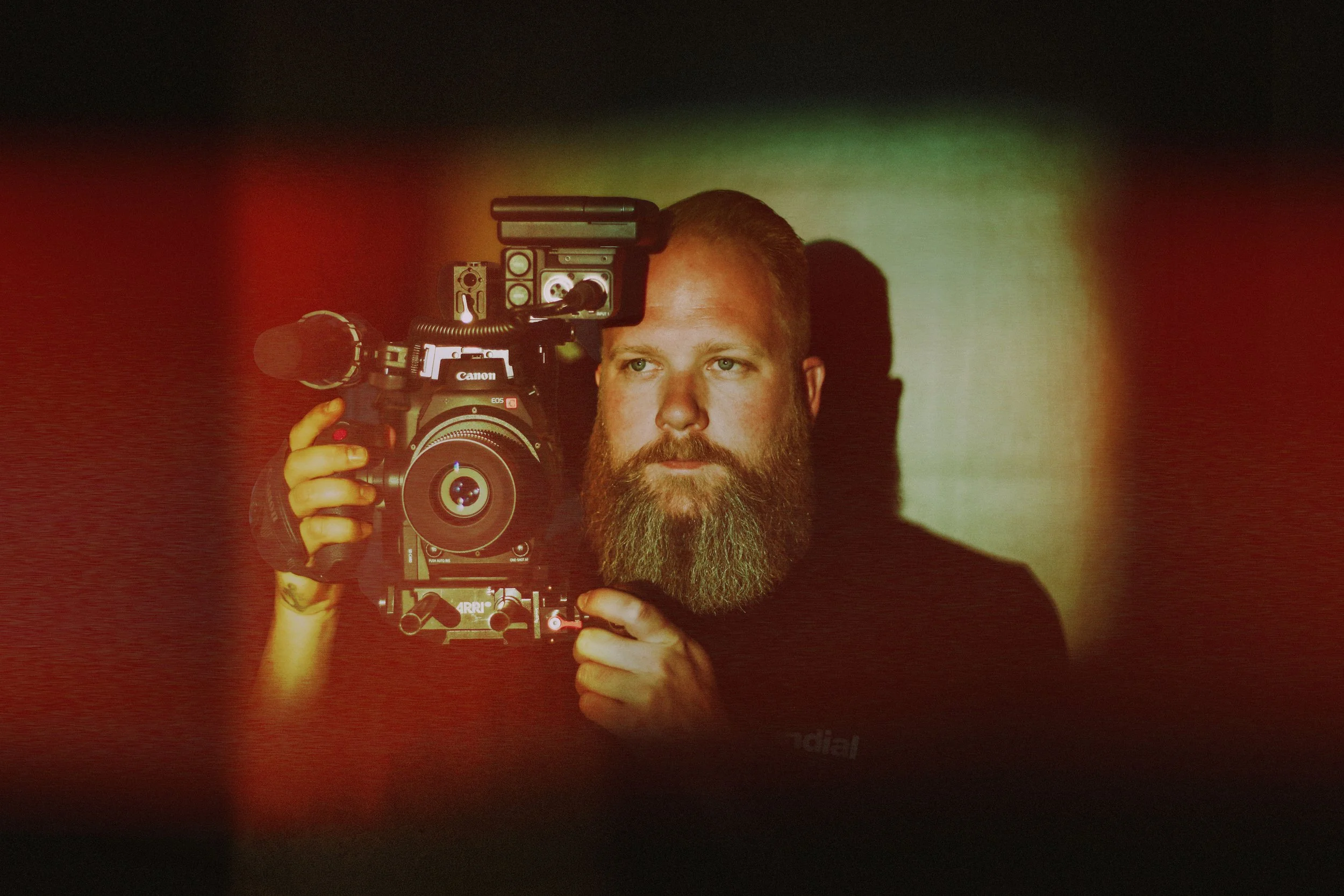
How One Filmmaker is Shaping the Future of Film in Redding—On Screen and Off
Tyler Faires once planned to leave Redding. More than a decade later, the documentary filmmaker is telling its stories, investing in independent filmmakers and helping build the creative community he once went searching for.
Story by Tommy Corey
Photography by Tommy Corey
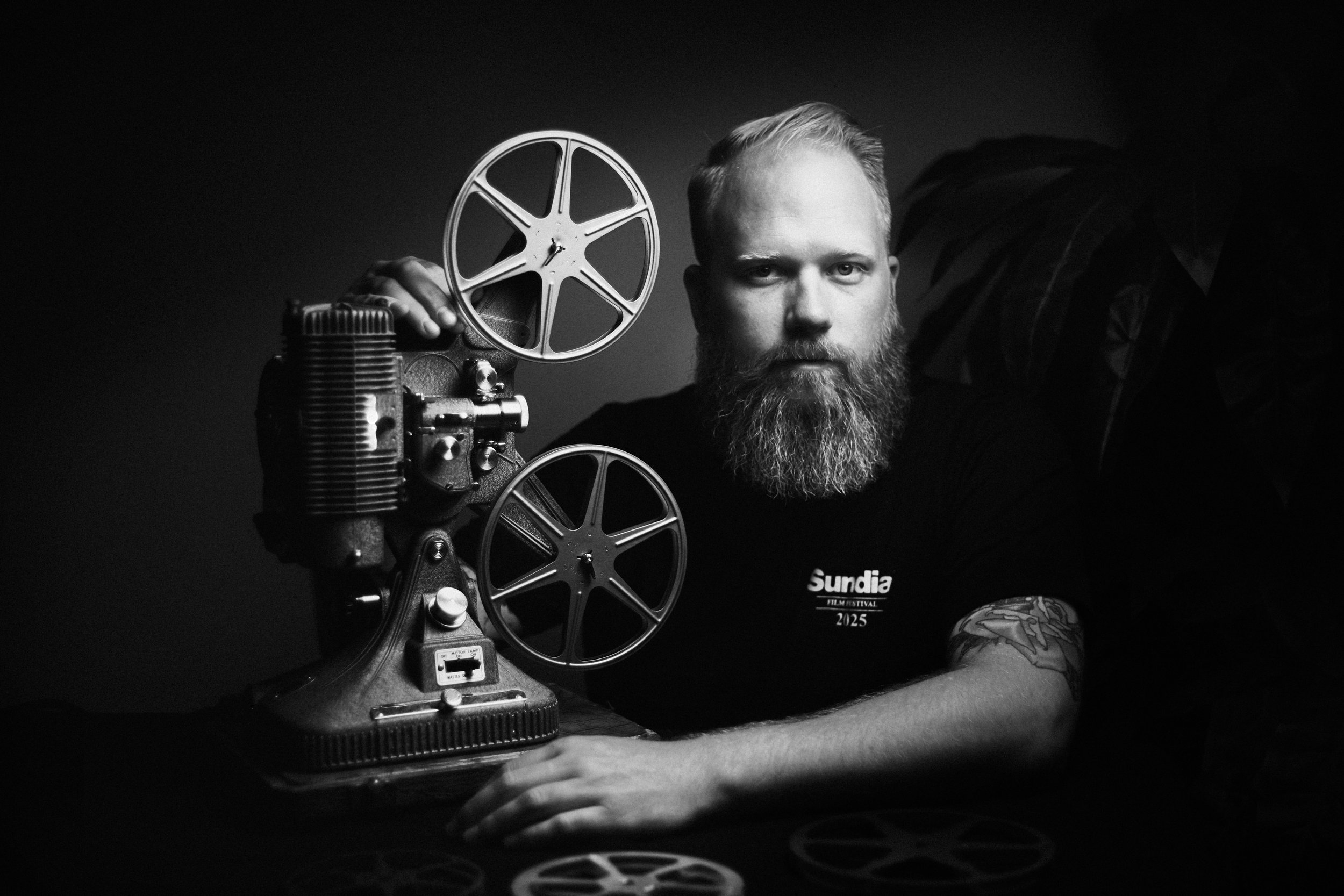
What makes a good leader? Is it fearlessness, a willingness to listen, or the courage to make the first move before anyone else has joined in? And if no one follows, are they still considered a leader?
In 2009, a YouTube video of a charismatic man dancing solo at Sasquatch Music Festival at the Gorge in Washington State garnered millions of views. The grainy, 3-minute video shows the shirtless man dancing on a steep grassy hill to “Unstoppable” by American songwriter, Santigold.
It doesn’t take long for another man in a green shirt to run over and accompany him. To acknowledge this first follower, he grabs his hands and raises them in the air to celebrate. From there, it only takes 35 seconds for the next person to join in.
What makes the video remarkable, however, is not the dancer himself, but the greater movement sparked by the person who joined them.
But a question remains: Who actually started the dance party?
For documentary filmmaker and cinematographer, Tyler Faires, the distinction between the two has become increasingly difficult to make.
“I’m not finding what I want in Redding, so I’m gonna build what I want in Redding.”
TYLER FAIRES
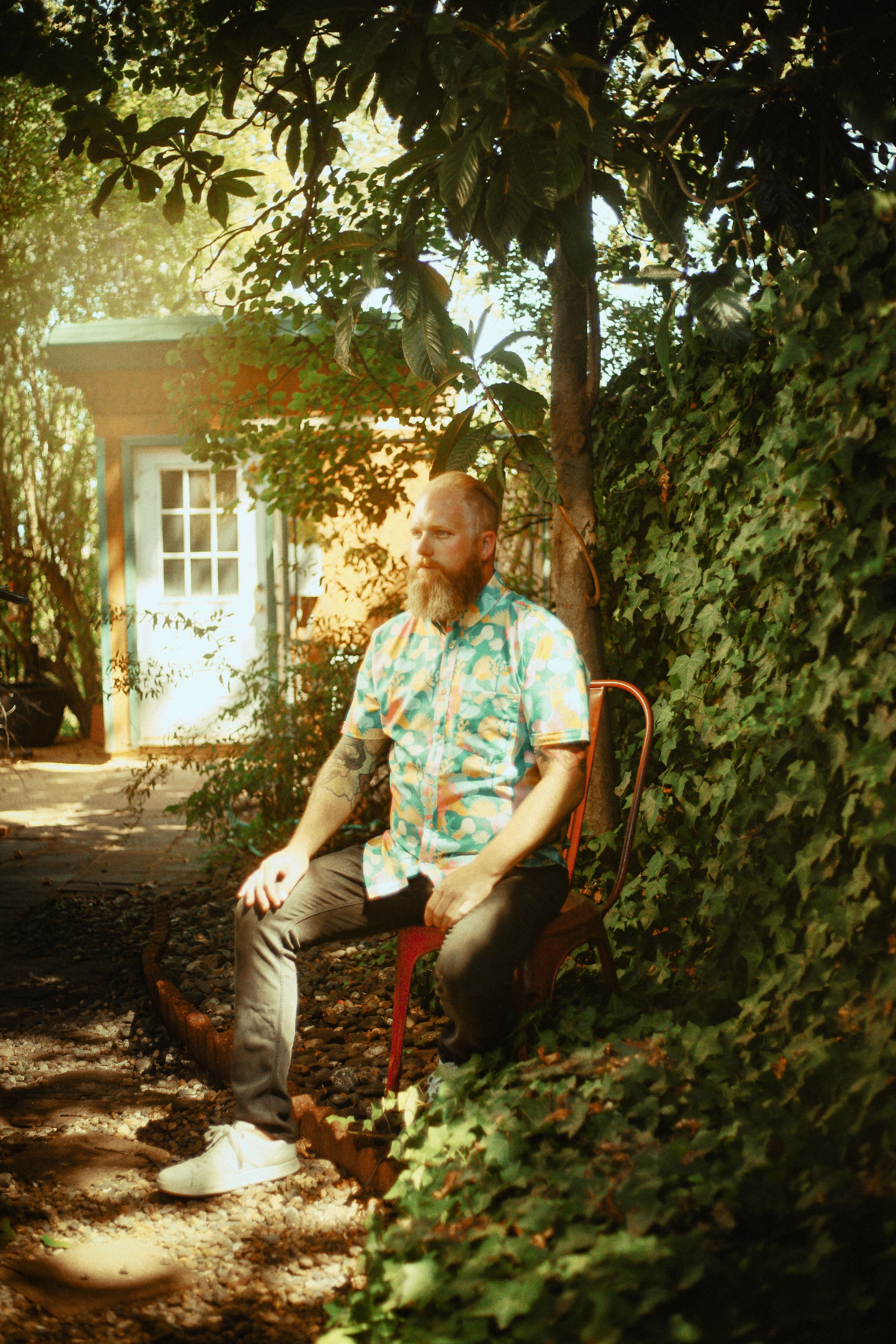
In 2014, Faires was planning to move his life and filmmaking business to Colorado. What was supposed to be a defining transition became a week of unfortunate events. News of his grandfather having terminal stage four cancer, a car accident, and a catastrophic hard drive failure all upended his plans for relocation.
Faires grew up in Christianity, which was a formative part of his upbringing and young adult life, particularly for the community it provided. As a member of The Stirring, he became increasingly disheartened as many of his church friends moved to Colorado and began leaving the religion. As his plans to leave were suddenly diverted, Faires decided to stay in Redding and search for a new community.
When Faires bought his house on Butte Street in 2014, he opened his new home for a weekly Taco Tuesday that lasted for two years.
“It was like a replacement for church for me because it was open door,” Faires says. “Anyone that wanted to come could come.”
While the Taco Tuesday gathering was simple, it would become a pattern in Faires’ life: when the community he wanted didn’t exist, he didn’t wait around for someone else to create it.
Two years prior, in 2012, he made To Plant a City, his first personal short documentary. The film explored the connection between food, buying local and community wellbeing. Nearly 15 years later, it had inadvertently become a small historical record–and a precursor to his feature-length documentary ACID Canal.
The documentary follows the conflict surrounding the Anderson-Cottonwood Irrigation District (ACID) and the canal that carries water through the region.
In 2022, amid a historic drought, ACID received just 18 percent of its normal federal water allocation. Rather than send the limited supply through its aging, unlined canal, the district’s board voted to sell the water, leaving the canal dry for the first time in more than a century. The consequences rippled outward as wells dried up, crops failed and ranchers were forced to sell their livestock.
That’s where the conflict exploded. Faires started listening.
During the year of production, Faires learned from farmers, ranchers and residents whose lives were tied to the water, sitting in their homes and researching the complicated systems surrounding them.
“I saw a community that was confused and had a lot of questions,” he says. “And I was there to listen.”
Several of the people Faires followed for the documentary lived near one another but had never been acquainted. He and his producer followed their stories independently until, after a board meeting, they looked across the hallway and saw them all standing together.
“They all live in a very small proximity, but they didn’t know each other,” Faires says.
“They came together through that process.” This became just another version of what Faires does best with his work: creating spaces for people in his community to connect.
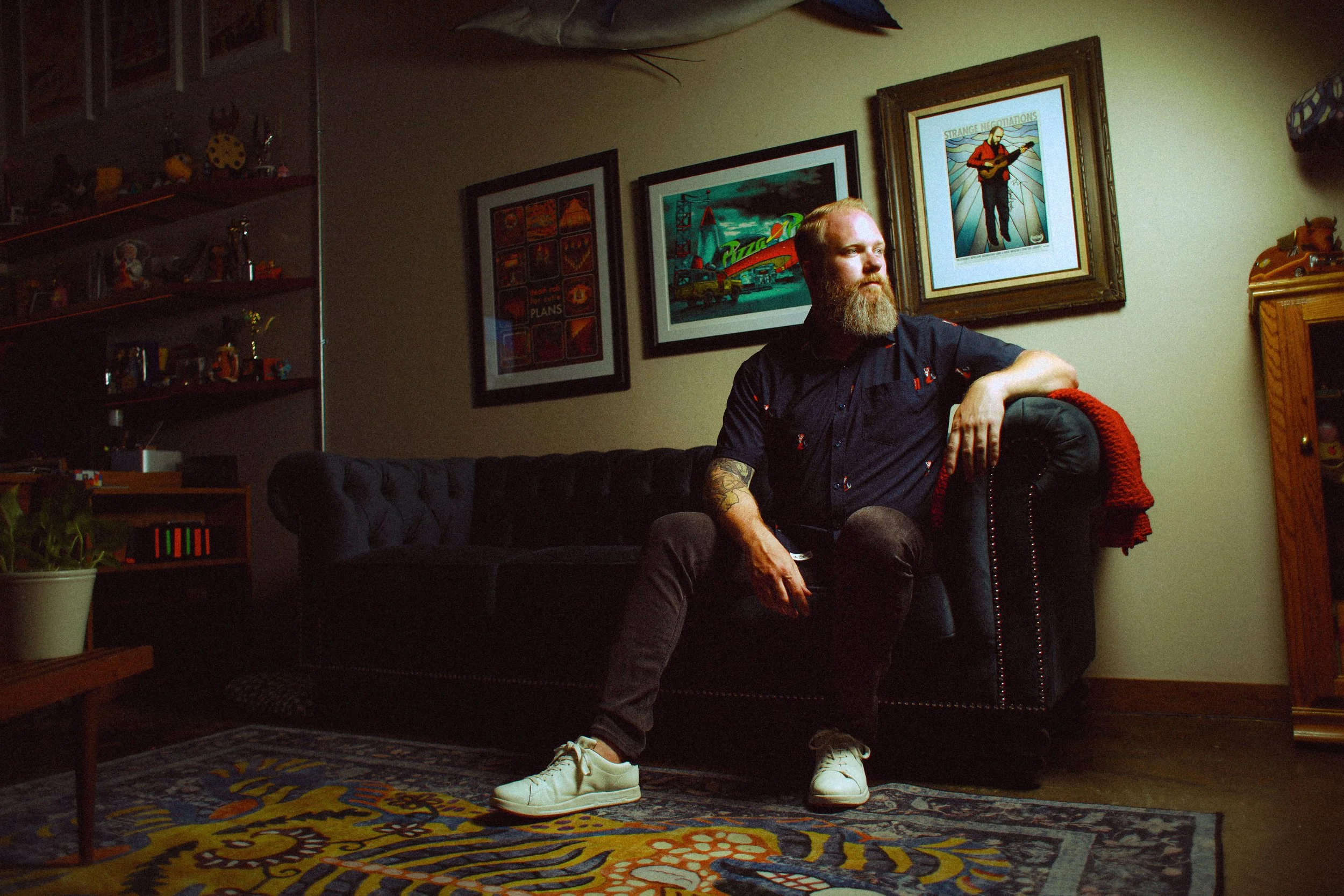
Faires in his studio in Downtown Redding.
ACID Canal eventually carried Faires beyond Redding as it was viewed at 28 film festivals around the world. Through this experience, he saw how film could bring widespread awareness to a hyperlocal issue.
That same outside awareness continues through the Redding Film Fund–a nonprofit founded by Faires to financially support local, nonlocal and international filmmakers whose work is accepted into the Sundial Film Festival.
The Sundial Film Festival has been running for 18 years at the Cascade Theatre in Downtown Redding. By March 2024, the festival received only 23 film submissions and was at risk of dying. That’s when Faires, along with local filmmakers Tyler Lockemy and T.L. Green approached the organization running it and offered to take it over. By March 2025, their first year running the festival, they had a staggering 130 submissions–drawing filmmakers from Los Angeles, New York and beyond.
But Faires didn’t want visiting filmmakers to simply arrive, screen their work and leave. He wanted them to feel like Redding had made room for them.
“We took them on e-bike rides around the river trail, we housed them downtown, we fed them, took them to Pipeline, had a pre-party with them. It was all about them,” Faires says.
This investment in visiting filmmakers is only one piece of what Faires hopes to build. His larger vision for the Redding Film Fund is to create a self-sustaining “film ecosystem” that supports filmmakers long before their work ever reaches the festival screen.
Faires says the long-term plan is to build a pool of money, use its earnings for grants and certificate programs, and help filmmakers produce projects locally with Redding crews.
Somewhere between making his own films and creating opportunities for others, Faires’ role in Redding has blossomed into more than just a filmmaker—he’s become a community organizer.
But not every idea Faires has invested in has been his own.
In 2014, Faires worked alongside One Safe Place. During its campaign to build the Sierra Center, a facility for survivors of domestic violence and sexual abuse, he created a short promotional film to inspire the Redding community to invest in its construction.
Doing so meant going far beyond filming a building that didn’t exist yet. Faires captured stories of domestic violence survivors and listened as they entrusted him with some of the most traumatic experiences of their lives. Those stories were told in the film, which helped raise the money.
Today, when Faires drives past the building, he remembers the role he played in helping someone else’s vision and a community initiative become real.
“I had a part in that,” he says.
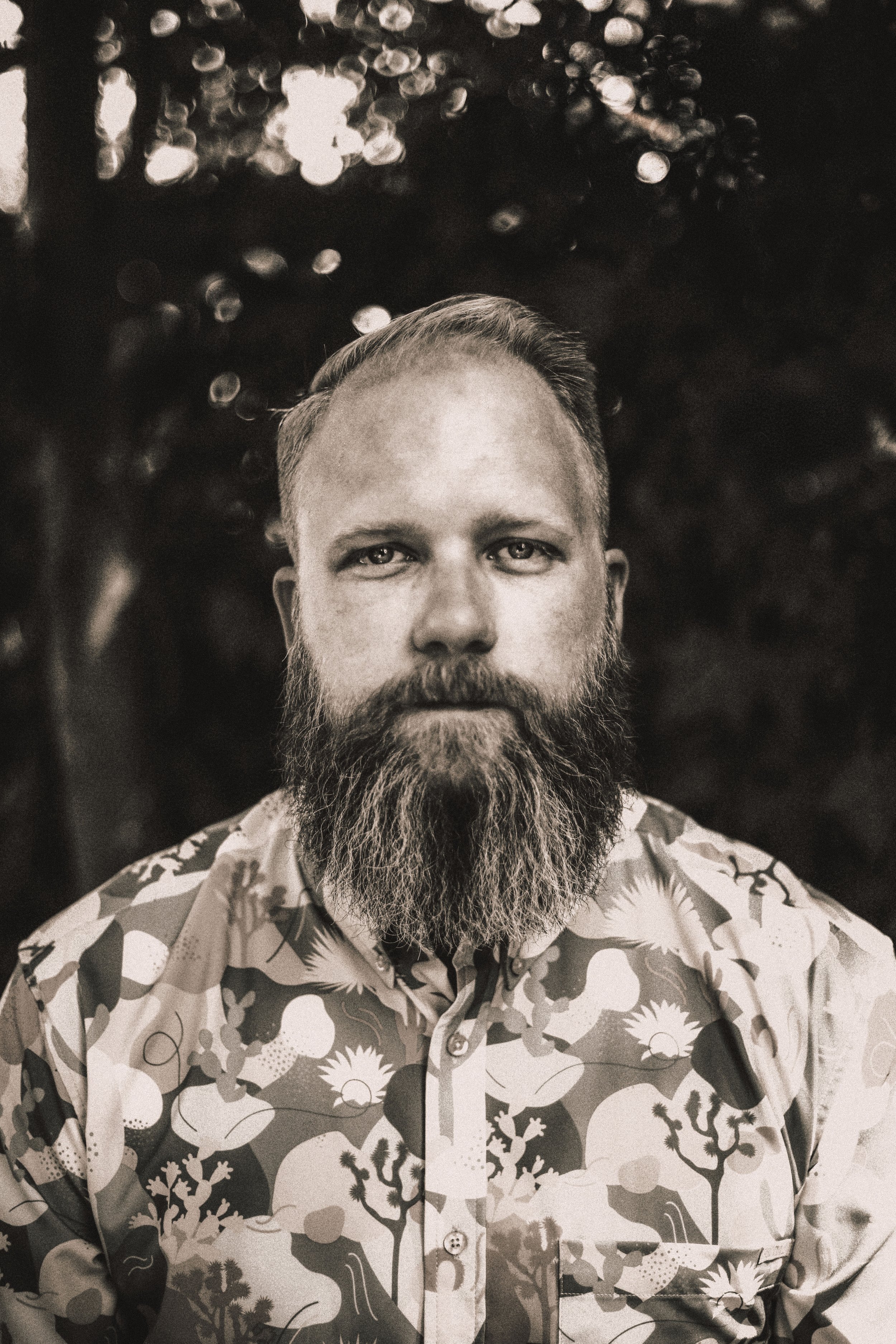
“I kind of say I’ve gone a little bit from a filmmaker to a community organizer.”
TYLER FAIRES
For Faires, that willingness to support each other’s projects is part of what makes a community work.
For nearly two years, he has been trying to grow the Redding Film Fund into the film ecosystem he imagines for his hometown. There are volunteers, board members and people who believe in the work, but Faires says he is reaching the limits of what he can carry himself.
“I still haven’t found, really, a first follower,” he says.
The Redding Film Fund already has a five-person board, volunteers and a Sundial Film Festival team Faires is quick to credit. What he’s searching for is someone with the time and dedication to share the weight of the larger vision.
That need became even clearer during a chance encounter at a film festival in Healdsburg, California, where Faires met John Cooper, the former longtime director of Sundance Film Festival.
When Cooper asked about the Sundial Film Festival, Faires described what he was building back in Redding, and admitted he was still searching for that deeply invested second person.
“You need to fix that,” Cooper told him.
The advice stuck.
Faires doesn’t want the Film Fund to remain his project. For him, this is his “legacy project.”
“I think when I die, what I'd love to see is a collection of filmmakers that got their start in Redding and it’s their home base,” Faires says.
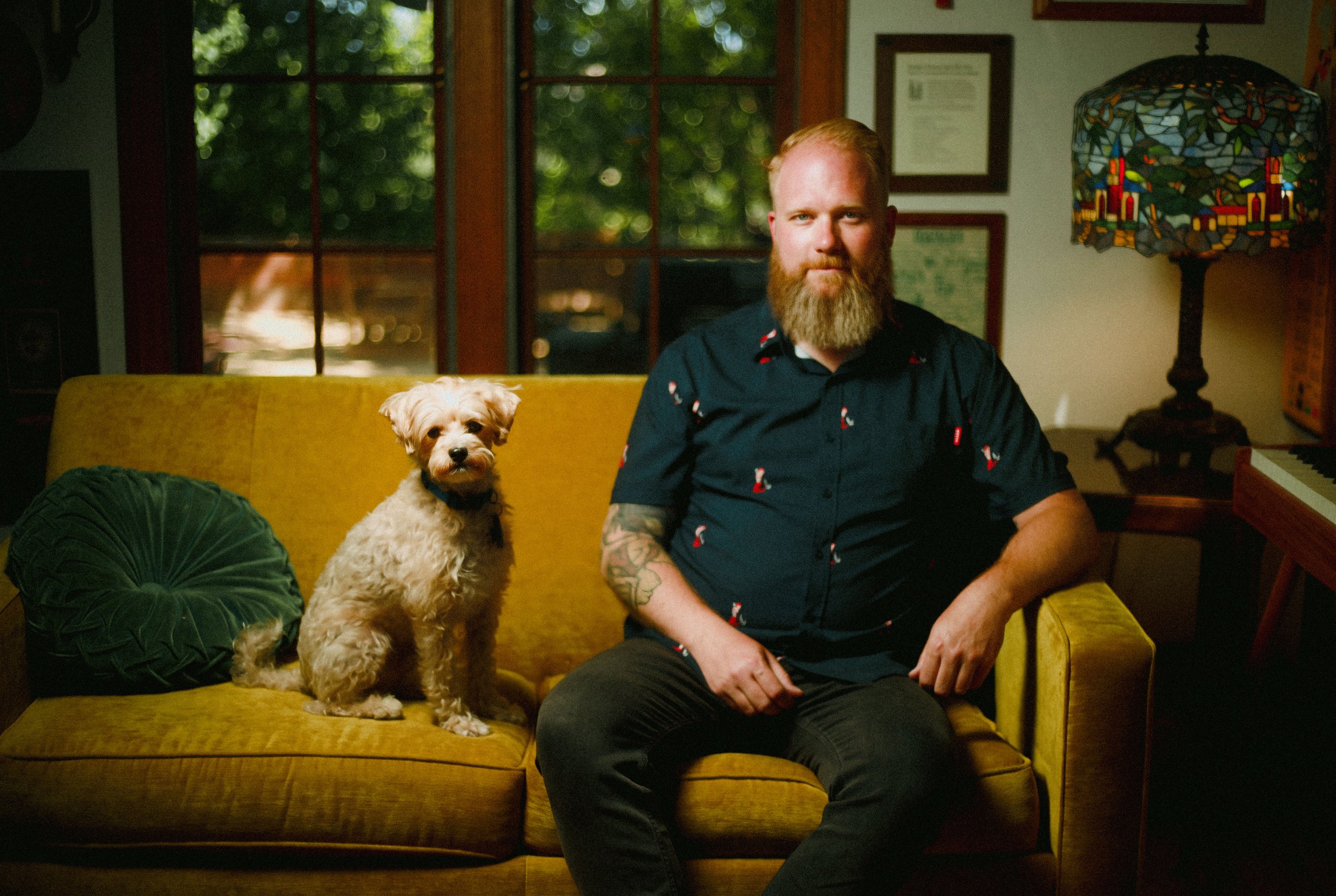
Faires has already had glimpses of what that legacy could look like.
When ACID Canal premiered at the Cascade Theatre in August 2024, Faires had set himself an ambitious goal.
“I told myself I was gonna sell it out, but I didn’t really think it was realistic,” he says.
Then the night came. Faires admits he was “kind of freaking out a little bit,” when he peaked behind the curtain and saw every single 990 seats in the Cascade Theatre–completely full.
Somewhere among the crowd were people he knew wouldn’t be happy with what they were about to see. The film had already brought some controversy and Faires had even been sued twice during its production. Still, he stood on the stage.
When the film ended, the response Faires remembers most wasn’t about its cinematography, its festival potential or even the controversy surrounding the canal—it was the community impact.
“You told our story and you told it well,” he remembers hearing from people in the community, and nearly a thousand people had shown up to witness it.
In a 2010 TED Talk titled How to Start a Movement, American entrepreneur Derek Sivers explained the social theory behind the viral video of the dancing man. He used the clip as an example to challenge the way we think about leadership. The shirtless dancer may have been brave enough to stand alone, but Sivers argues, “The first follower is what transforms a lone nut into a leader.”
There is vulnerability in being the first dancer. Before anyone joins, there is no movement, no validation that the idea is a good one and no guarantee that anyone else will ever get up. For a moment, a leader has to be willing to stand alone while everyone else watches.
But there is an immense vulnerability in being the first follower, too.
The first follower—or the man in the green shirt-–has no crowd to disappear into when he gets up. He is choosing to believe in something before everyone else has decided it is worth believing in. And by taking that risk, he makes it easier for the next person to join. Then the next.
Faires, as it turns out, has spent much of his life being both.
He has been the first dancer–opening his home when he was searching for community, turning his camera toward stories and issues that he believed deserved attention and building the Redding Film Fund around an idea for what filmmaking in his hometown could become.
But alongside his leadership, he’s done something that complicates the usual story of what leadership looks like: lending his time and talent to movements that never belonged to him. Maybe that’s the measure of a good leader: not whether people remember who started the dance, but whether enough people join that it no longer matters who led or who followed.