A Nonprofit Founder’s Return to Hunting, Tradition and the Hunter Within
In 2020, Jimmy Flatt founded Hunters of Color, a nonprofit aimed to diversify the 97% white demographic of hunters and conservationists. After five years of running 47 chapters around the US, burnout led him back home to California—and to a life he lost for a while.
Story by Brad Holzwart . Sponsored by Sawyer Products
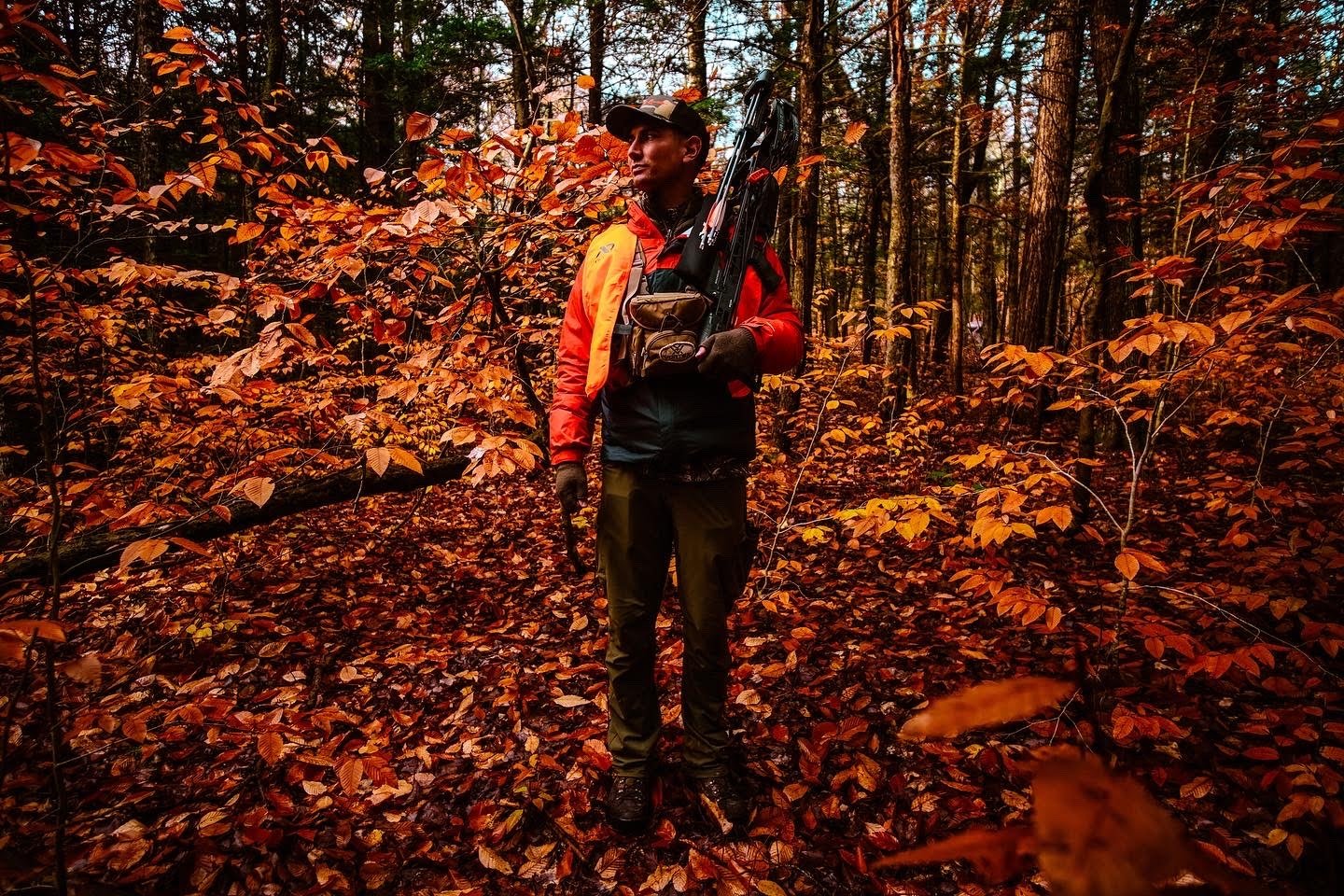
Jimmy Flatt walks to the end of his parents’ driveway, carrying the case containing his hunting bow. He recently moved back home after leaving the organization he spent five years building, still reckoning with how he went from being an Executive Director at twenty-five years old to back living with his parents at thirty.
He opens the case and assembles the bow, piece by piece for the first time in over a year, but his fingers remember. Neighbors peer from behind drawn curtains. A few men stand watching, fascinated.
He draws back. His heart slows. The stares vanish. He lets fly, and the arrow slices through the air, sinking into the target with a whmmph!
“How far can you shoot it?” one of the men asks.
At one time, the answer would’ve been as instinctual as his next breath. Now he has to think about it. In his final year running Hunters of Color — the nonprofit he founded in 2020 to get more people of color into the outdoors — anything unrelated to the organization withered away, even his own hunting.
Ironically, part of HOC’s founding mission was to revitalize hunters who’d drifted away. Jimmy never imagined he’d become one of them. Since resigning from HOC in August of 2025, he’s wondered whether walking away was the only way back to the thing he loves most.
He studies the cluster of arrows in the target. Tight, he thinks, satisfied. Then: Why did I ever put this away?
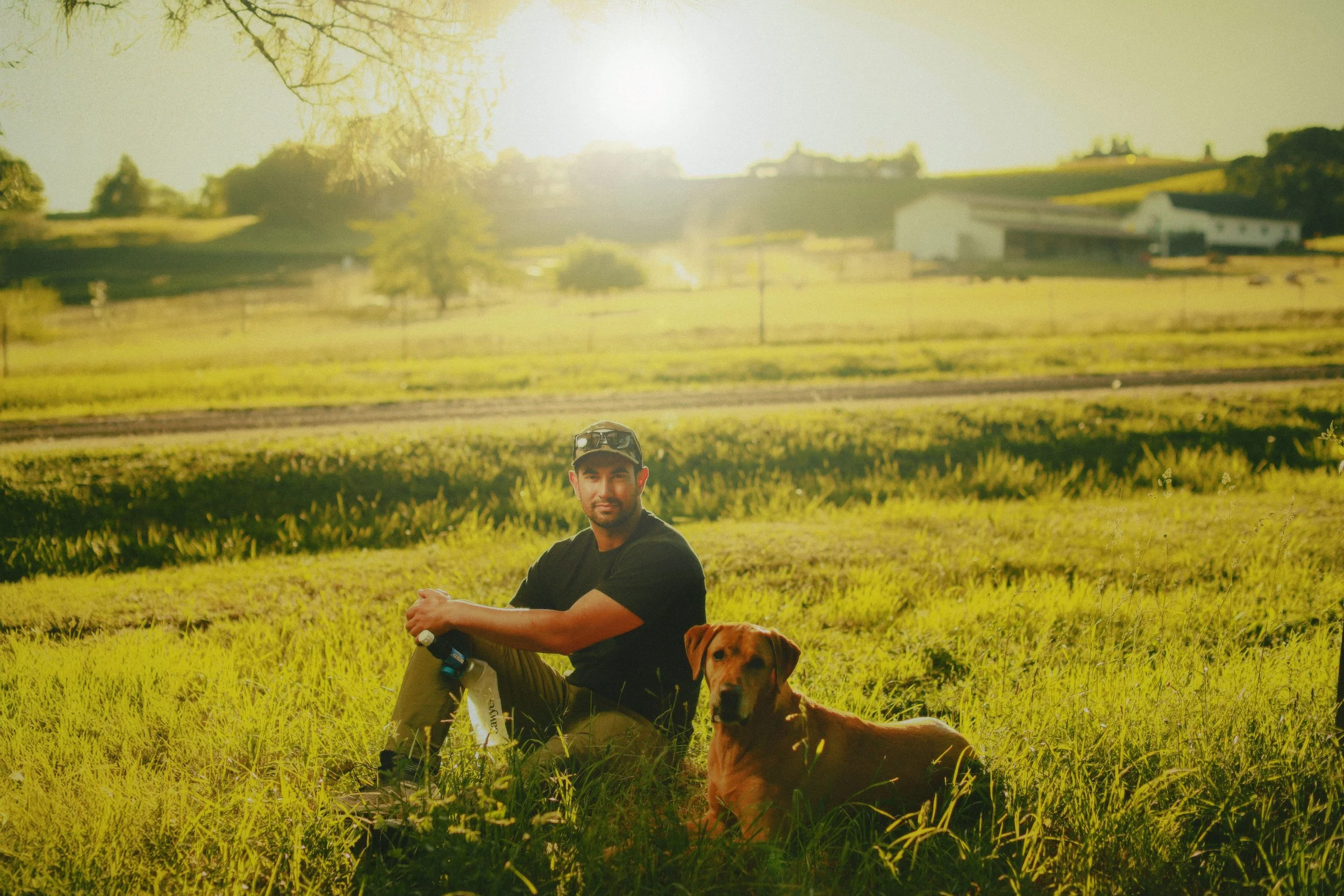
When Jimmy was seven, growing up in that same Sonoma house, he stalked his backyard with the BB gun his father had given him. One day he managed to shoot a squirrel scampering across their willow tree.
“I was shocked that I had just killed something,” Jimmy says.
Later that day, Jimmy’s father found the dead squirrel in the backyard, a BB-sized hole in its side, and asked him what happened.
“I told him it must have fallen on a twig,” Jimmy recalls, laughing.
His father pressed him. When Jimmy admitted the truth, his dad gathered up the squirrel and told him plainly: “If you plan on taking life, you are going to accept the consequences.” Jimmy didn’t understand until he had squirrel for dinner that night.
“My parents instilled this ethic in me,” he says. “If you take from nature, you have to give back. When you kill something, you have to respect it.”
When Jimmy and his dad began hunting together, his father would offer thanks to the animal whose life he had taken. Jimmy adopted the ritual but made it his own after encountering several Native American hunters through HOC.
“There are some cultures that have been saying the same prayer for eons,” Jimmy says. “I felt like my own hunting culture was severed and I wanted to rekindle that and have something to share with my kids one day.”
He closes his eyes.
“I walk up to the animal and place my hands on it. Then, I pray, ‘Thank you for the life you’ve given me. I will see you again when all that’s left of us are our bones.’ I believe the life they’re giving me is becoming part of my body and sustaining me.”
That principle has become as much a part of him as the carbon from the animals he’s consumed.
“When you pull that trigger, you take on the responsibility of being the best steward of the life you took,” he says.
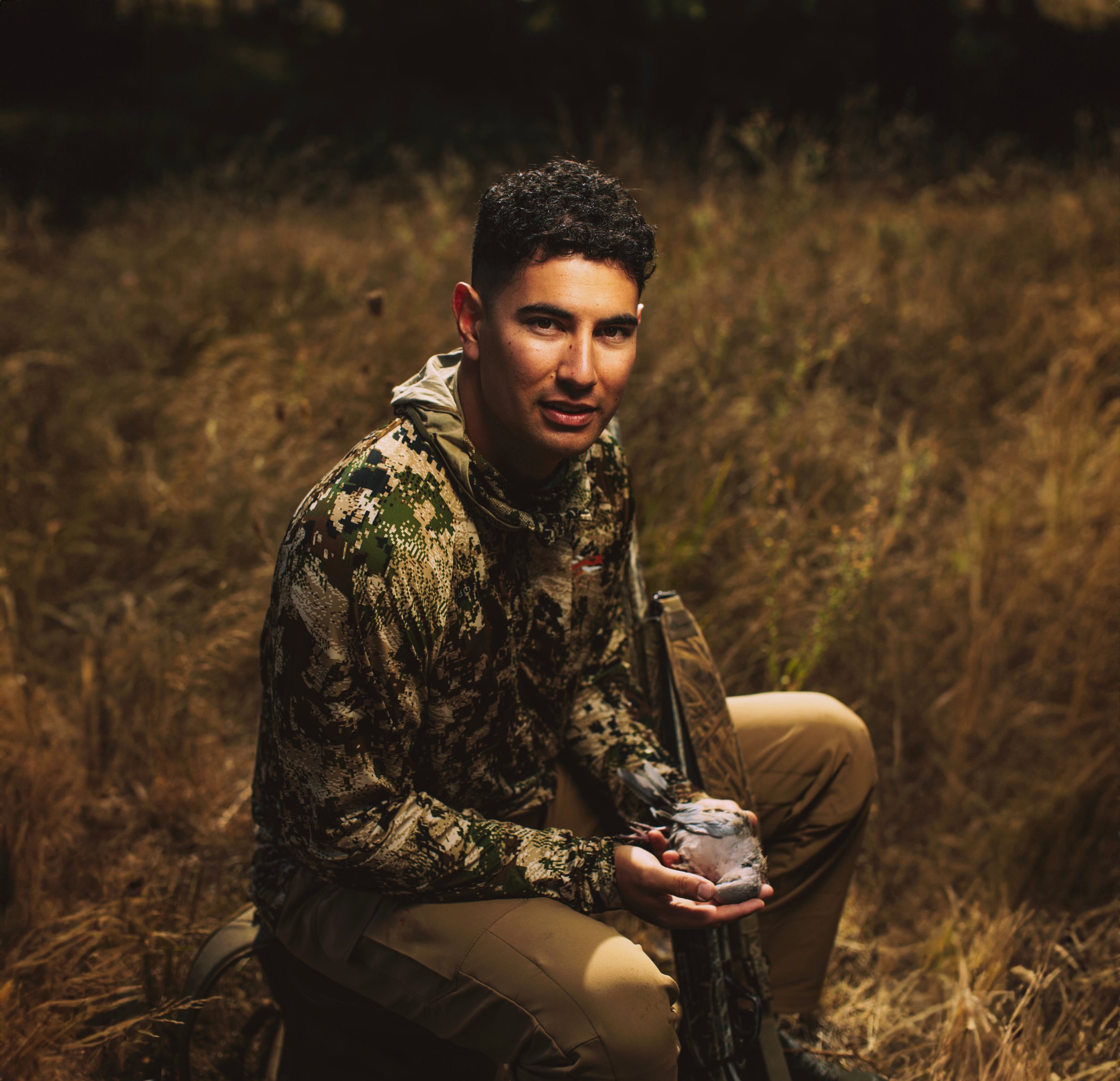
“My parents instilled this ethic in me. If you take from nature, you have to give back. When you kill something, you have to respect it.”
But for Jimmy, finding where he belonged was never as simple as finding people who shared his interests. In high school, he’d tell girls he hunted, only to be met with an “Ew.” His best friend was forbidden to go on a hunt because his mom didn’t want him in the woods with guns.
“It hurt,” Jimmy says, “Especially when it was my best friend and I wanted to share that experience with him.”
The hunting community itself could be protective, particularly in a sport where participants guard their favorite spots and methods. Jimmy’s Latin-Pacific Islander ethnicity added another barrier.
“If my dad was with me, big Polynesian guy, former Marine, it wasn’t as overt,” Jimmy says. “But when I was alone, even volunteering at duck club events, I’d get condescending comments or looks. That was honestly the reason why HOC started. I needed people to hunt with.”
He wasn’t wrong to feel outnumbered. According to the U.S. Fish and Wildlife Service’s 2016 national survey, 97 percent of American hunters identified as White. Its most recent survey in 2022 put that figure at 77 percent.
In its early years, HOC gave Jimmy the fulfillment he’d been chasing as a kid. The model was simple: open local chapters, enlist ambassadors to run hunts and archery meetups, and pair mentors and mentees to have a safe place to learn how to read a map or field dress a deer.
“I was meeting all these really cool people, seeing them light up the way I lit up when I was a little kid,” he says. “That would recharge my batteries.”
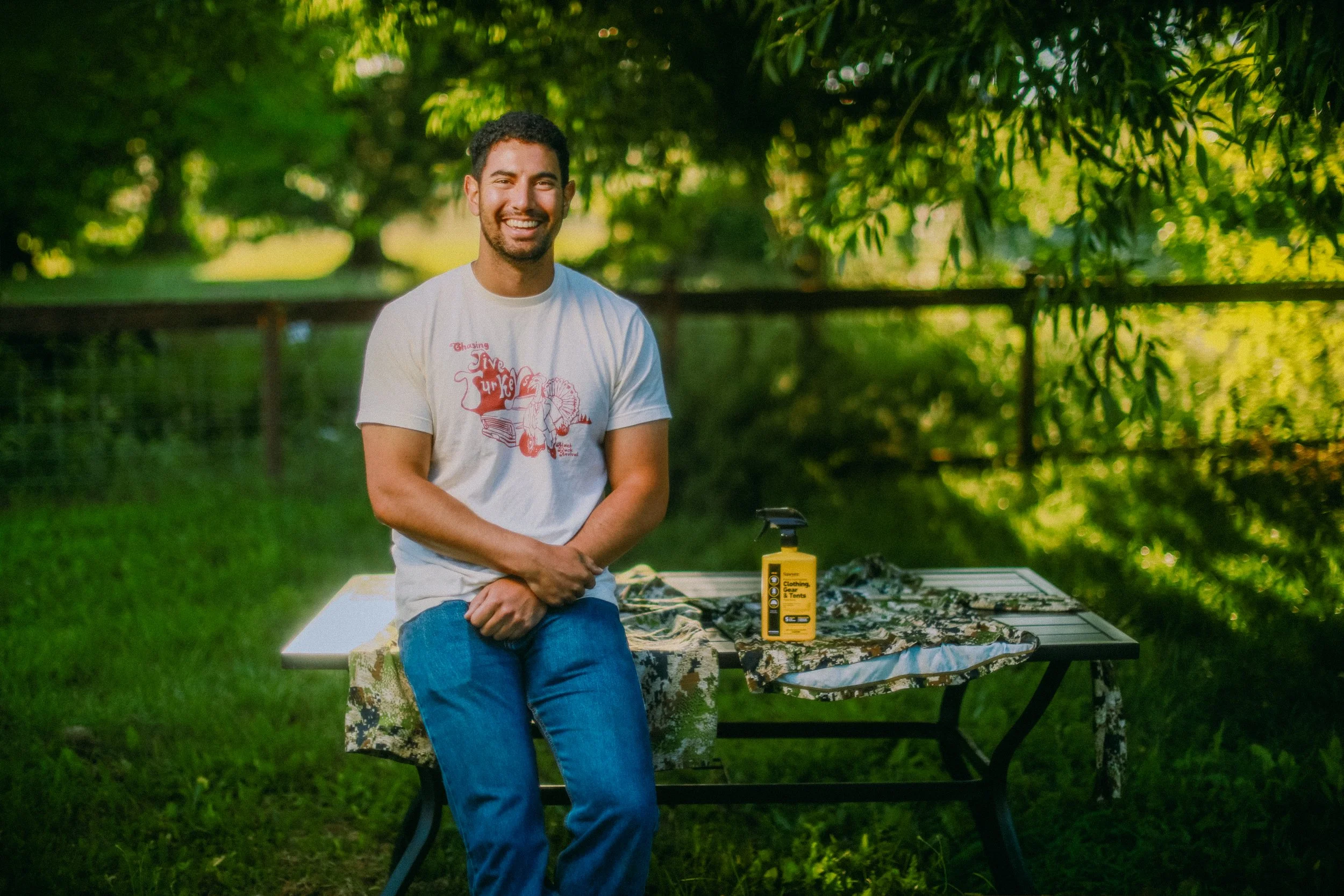
One of those people was Rue Mapp, founder of Outdoor Afro, who he took on her first turkey hunt. Afterward, she told him he’d ruined her: she couldn’t go outdoors anymore without scanning every trail for what she might track. It was the same feeling for Jimmy at eight years old on his first hunt, only now he was the one passing it down.
For HOC mentee Divya Anantharaman, founder of Gotham Taxidermy in Brooklyn, the pull was obvious the first time HOC showed up on her social media feed.
“I saw people who looked like me, people I thought could make me feel comfortable and who I wouldn’t be afraid to be around with weapons.”
That wasn’t always the case. She’d once taken a hunting and trapping class in the Bronx where she was the only woman, the only person of color, the only queer person in the room.
HOC paired her with mentor Jayne Henson, director of the LGBTQ hunting advocacy group Queers & Camo. “Having another woman mentor me was so meaningful,” Divya says. “It created a kind of safety and connection that’s hard to find in other spaces.”
Somewhere along the way, though, the job description changed. Jimmy stopped being the hunter connecting others in the field and became the Executive Director chasing federal grants and funding relationships from his desk. While his hard work paid off — growing HOC to fourteen chapters and hundreds of members across 47 states — the exhaustion of being seen as a cause rather than a person began to fray his edges.
He wasn’t the first HOC founder to feel it. When Jimmy told Thomas Tyner, a cofounder, how he’d started to struggle, Tyner didn’t hesitate to agree, having burned out much earlier: “Yeah, I was just tired of talking about race.”
At the SHOT Show in Las Vegas in 2025, Jimmy sported a Hunters of Color shirt when a man approached and asked, “Hunters of Color? What the fuck is that about?”
Jimmy gave his elevator speech. The man said he didn’t get it.
“I just told him, you don’t have to. But when people are always questioning the work you’re giving your life to, it goes from being a full-time job to a burnout job.”
Then the Trump Administration took office and compounded the pressure when it stood up the Department of Government Efficiency, or DOGE, in early 2025. HOC saw sixty percent of its federal funding slashed overnight, joining a lengthy list of non-profits suffering similar funding disruptions, particularly organizations with DEI-linked programs. For HOC, though, the $100,000 it lost wasn’t a rounding error, it was the whole floor.
“I walk up to the animal and place my hands on it. Then, I pray, ‘Thank you for the life you’ve given me. I will see you again when all that’s left of us are our bones.’ I believe the life they’re giving me is becoming part of my body and sustaining me.”

Jimmy’s sole focus became scouring funding for HOC to stay afloat and stave off layoffs.
“Every ounce of energy I had went into planning for other people and nothing for myself,” he admits. “I got warnings from other CEOs to prioritize myself, take the hour to go to the gym, but it was a lesson I had to learn for myself.”
He worked seven-days-a-week, rarely sleeping, while losing weight and battling depression. Jimmy fully unraveled after his engagement to his long-time partner ended. He stepped back from HOC in July 2025 and officially handed it off to the board the next month before deciding to go off grid.
During that time of self-reflection, he never regretted starting HOC but realized that he had lost himself along the way.
“I prayed real hard about everything that was happening in my life. I wasn’t being authentic to who I was. Running HOC felt like taking on this morally superior persona, and that’s not me. What I am good at is building community and making people feel welcome.”
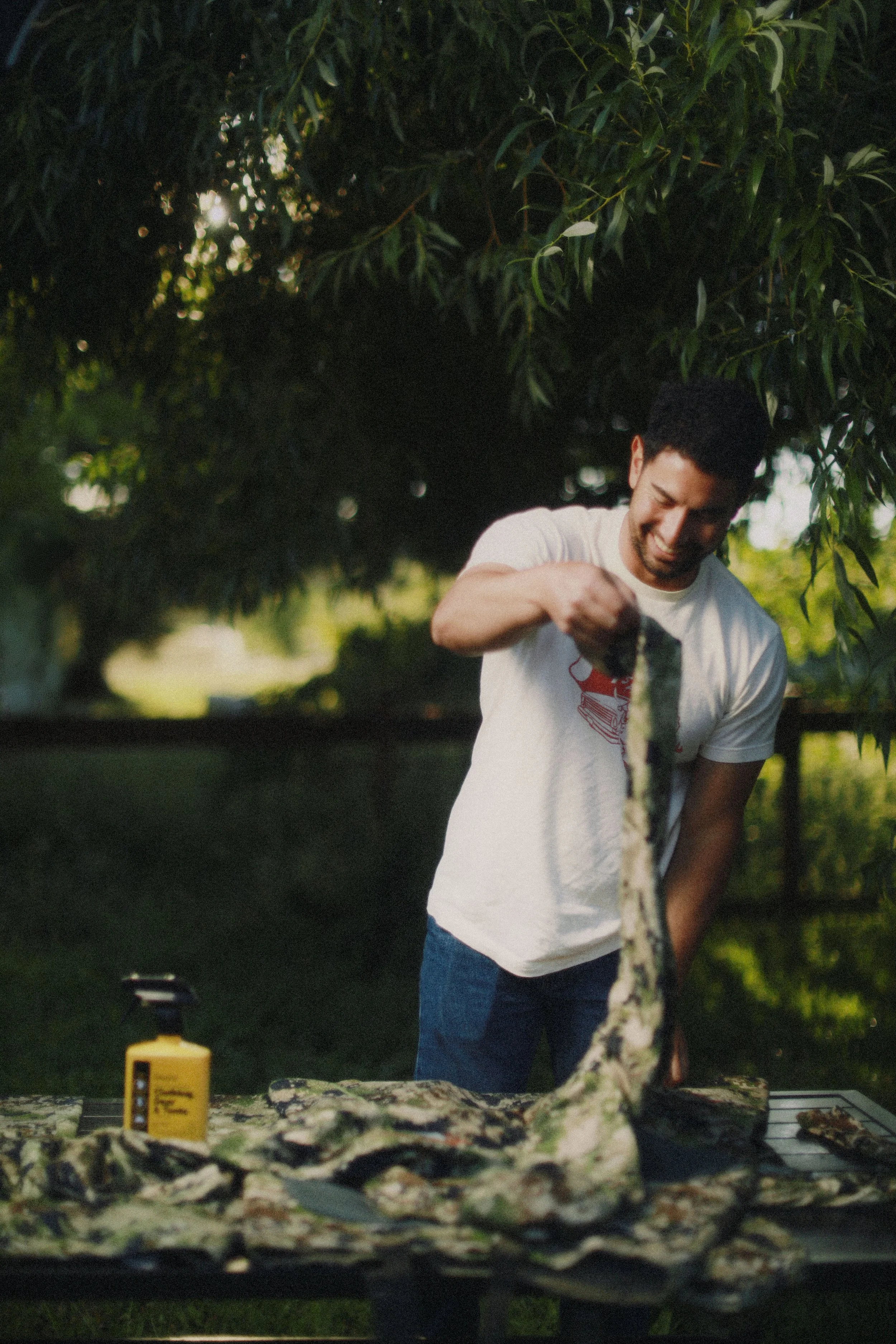
HOC continues without Jimmy, but it remains with him, too. At a climbing gym, he wore an HOC shirt, when two climbers, Tynisha and Josh, asked if he was involved in it.
“I’m a part of it,” Jimmy said to them.
When they later found out he was the founder, they asked why he hadn’t told them. But, for the first time in years, someone had met him before they knew what he’d built.
Tynisha and Josh checked in regularly and had him over for dinner during the darkest moments. When he finally left Oregon for good, Jimmy gifted them new bows and his chickens.
“There will be people like that I have in my life forever,” he says. “That was the true reward of HOC for me: the relationships. It wasn’t ever about the money or notoriety.”
He pauses.
“I set out on this mission to create community, and I did that for myself.”
Leaving HOC meant returning to the parts of life he’d set aside — an old job in construction project management waiting for him in Oregon, then a new one back home in Sonoma.
He pulls up a text from his girlfriend, asking about his first memory of the outdoors. He knows there were times before hunting — getting lost in the creek behind his house, fishing — but his mind always returns to one indelible place.
The past flickers. He’s eight again with his dad on his first hunt. He remembers the cold in his feet, the fog hanging over the pond, the low whistle of duck wings beating the air, the crack of a shotgun, and how the adrenaline of holding his first duck chased away every discomfort.
It wasn’t ever only about the hunting. Not that morning, and not the five years he spent trying to ignite that feeling in strangers. What he’d been chasing, and building, and almost lost, was the people who make it worth doing at all. Maybe that’s what he had to walk away from to see.
“I found my people,” he says. “And now I’m back with the ones who got me started in the first place. I just gotta get my dad and my brother-in-law back out there with me.”