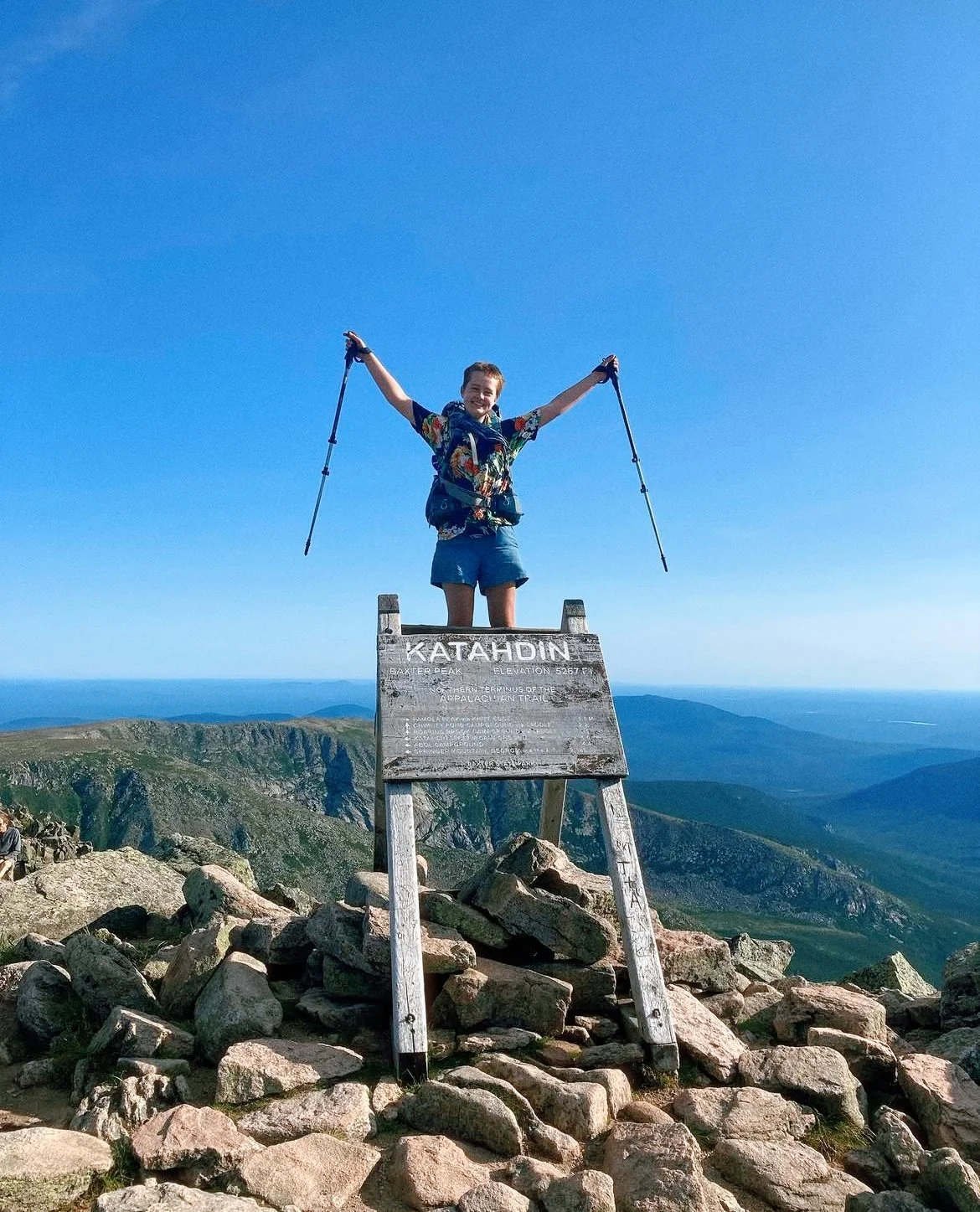
I thought transitioning and thru hiking would teach me how to rely on myself. On the Appalachian and Pacific Crest Trails, the kindness of strangers taught me how to trust others and showed me what I could offer by opening up about being trans.
Story by Carson Hopwood . Photos courtesy of Carson Hopwood
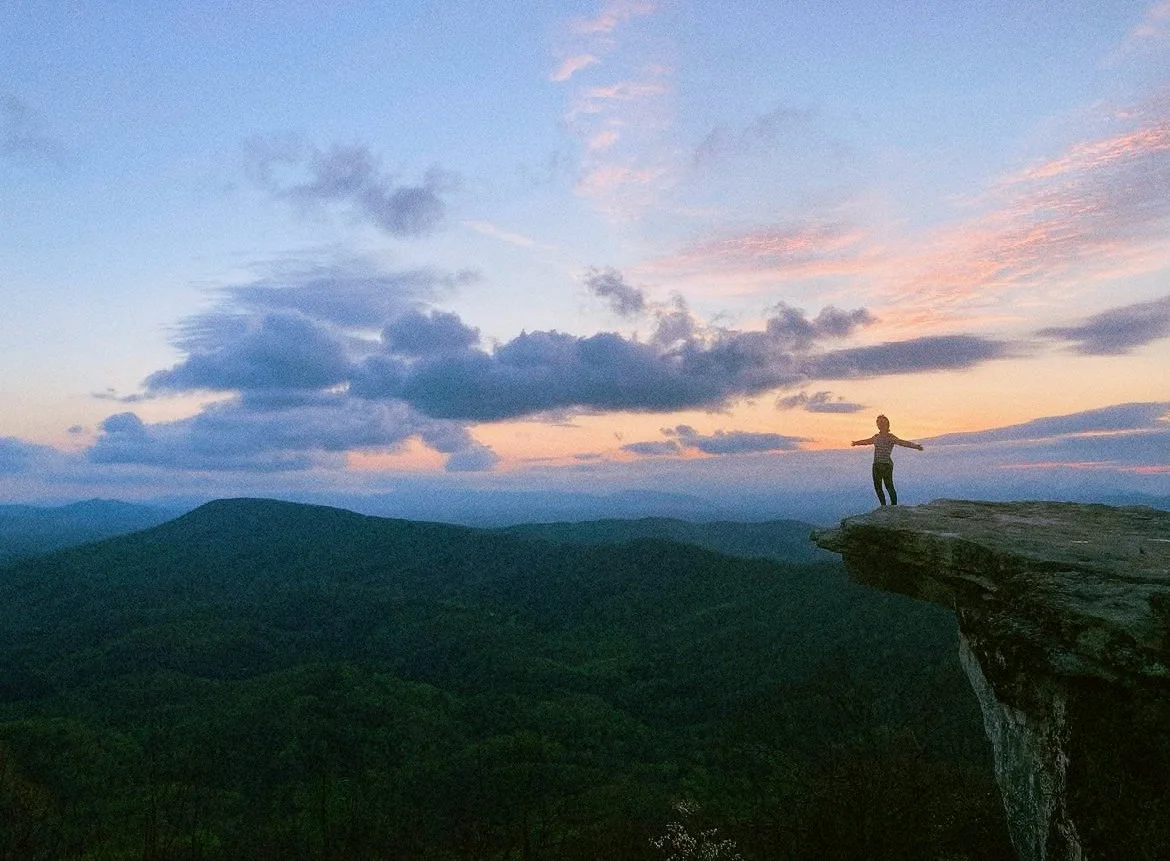
Before I’d done either, transitioning and thru hiking occupied the same place in my imagination: enormous, distant, and meant for other people. At fifteen, both felt more like impossible futures than actual plans. The stories I had been told about trans people were ones of lonely and complicated lives, and the process of navigating the world as a transgender person felt no less daunting than walking thousands of miles for the first time. Even so, both lingered in the back of my mind until I decided I would rather pursue my curiosity than die wondering. I thought I knew what to expect, but I have since joyfully realized that was an incredibly foolish thought. I believed these experiences would be exercises in self-reliance, proof that I could survive difficult things.
As I’ve grown through the journeys of transitioning, hiking the Appalachian Trail in 2021, and hiking the Pacific Crest Trail in 2025, I’ve realized that these endeavors have instead led me to reconsider what I thought I knew about community, connection, and generosity.
Growing up, I was an anxious person who did my best to keep myself—and my queerness and transness—guarded. I felt misunderstood at home, at school, and in general. With a relatively narrow scope of reference, it was easy to assume my future would resemble my past. I graduated high school early and set off to hike the Appalachian Trail when I was 17, and I was concerned about how fellow hikers would receive me. I didn’t yet understand how closely identity and perception would shape my experience on trail.
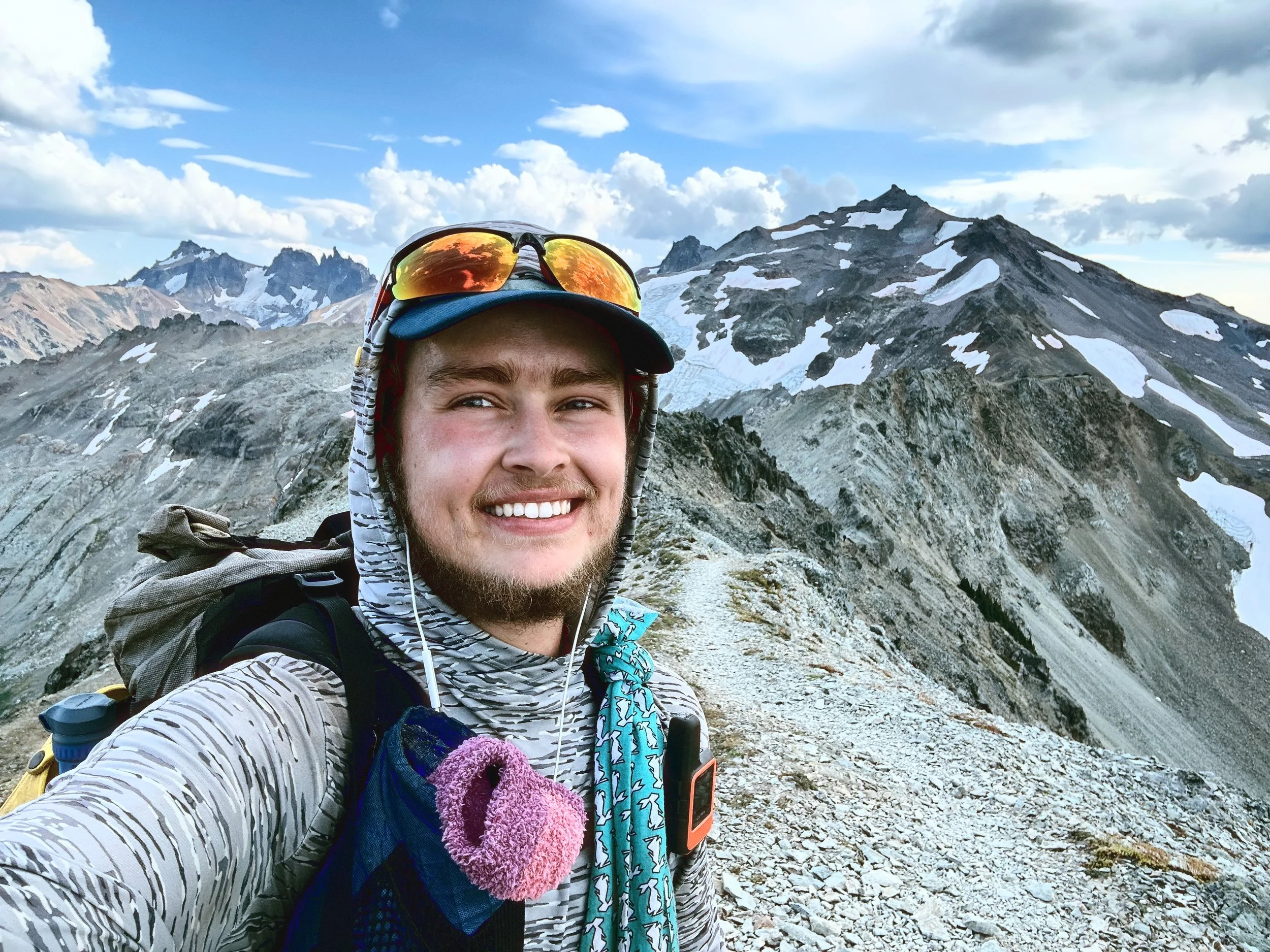
I decided to only tell someone I was trans if they explicitly asked me about it, but I wouldn’t bring it up otherwise. At the time, this was still a step forward from high school, when I had a couple of friends who knew I was trans, but was otherwise vigilant about keeping it private. While I remained cautious and guarded, I encountered people who treated me with an ease and goodwill that slowly began to challenge the way I understood others.
There’s a common saying within the hiking community that “the trail provides.” The phrase was something I had heard when researching the Appalachian Trail, but I didn’t fully understand until I experienced it. As I hiked, I experienced astounding moments of kindness which continued throughout the entirety of my time on the Appalachian and Pacific Crest Trails. Whether it was something as fancy and random as a free lobster dinner on a mountaintop in New Hampshire, as simple as a ride to town, or as specific as a friend having one extra earplug right after I lost one, I began to realize that it was never the trail that provided. It was always the people, often strangers, and there were few limits to the generosity they had to spare.
One night on the AT in Virginia, I was in camp eating dinner when I started complaining about my knee pain. A hiker I only met 20 minutes earlier immediately spoke up, asking if I wanted to take his knee brace. I declined, as I already had one. The next morning, I watched him hobble out of camp with his knee brace on, severely limping, and I couldn’t help but be surprised by the speed at which he had offered up something that he clearly needed to help out someone he would likely never see again.
When I finished the Pacific Crest Trail at the Canadian border last September, I had to turn around to walk the 30 miles back to Hart’s Pass to reach the road. Hart’s Pass is a dirt mountain road that’s 25 miles from the nearest small town. As I hiked back towards the pass to hitchhike to town, I told hikers heading to the border to “enjoy the end.”
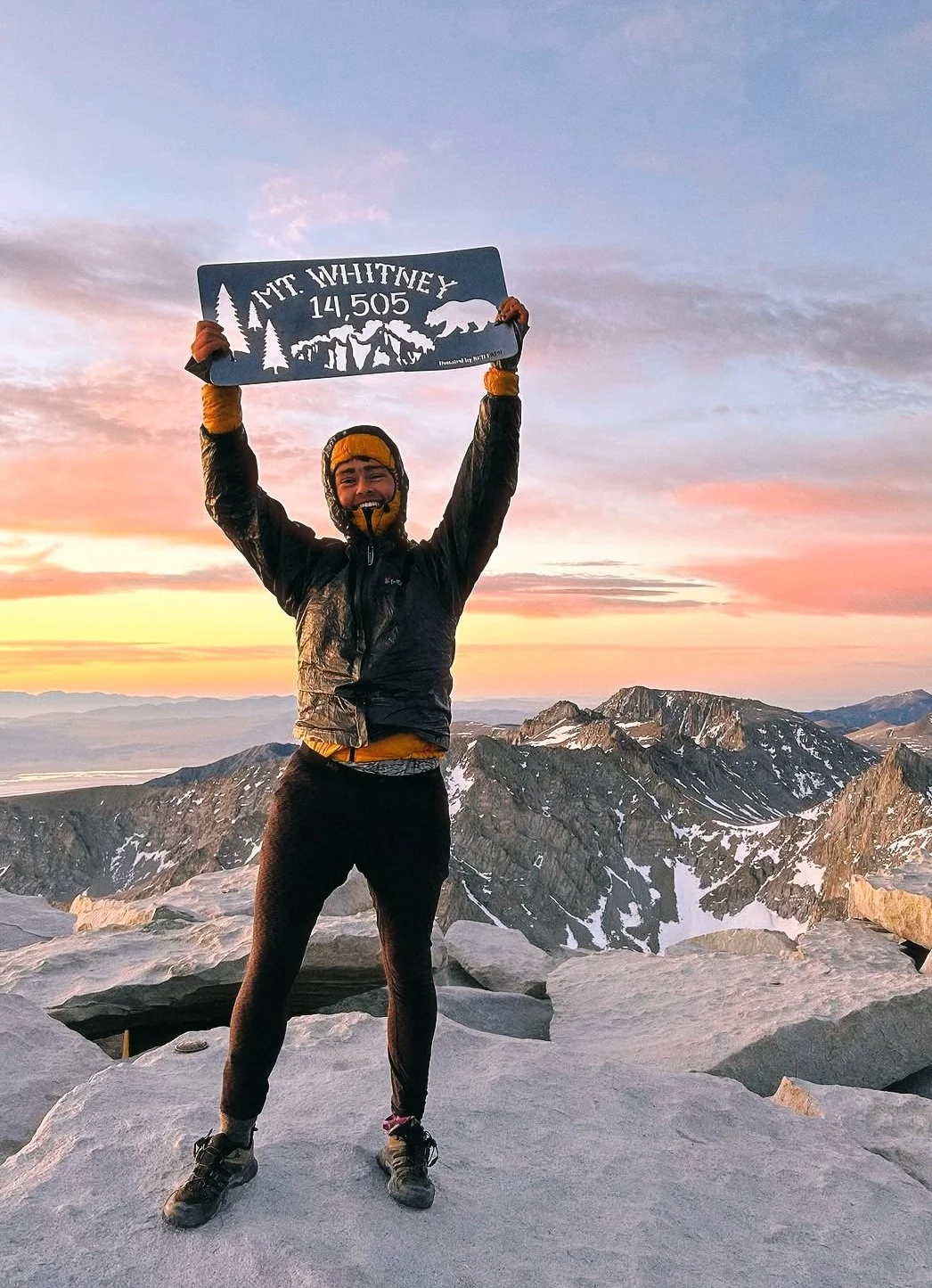
“Before I’d done either, transitioning and thru hiking occupied the same place in my imagination: enormous, distant, and meant for other people.”
carson hopwood
Eventually, someone responded with “enjoy the trail magic!” News of trail magic ahead was always exciting, but even more so on my last day on trail. As we talked, I learned that someone had brought three couches, two refrigerators, Starlink wifi, and two weeks’ worth of food for hikers. For the last fifteen miles to Hart’s Pass, half of my brain was convinced that this must be a sick joke that the northbound hikers were playing on those of us heading back.
And yet, I arrived at Hart’s Pass to find exactly what was described to me, along with a dog and a full oven, all at this remote dirt pass. I spent the last night of my journey sleeping on a couch in the woods after eating barbecue mac and cheese and garlic bread for dinner.
Growing up convinced I was the only one I could truly trust, it was a paradigm shift to receive such radical generosity from strangers on trails—both because I needed the help and just because they wanted to make someone’s day better.
After my first thru hike, I could more easily identify and appreciate kindness off trail, too, my experiences giving me a faith in humanity and a sense of gratitude that I didn’t have before.
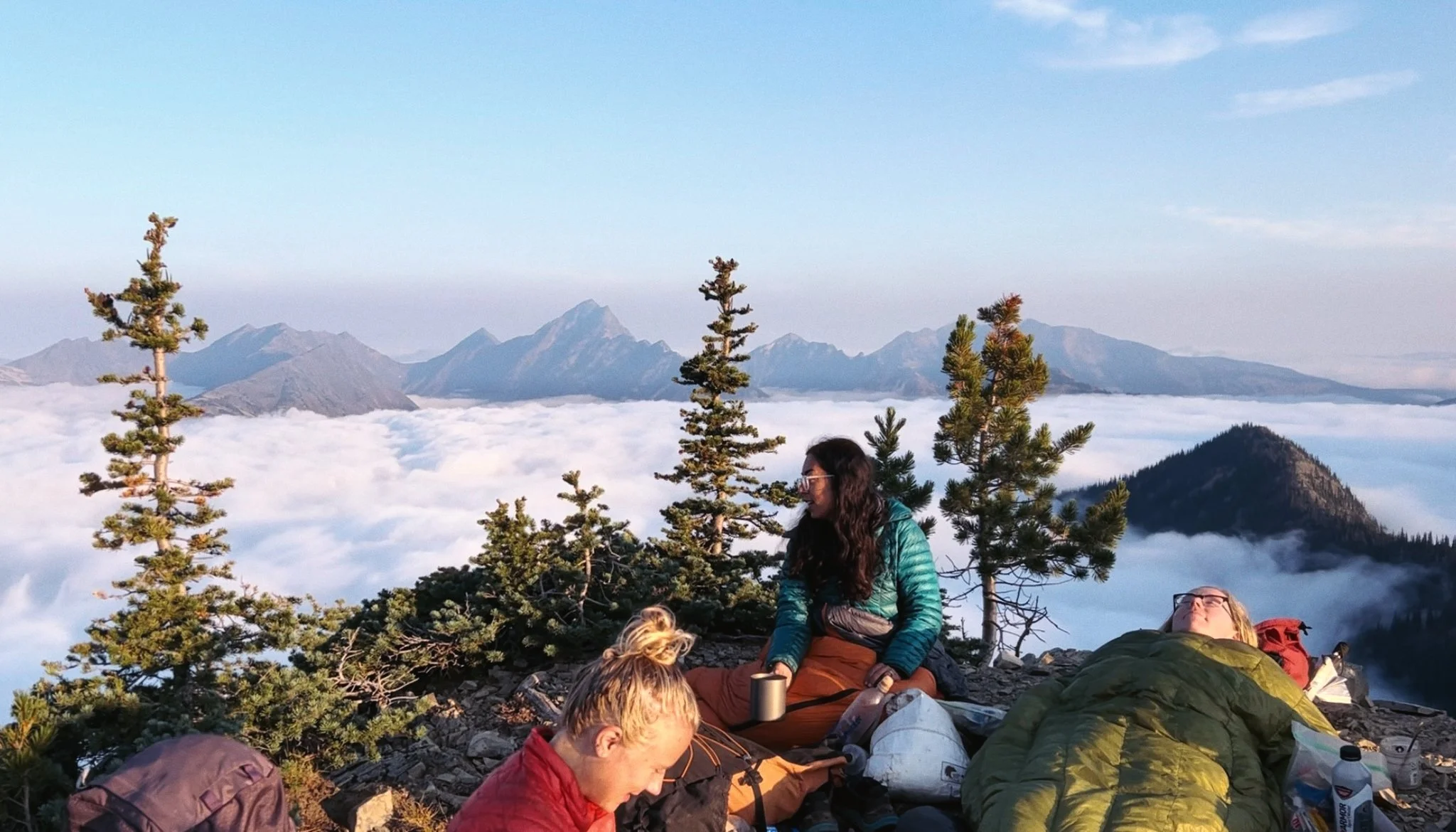
Shortly after I began hiking the Pacific Crest Trail last year, I found myself thinking about the relationship between generosity and openness. Two weeks in, I was crowded with at least eight other hikers in a woman named Kristin’s living room. As her son made paper airplanes with a hiker named Bluebird, I was impressed by how much trust Kristin (and many other people like her) must have towards hikers to allow strangers to sleep in their garages, living rooms, or backyards. Thru hikers show up dirty, smelly, tired, and most of us are a bit odd, though we’re relatively harmless.
That night at Kristin’s house made me realize that I was still not as open as I’d like to be. It was Saturday, which meant my weekly testosterone injection. While other hikers crowded the living room and occupied the bathrooms, I was trying to find a discreet, relatively clean place to administer my medication.
Four years earlier, on the Appalachian Trail, I hadn’t yet started hormone replacement therapy, and I was still adjusting to managing the extra logistics and supplies it required on trail. When everyone seemed occupied, I slipped out to the garage where I set up to sleep that night. I was in the middle of doing my injection (needle in my belly fat) when a hiker I’d met that day walked in. “Oh, are you diabetic?” Pippin asked. I paused and answered him but didn’t elaborate. “Nope,” I said. “I feel like that would be pretty hard to manage on trail with all of the junk food we eat.” He took my non-answer in stride and launched into a story about guiding backpacking trips with diabetic participants, and I was thankful for the diversion.
The interaction (and my instinctual deflection) made me think back to how guarded I was about my transness on the Appalachian Trail four years prior.
There was a moment in Vermont that made me question whether my caution might be taking opportunities from the people around me—to learn, to expand their understanding of the world and people around them, and to understand me. I was sitting in a restaurant with my friends Cool Enough and Silver Tongue, who I had been hiking with since Georgia, when a nonbinary hiker we met was brought up. While giving me a very obvious side-eye, Cool Enough said, “You know, I don’t mind if people use different pronouns, I just wish they’d tell me.” Staying true to the decision I had made before trail, I said nothing. I hadn’t been asked an explicit question, though it was clearly implied. It was something I regretted even while we were still sitting in that restaurant. Cool Enough was someone who, in my interpretation, may not have had a lot of knowledge of the queer or trans community, but he was clearly curious about and kind toward the people around him. There was no threat, and he was my friend, so not being vulnerable with him felt deeply unfair.
And there I was again with Pippin in Kristin’s garage, choosing to be guarded. It was a bit different this time, less intentional. On the PCT was the first time in my life that I generally “passed,” and most people read me as a guy, making it easy not to talk about. I knew I didn’t owe anyone openness about my trans identity, but I began to wonder whether sharing that part of myself could be a way of giving back some of the generosity I had received.
As I kept walking north, I made a concerted effort to be more vocal about my transness. Sometimes that meant trying to connect with the few other trans people I met on trail or answering curious questions. A few of these inquisitive conversations turned into unexpectedly vulnerable ones. Being able to provide a small amount of solace to some hikers who were thinking about transitioning and were vulnerable enough to share their fears with me felt like I was comforting a younger version of myself who had carried those same feelings.
“I knew I didn’t owe anyone openness about my trans identity, but I began to wonder whether sharing that part of myself could be a way of giving back some of the generosity I had received.”
carson hopwood
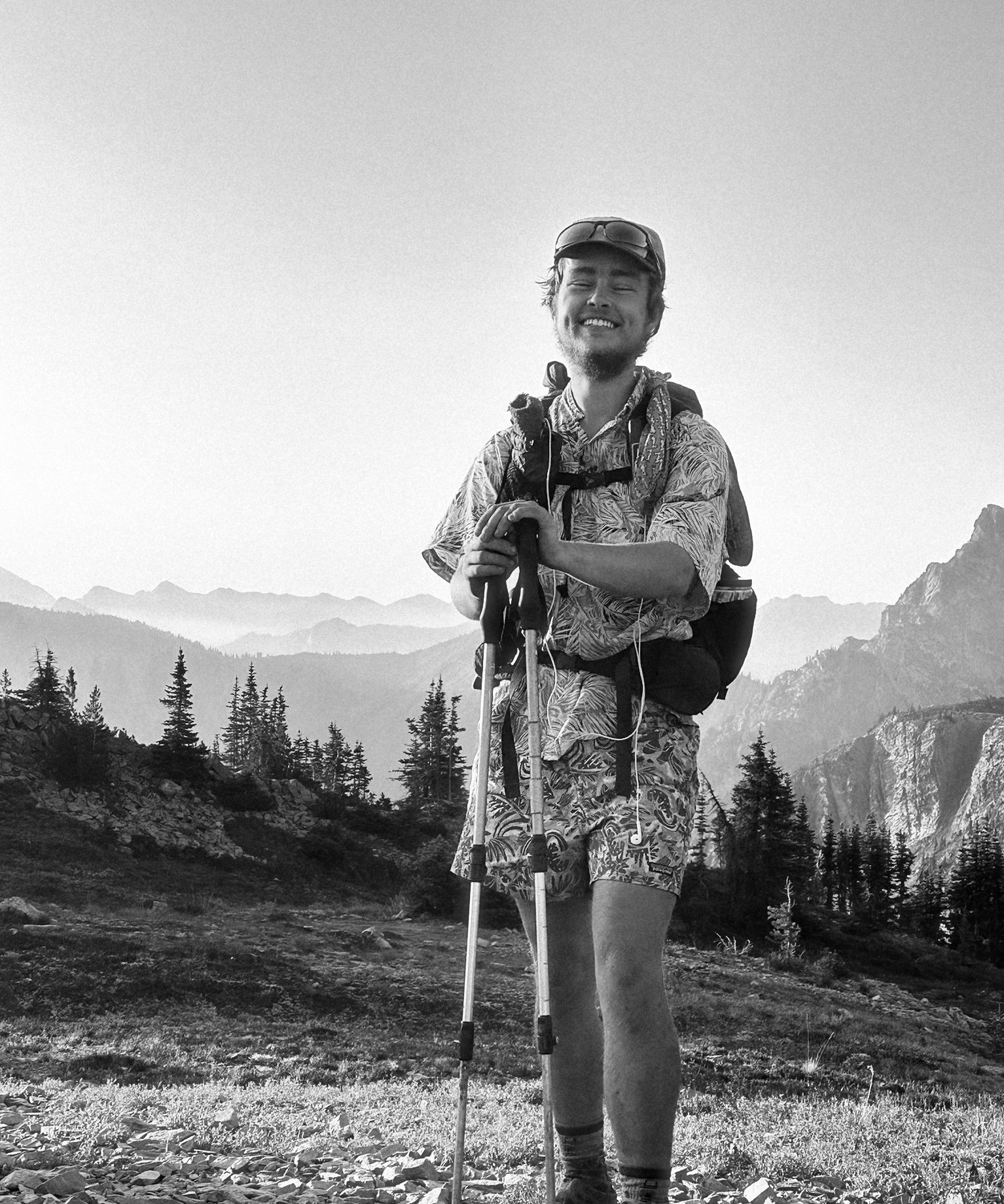
I stumbled into my first thru hike as a teenager with a dream and plenty of misconceptions about what I would find along the way. I expected an adventure and a test of self-reliance, but instead, I found something more meaningful in the people I met along the way.
I could write about my hikes indefinitely, but I’ll leave you with one last story.
On the AT in New York, I walked past a day hiker who was barefoot, which I found quite odd. As I passed, he stopped me and said, “Wait, can I ask you a question?” I assumed he would ask if I was a thru hiker or how far I was going. Instead, he asked, “Do you think most people are good or bad?” I was caught off guard by this barefoot stranger and his peculiar and existential question, and after asking a few clarifying questions and learning he had asked thousands of people over the past decade, I told him, “I want to answer good, but I’m really not sure. I don’t know.”
I wasn’t certain of my answer then, but I am now, and I feel deeply fortunate to have experienced some of the goodness that people choose to contribute to this world.