Loving My Baby, Losing Myself
I had a healthy baby and so much to be grateful for, but I was struggling more than I was enjoying motherhood. For a long time, guilt kept me from admitting how much I needed help—and from understanding that loving my daughter didn’t mean I had to be okay.
Story by Sarah Karner . Photography by Tommy Corey
There’s a show called Mammals that came out in 2022 starring English television actor James Corden. It opens with him and his wife arriving at a vacation home, beaming with joy. His wife is pregnant, and they are clearly excited to be new parents. However, minutes into the first episode, the woman begins bleeding and is rushed to the hospital, ultimately losing her baby.
My first child was about a week old when I laid her down for a nap in the bassinet beside my bed, climbed into bed myself, and started streaming the show, which had aired the day before she was born.
After being blindsided by a delayed diagnosis of pre-eclampsia, a couple of emergency hospitalizations for skyrocketing blood pressure, and a difficult induction at 37 weeks, I felt similarly shaken by the depiction of a miscarriage in these early scenes. The intensity of the scene led me to sob, which was nothing new for me just a week into motherhood—but my tears weren’t for the fictional couple dealing with such a devastating loss. Instead, I cried with relief that my baby was here—that she was fine. I even suddenly felt immensely grateful that she was
already here, that she was a week old, even though we’d expected her to arrive two weeks later. I knew I’d been gifted this extra time with her and, for the first time, I was thrilled about it.
This response—this relief and gratitude that welled up so rapidly—was shocking to me. It feels strange to admit, but it’s true. I vividly recall the shock of it, because it was the first time I think I actually felt happy that she was here—that she was my baby. Despite my best efforts to hold on to these feelings, these few moments of immense gratitude were isolated and occurred rarely during most of her infancy.
"Love at first sight" is one of the most persistent clichés surrounding new parenthood. It's depicted repeatedly in popular culture, and alternatives are rarely explored. I presumed this instant love was what I would experience, but my reality was quite different. I knew that I loved my newborn on some primal level, as evidenced by the acute anxiety I had about any harm befalling her, but I did not feel in love. I grappled with this poorly, oscillating between feeling guilty for what seemed like a complete lack of gratitude and daydreaming about what my life would look like had I chosen not to have a child at all.
Even as a new mother, I knew things like birth trauma and postpartum depression were not uncommon. Because so many other moms had had similar experiences, seeking help felt like an option rather than an urgent necessity. I clung to that fleeting feeling of gratitude for the next six months and beyond. I knew how lucky I was to have a relatively healthy body and a healthy baby, even as I struggled in ways that weren’t visible. The fact that I was struggling more than I was enjoying new motherhood was a feeling I primarily kept to myself.
I did cry a lot during this time. My partner knew I was not doing well, but neither of us had entered parenthood with any firm ideas about what to expect. I answered honestly when given a 10-question depression screening at each of my postpartum doctor visits and, though I was obviously sad, no one made an issue of it. I was functioning–I knew I was not at risk of harming myself or my baby, and so did my doctors. So, apparently, I was doing just fine. I figured, “this must just be what it’s like,” which only enhanced the hopelessness I felt. I so wish someone had suggested to me that even an outwardly manageable case of postpartum depression was not only worth acknowledging, but significant and treatable. Instead, repeated dismissals had me convinced I was just being dramatic.
A high-profile trial about a mother who experienced postpartum depression and psychosis, culminating in the death of her three young children, has recently had the internet reeling. I won’t comment on the details or outcome of this trial, but I believe it’s good for people—especially healthcare providers—across the nation to confront what might be at stake when mental health is not appropriately prioritized and treated. However, this mother’s symptoms were severe (psychosis–characterized by insomnia, disorientation, hallucinations, delusions, loss of inhibitions, or confusion–is separate from depression), and she cried loudly for help. I still worry deeply about the women who, like me, appear to be keeping everything together while privately struggling in a painfully dark place—and whose suffering may be overlooked.
Many life changes contributed to the difficulty of that period for me. For one, I had just moved away from my family and friends for the sake of my partner’s career. I was unemployed (even though I had mixed feelings about it). The isolation I was experiencing made me incredibly lonely.
“I so wish someone had suggested to me that even an outwardly manageable case of postpartum depression was not only worth acknowledging, but significant and treatable.”
My daughter was also small—too small—and I was immediately under pressure to feed her around the clock, interrupting our already limited nighttime sleep. She was born in November, and RSV (Respiratory Syncytial Virus) was so rampant in the area that public schools were closing to avoid widespread infection. When I mentioned to a lactation consultant that I was lonely and thinking of taking the baby to family story time in hopes of meeting other moms, she looked me dead in the eye and said, “Don’t go.” I knew then the baby was at risk being out and about, so I kept her home, venturing out only for necessary errands.
The foundation of these many layers of loneliness, however, was my inability to do what I had relied on for years to combat it: move my body long distances in the outdoors.
Before my pregnancy, you could frequently find me training for my next marathon or 50k, and I continued running 10-15 miles per week through most of my pregnancy, even completing a half marathon at nearly eight months pregnant.
I thru-hiked the Appalachian Trail in 2017 and flip-flopped around the Pacific Crest Trail in 2019, hitting 2,100 miles before I headed home.
There is a camaraderie in the running and hiking communities that I suspect differs from what might be considered “tamer” interest-driven groups. I’m certain that invaluable friendships are forged through book clubs, knitting clubs, and on cooking and crafting forums, but the forced vulnerability you experience spending days on end with other runners and backpackers is bolstered by shared grit, determination, and limited access to plumbing.
Connecting with others on trails and in running clubs had always felt natural to me. Running was a way to be outside, stay fit, and find camaraderie, but it was also one of the ways I had long cared for my mental health. In the postpartum period, though, my body needed to heal from delivery, and I was always up late feeding my baby, struggling to catch up on the sleep I so desperately needed. Neither was conducive to returning to the hobbies I’d relied on so heavily just months before.
I knew I had signed up for motherhood, and I tried hard not to feel sorry for myself. What I hadn’t anticipated was just how much of my confidence, identity, and self-worth were tied to being active outdoors—and how devastating it would be to be separated from those activities and the people they connected me with.
It’s not lost on me that all of these hardships are minuscule compared to parenting a child with pressing medical needs, unexpected pregnancy loss, addiction, chronic illness, terminal illness, etc. I think it’s why I denied the weight even as I drowned beneath it. It wasn’t just the struggle itself that hurt, but the incredible guilt and shame I felt for struggling when, from the outside, I had a rich and wonderful life.
I treaded water through most of her first year, looking forward to things getting easier. They did, but not all at once—and not quickly. I remember thinking when she turned six months old, “OK, I’m going to make it.” Then, when she was about a year old, I laughed at myself, realizing just how much I had still been struggling six months earlier.
By the time she was 18 months old, I was actually feeling better. I made it through postpartum without intervention and became pregnant with my second. By then, anxiety about a difficult delivery and surviving postpartum again drove me to finally seek therapy.
In my sessions, I came to terms with the fact that I had experienced birth trauma and some rather severe (and classically presenting) postpartum depression. I accepted that there have been times when the challenges of parenting have outweighed the joy. Acknowledging those struggles does not make me a bad parent, and recognizing them has been invaluable.
“Now, with two children and one on the way, I still find time in nature to feel like myself. “
I wanted postpartum to be easier the second time around, so I continued therapy and started taking an SSRI. As a result, the experience was much more feasible for me. Life with a newborn is never easy, but I wasn’t drowning the second time around. I knew things were going to get easier as my hormones regulated, as the baby started to sleep more, and as I worked to let go of some of the things I knew I would miss out on. I finally settled into all of the joys of having beautiful, funny, loving little kids in my life every day.
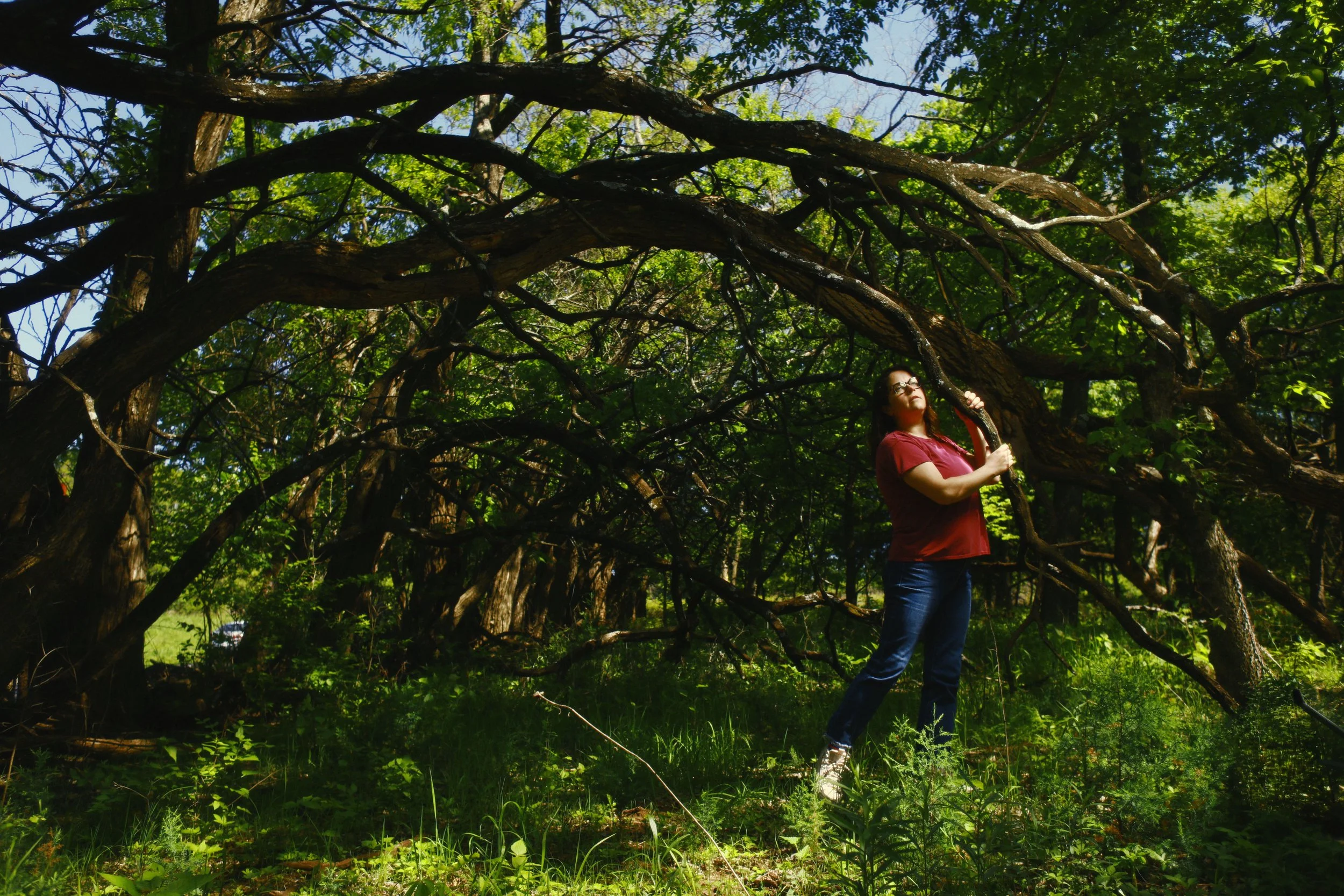
Now, with two children and one on the way, I still find time in nature to feel like myself. When I can carve out some moments alone, I often spend them taking long walks while listening to audiobooks—reminiscent of my days thru-hiking, but now with a flushing toilet around the corner.
Those remaining miles on the PCT are still looming like unfinished homework, but I know when my kids are a little older and need me a little less, I’ll make the time to enjoy some sweet solitude and finish that trail. I’m not running much at all these days (third pregnancy hits a little different than the first), but I’ll get back to that too, once again, when my body is ready.
I recently rewatched Mammals and the scene depicting the couple’s grim experience with miscarriage, and those same feelings of relief were triggered again. This time, it was not as jarring. The gratitude is no longer a shock; instead, it is warm and familiar. While I feel deep loss over the absence of peace and happiness during my first child’s infancy, with help, I found my footing again the second time around, and I look forward to making the most of a third.