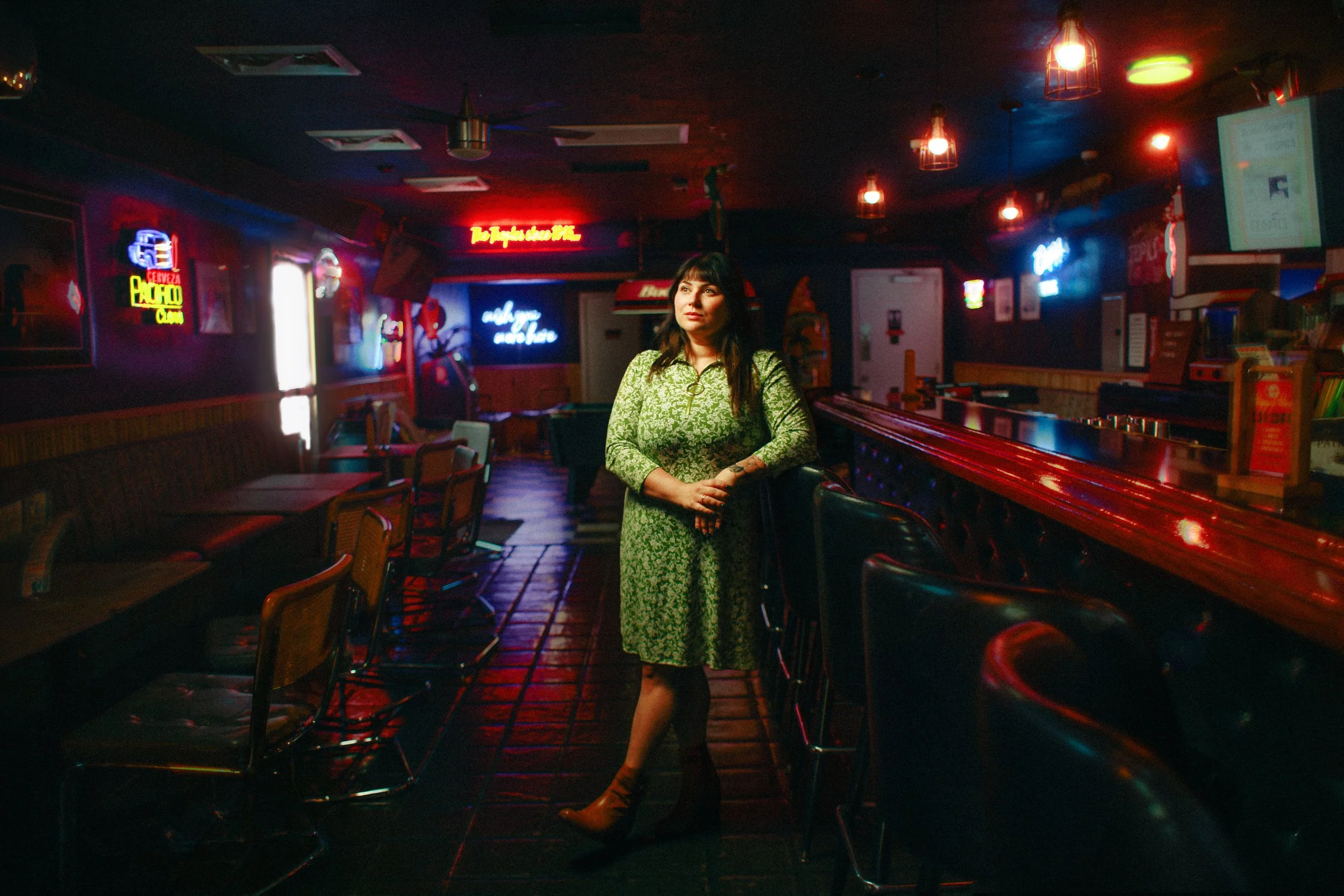
Inside The Tropics, Redding’s Oldest Bar—Where Its History Has Been Rewritten as a Space Where Everyone Belongs
Born from America’s postwar hunger for escapism, The Tropics has long been a dimly lit neighborhood bar to disappear into. Under owner Thea Lammers, it’s becoming something else entirely: a vibrant place where everyone can be found.
Story by Tommy Corey
Photography by Tommy Corey
After a 13-year national ban on the sale and consumption of alcohol, Prohibition came to an end in the United States. On Dec. 3, 1933—the same day the 21st Amendment was ratified—American businessman and bootlegger Donn Beach opened what is widely considered the world’s first tiki bar, Don the Beachcomber, in Hollywood, California.
Inspired by his travels through the Caribbean and South Pacific, Beach created a romanticized vision of these far-off places. Adorned with sculptures, replicas, and cultural artifacts collected during his adventures, Don the Beachcomber immersed guests in a fantasy of lush tropical plants, bamboo-lined walls and ceilings, and dim, amber lighting, sometimes emanating from a pufferfish.
Today, some critics argue that tiki bars are a form of cultural appropriation because they incorporate elements from various Polynesian, Southeast Asian, and Pacific cultures and traditions. While those critiques remain valid within a broader historical context, tiki’s post–World War II rise also reflects a deeper cultural longing in the United States at that time.
For many Americans–particularly servicemen returning from the Pacific–the bars offered more than just boozy rum cocktails. They provided nostalgia for the islands they had known during the war and a fantastical portal into escape—an early version of the same impulse that now pulls us into phones, Netflix, and algorithmically curated worlds of distraction.
When World War II ended on Sept. 2, 1945, tiki culture began to sweep across the United States. That same year The Tropics opened in Redding, offering locals their own slice of South Seas fantasy.
Today, Tropics owner Thea Lammers prides herself on keeping the postwar daydream alive for Redding locals.
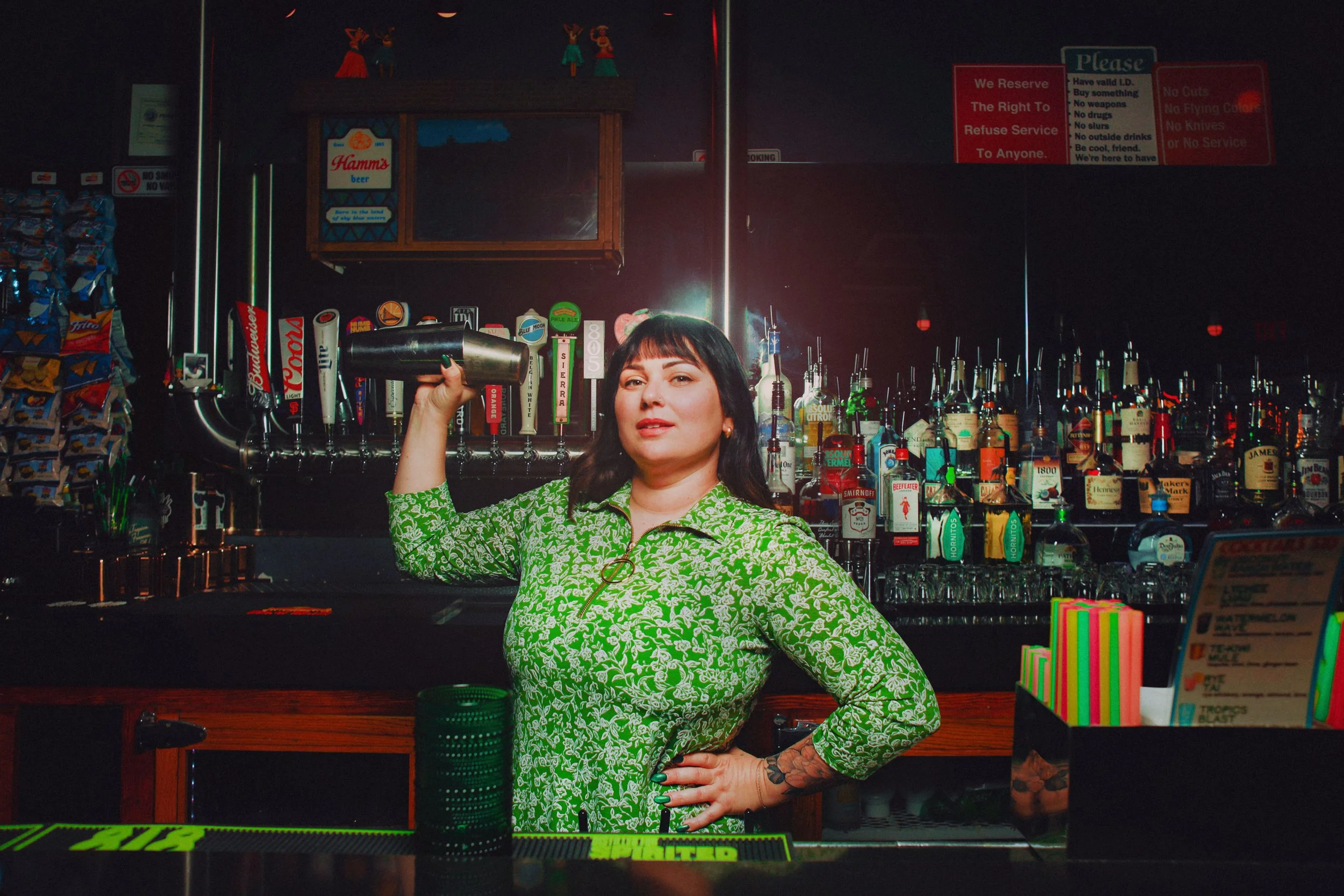
Originally from Martinez in California’s East Bay, Lammers, 36, spent summers in Redding and throughout Shasta County with her grandparents. At 21, she moved to New York City to pursue a career in musical theater and Broadway acting. To support herself while pursuing that dream, she bartended in piano bars, where she fell in love with the old-world charm of live performance.
“There was a piano going all the time. A pianist playing, singing pop, rock, show tunes. We would sing from behind the bar and we’d get up and do sets. To me, those performances, entertainment, bartending, and being in bars has always been one vision for me,” she says.
With the onset of the COVID-19 pandemic in March 2020, Lammers’ longtime aspirations were disrupted. Her bartending career, auditions, and even a show she had been cast in all came to a sudden halt.
In 2023, Lammers left New York and permanently relocated to Redding to be with her family, where she purchased The Tropics—Redding’s oldest bar—and began transforming it into a space where she could channel her love of performance, hospitality, and community.
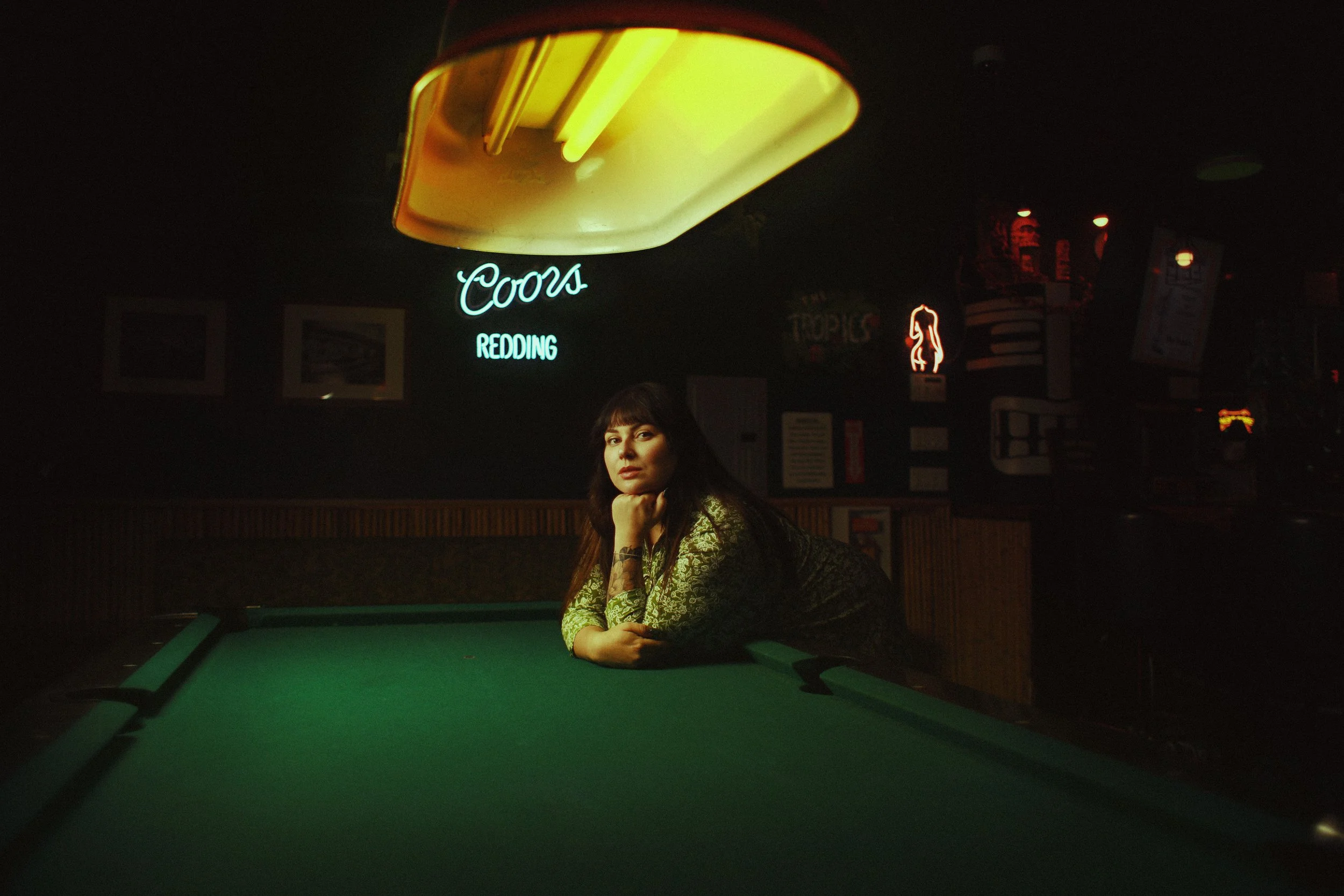
Over its 80-year history, the Newmans family operated the Tropics for nearly 50 years before selling in 2018. Lammers, who owned the bar since 2023, has been intentional in preserving the bar’s postwar charm and dimly lit atmosphere, including a panoramic illuminated Hamm’s sign dating to the 1960s, one of the bar’s oldest surviving pieces of memorabilia.
“People come here after years of not being here, and they come back in and they’re so excited it’s still here–and pleased at how clean it is,” she jokes. “This is a neighborhood dive bar, and it needs to be. We have new furniture, but it’s old furniture that we got from somewhere else—because everything here should feel lived in and molded by the people that have come through it for 80 years.”
While she’s added her own artistic flair to the bar’s design, including a blue neon sign in the back corner that reads “wish you were here,” Lammers has contributed something much more meaningful and unexpected to the bar's identity: a place where everyone feels welcome.
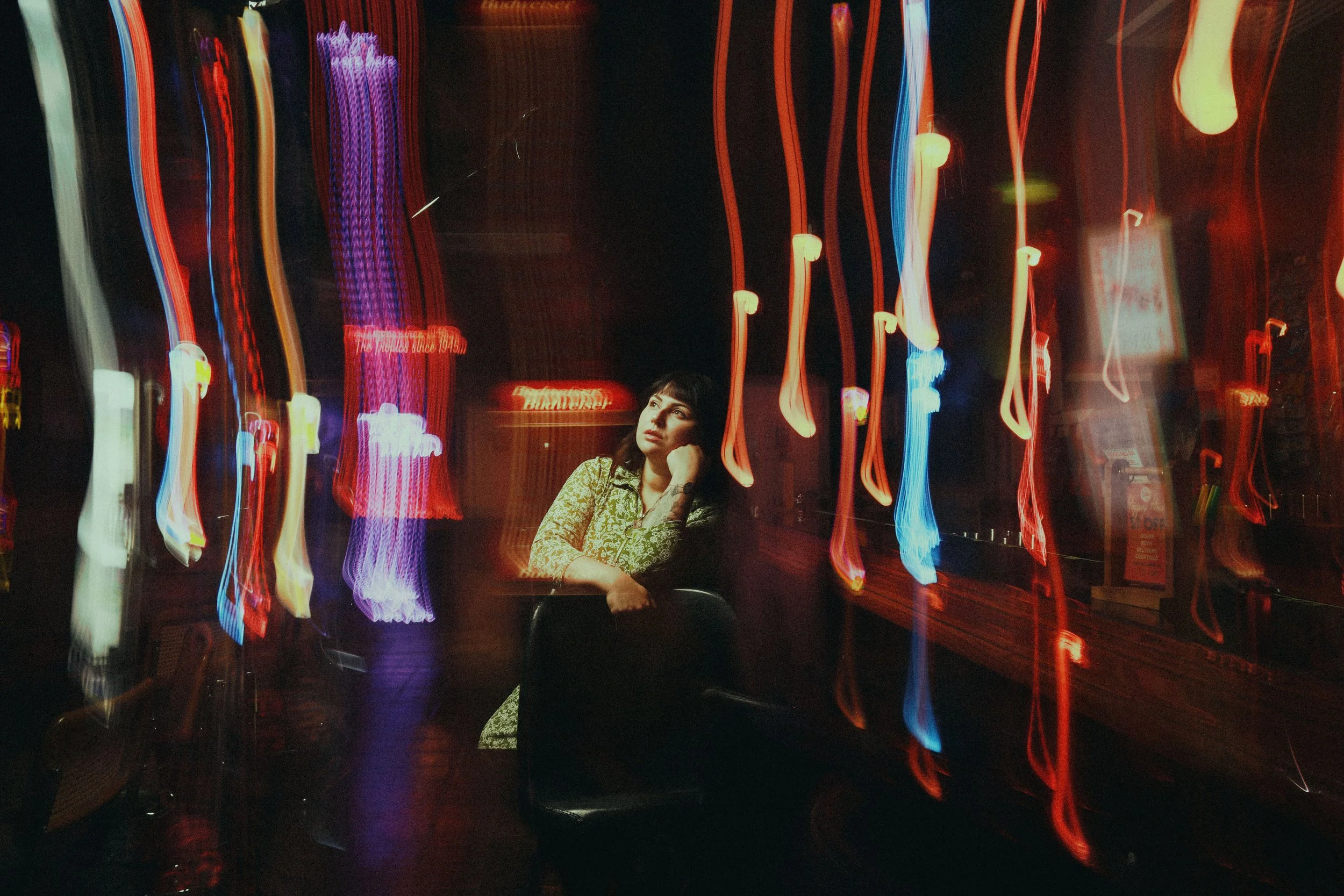
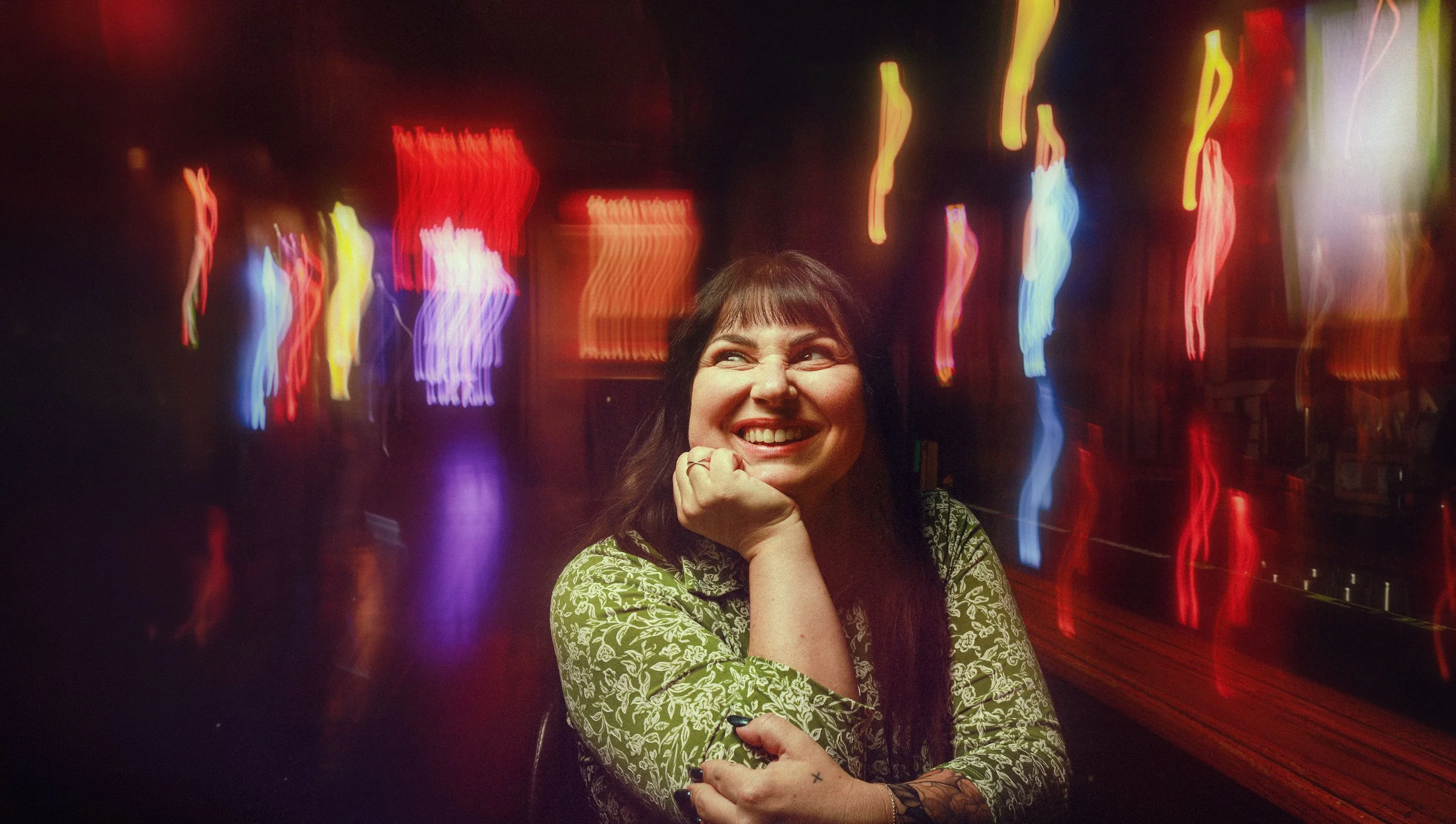
“This is a neighborhood dive bar, and it needs to be. We have new furniture, but it’s old furniture that we got from somewhere else– because everything here should feel lived in and molded by the people that have come through it for 80 years.”
Through our nearly two-hour long photo shoot and interview, I saw her commitment to preserving The Tropics’ historical ambiance. What struck me most, however, was the profound cultural transformation it has undergone, thanks to Lammers.
From 1995 to 2022, Club 501, Redding's only gay bar, was considered one of the few LGBTQ+ bars between Sacramento and Portland. Today, more bars across the Pacific Northwest are welcoming a broader range of patrons– whether through queer-themed events, drag brunches, or simply by displaying a rainbow sticker in the window that reads, “Everyone is welcome here.”
For Lammers, transforming The Tropics into a space where everyone feels welcome was met with some initial pushback. Since its reinvention, however, the changes have been largely embraced by the Redding community.
“We started being loud about who we wanted to see here, and that was people of color, women, and queer people in this community. We said ‘Hey, we want you to come see us.’
Today, The Tropics hosts events like queer and musical theater-themed karaoke events, trivia, and the official after-party for Redding Pride. And while The Tropics isn’t technically a gay bar, Lammers labels it as “A Bar for Everyone,” a phrase printed in bold on the back of the bar’s T-shirts.
“Everyone asks me, ‘Why don’t you just make it a gay bar?’ Because we’re here to fulfill a different need. My passion is bringing all these people together to share their life experience and to become friends with one another,” she says.

That philosophy extends beyond identity and into political affiliations, an area she believes should not prevent people from interacting or building relationships.
“I have my own political beliefs, but if somebody comes in with other ones, I’m glad they’re here because I want to get to know them, and I want them to get to know me. Community isn’t everyone agreeing–community is making space for one another.”
Lammers’ insistence that “everyone belongs here” has transformed the bar’s modest 1,800 square feet into a gathering place whose reach extends far beyond its walls–a space where even those who don’t imbibe can still enjoy a good time.
Since 2021, the global alcohol industry has seen an $830 billion decrease, with Gen Z (people born from 1997 to 2012) leading a more liquor-free lifestyle. Statistically, three in five Gen Z are replacing wine, beer, and cocktails with non-alcoholic beers and cocktails or CBD-infused drinks. While the bar has always been a sole drinking establishment, Lammers welcomes those who are sober and sober-curious with open arms.
“Younger people are not as interested in alcohol, but they are interested in having an experience,” she says. “I’m still learning how we can stay open and drink less. Which is a wild thing to say as a bar owner.”
For Lammers, becoming a mindful-drinking, queer-friendly and politically inclusive space isn’t superseding what has been, but rather revealing what a community can look like when people share interests beyond their differences. That vision is also deeply personal for her and has illuminated her own sense of belonging in the Redding community.
“This place has given me a huge sense of belonging and I think purpose. Our staff here, our patrons, our regulars–they are so supportive and build me up. I feel like this bar, this community, is my ministry,” she states, her hand hovering over her heart.
During our conversation, I asked, “What do you find many of your patrons are looking for when they come to The Tropics?” She responds, “Belonging and escapism.”
“Community isn’t everyone agreeing–community is making space for one another.”
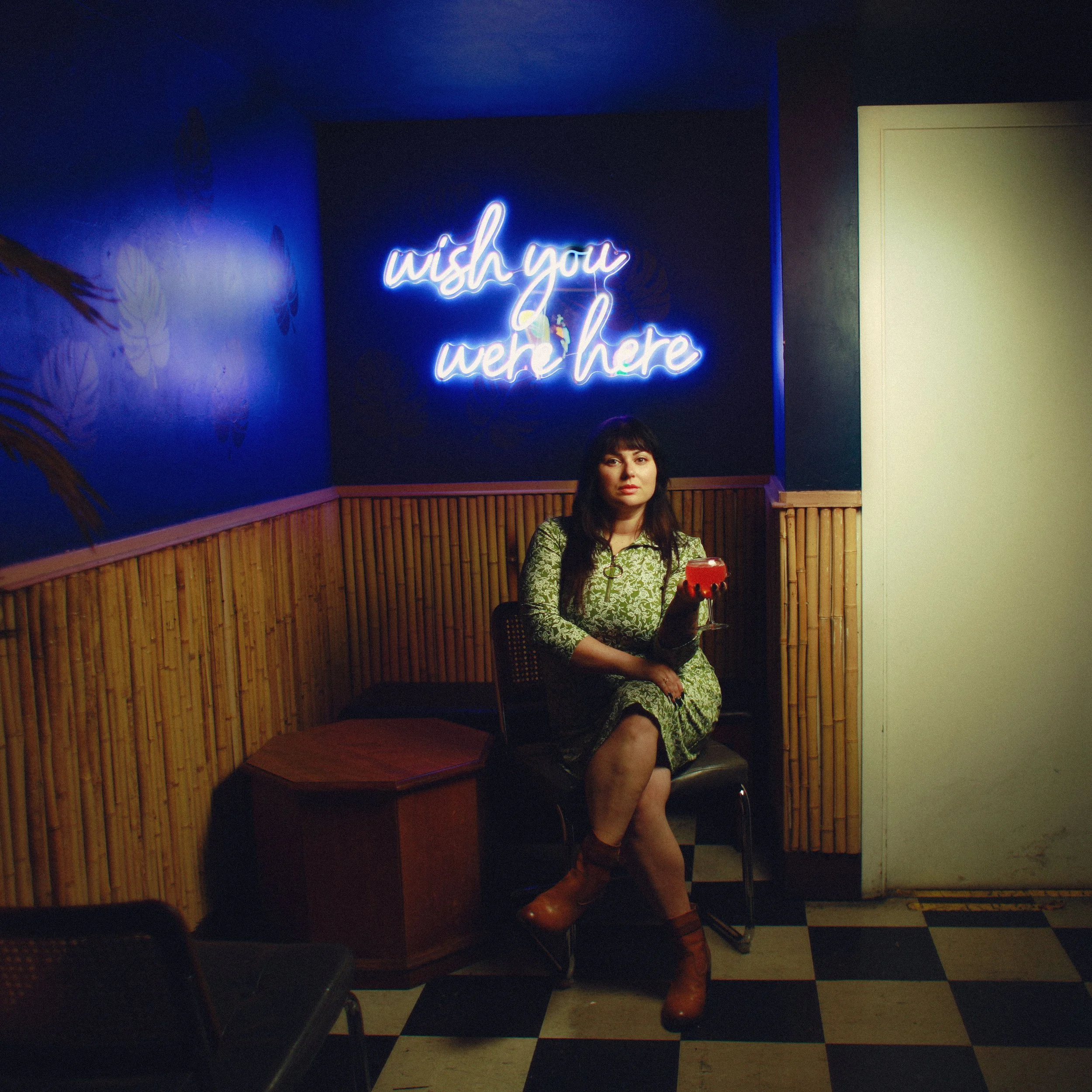
The Tropics is a space built around these two core instincts. Lammers hopes that the bar serves as a neighborhood destination where people can feel seen, welcomed and “let their freak flag fly,” if they wish–whether they stay for hours or just pop in for a non-alcoholic beer or a hot dog, she wants it to be a place where the outside world can be temporarily forgotten.
During my visit to The Tropics, I felt that sense of escape and comfort– whether it was the dim lights, the nostalgic pull of my twenties or Lammers’ warm, welcoming presence that seemed to soften the space.
As we wrapped up our interview, I couldn’t help but think of all the people who had lined the bar in the past 80 years, most of them strangers, perhaps even my own parents in their prime. One thing I know is true: it’s comforting to know that the same escape from the outside world people sought 80 years ago is the one we continue to chase today. For Lammers, that continuity is a legacy she is proud to carry forward.
“We’re a bar that has been shaped by Redding for 80 years–that was the spirit in which it was started. And I think that spirit still lives on today.”
In the end, our human instinct to connect with one another raises a quieter question: why, 80 years later, do we still retreat to these small, dim corners? Are we drawn only to escape, or is it easier, at times, to be seen in the dark?