When Nate Knudsen couldn’t find the kind of mountain bike trails he wanted to ride around Redding, he built his own. What started as a little unauthorized landscaping led him to start the Redding Trail Alliance, a nonprofit that builds and maintains trails with the help of local volunteers.
Story by Brad Holzwart
Photography by Tommy Corey
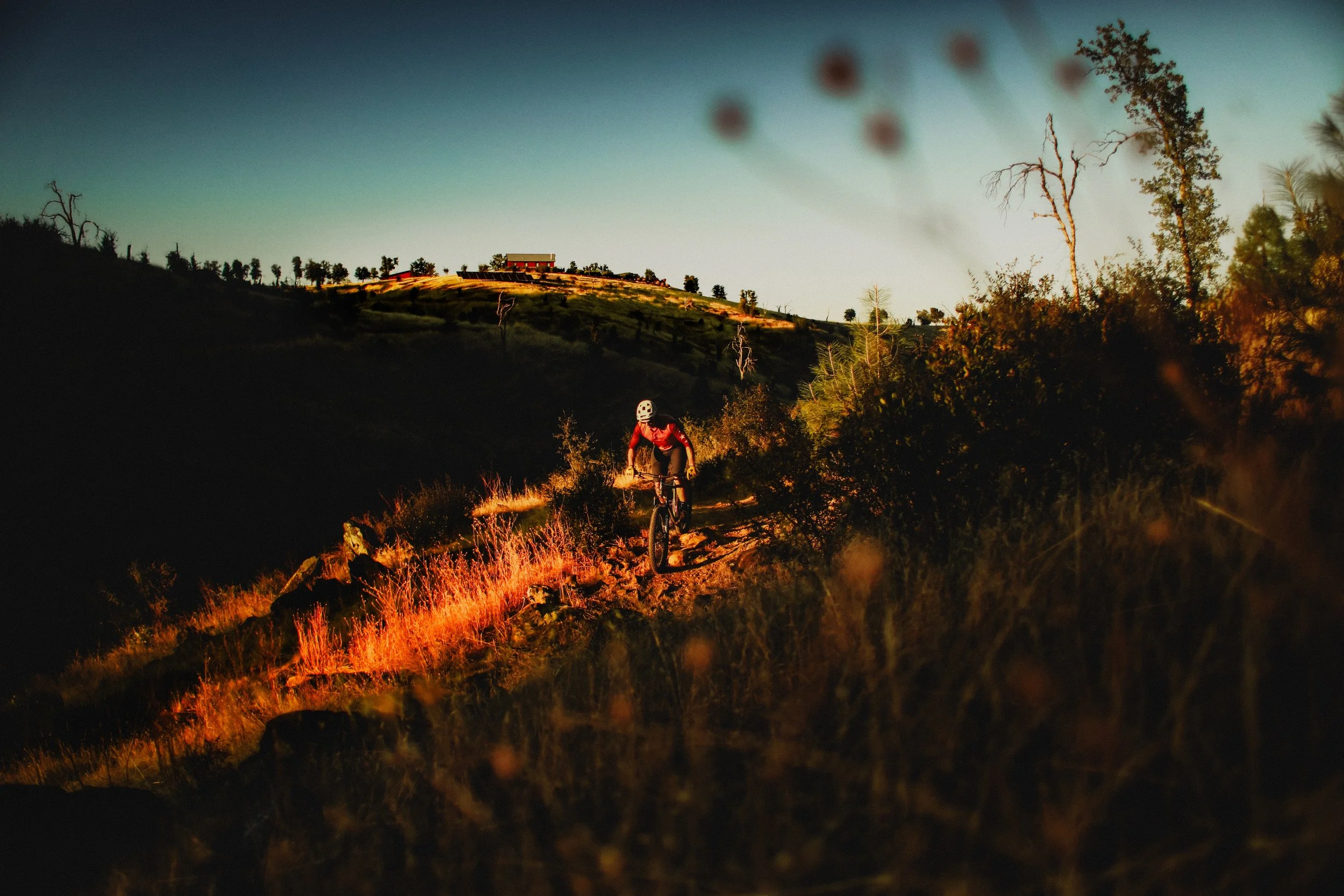
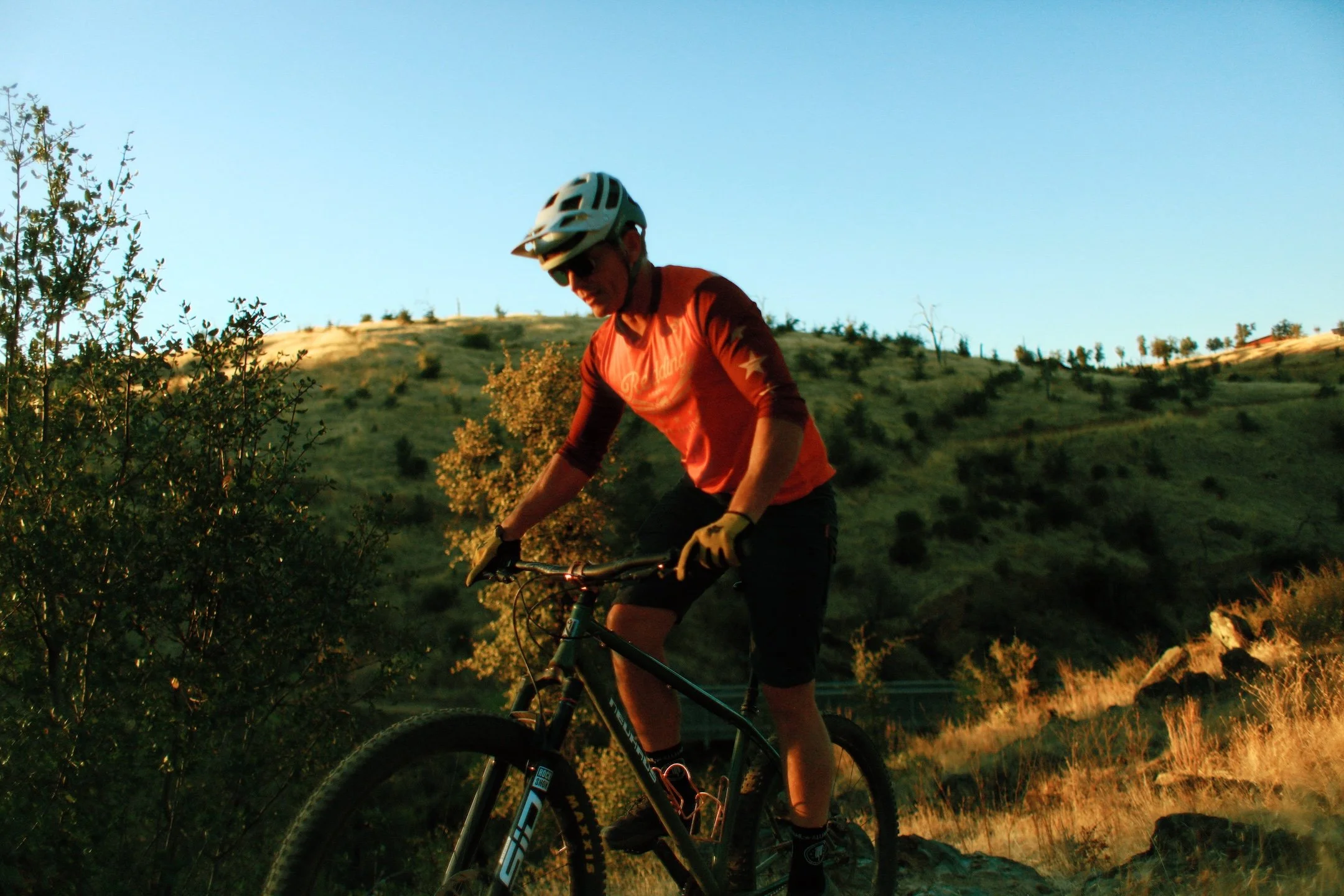
Nate Knudsen, founder of the Redding Trail Alliance, rides a stretch of singletrack on Salt Creeks Heights Trail in Redding.
Nate Knudsen loves getting a brain massage. All it takes is ripping down a flowy mountain bike trail, like Sweepstakes — a trail he helped build that carves through old-growth forest an hour west of Redding, California.
“When you’re riding singletrack, your mind is 100 percent focused on what you’re doing. It’s like somebody going into your brain and giving it this nice massage,” he says, borrowing the phrase from Glen Jacobs, an Australian trail builder.
As founder of the Redding Trail Alliance, a nonprofit that creates and maintains trails across the region, Nate has spent a decade building that feeling into the hills around Redding for others to discover.
But Nate was playing in the dirt long before he ever climbed onto a mountain bike.
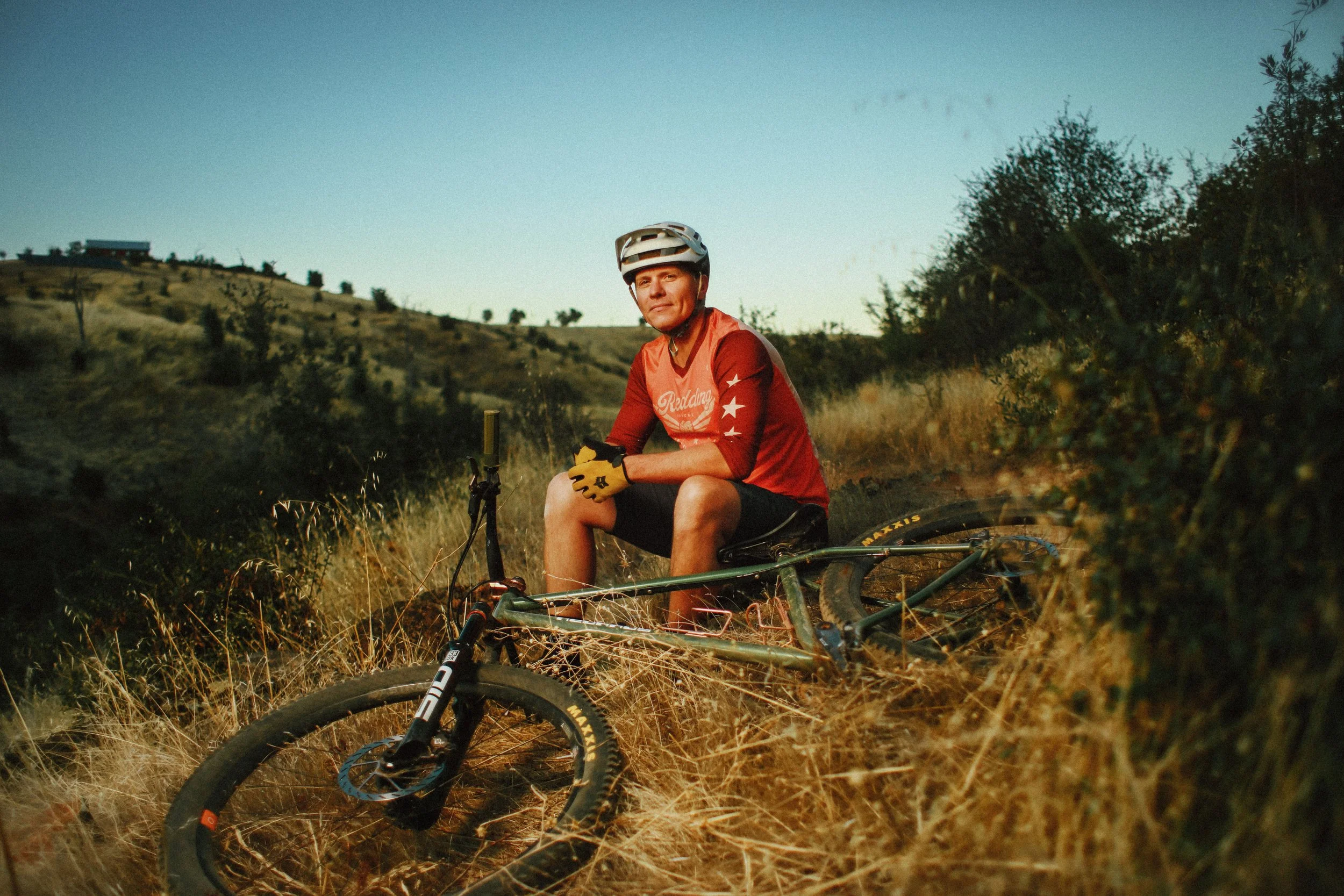
Nate grew up on 20 acres in Round Mountain, 30 miles east of Redding. His family had an outhouse and no electricity until he was five. He and his brother were built-in best friends, tromping through the woods, constructing forts for their Star Wars action figures along the stream winding through their property, and biking on dirt roads. As teenagers, they ventured farther to ride a singletrack trail by Lake Shasta called Clikapudi.
At 21, a coworker took Nate on what he considers his first real mountain bike ride. They pedaled along the Sacramento River before turning off onto Twister, an illegally built singletrack trail.
“I struggled pretty hard. I had to jump off my bike and push it uphill. I crashed into some bushes and tore my shirt. I had so much fun,” he says, laughing. “I just wanted to do it again.”
And he did. Nate rode his old Diamondback every other day, until he’d destroyed it two months later. With only a JCPenney charge card, he turned to his grandmother, who lent him her credit card. Nate charged $1,400 for a Trek 8000 and the gear to go with it.
“I rode the heck out of it,” he says, grinning.
Soon, his Saturdays revolved around epic rides with a growing circle of mountain bikers, where pedaling was just one part of the ritual.
“You’d finish, and somebody would have a cooler of beers, chips and salsa,” Nate says. “You’d hang out talking for a good hour after the ride.”
As Nate became a stronger rider, he traveled farther afield in search of gnarlier adventures. In 2012, he went to Whistler, British Columbia, where he rode challenging trails unlike anything he’d encountered in Redding. Coming home was a letdown.
“It was this huge up to this huge down,” he recalls. Back in Redding, the trails seemed boring by comparison, and he hardly wanted to ride.
A year later, he couldn't. Nate lost his graphic design job and broke his bike frame. At 34, with neither work nor a working bike, he bought a pickaxe and started carving a trail into a patch of land outside Redding he’d previously scouted. For once, he had time to build it.
“I was digging in the dirt every day,” he says. “It was like my therapy.”
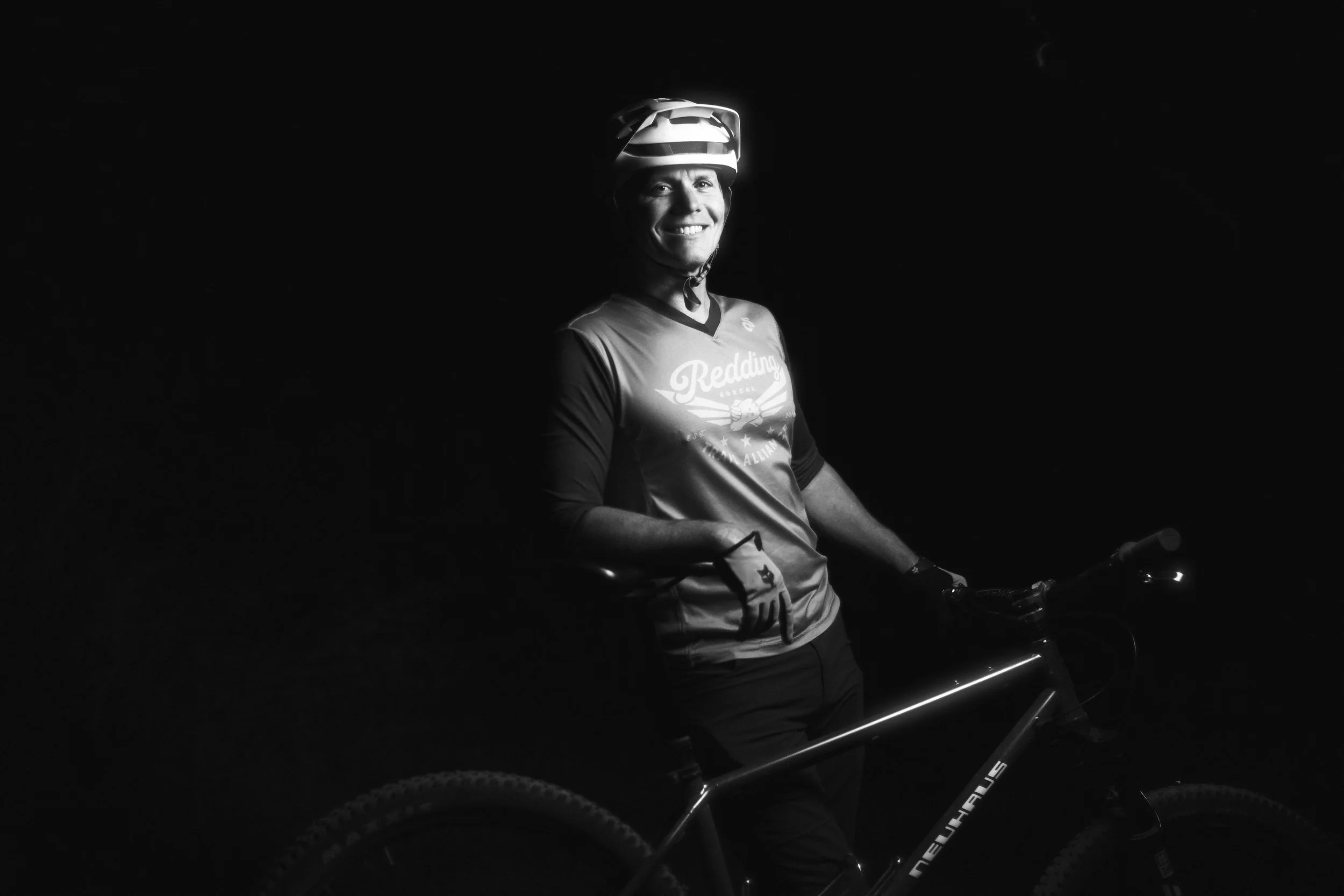
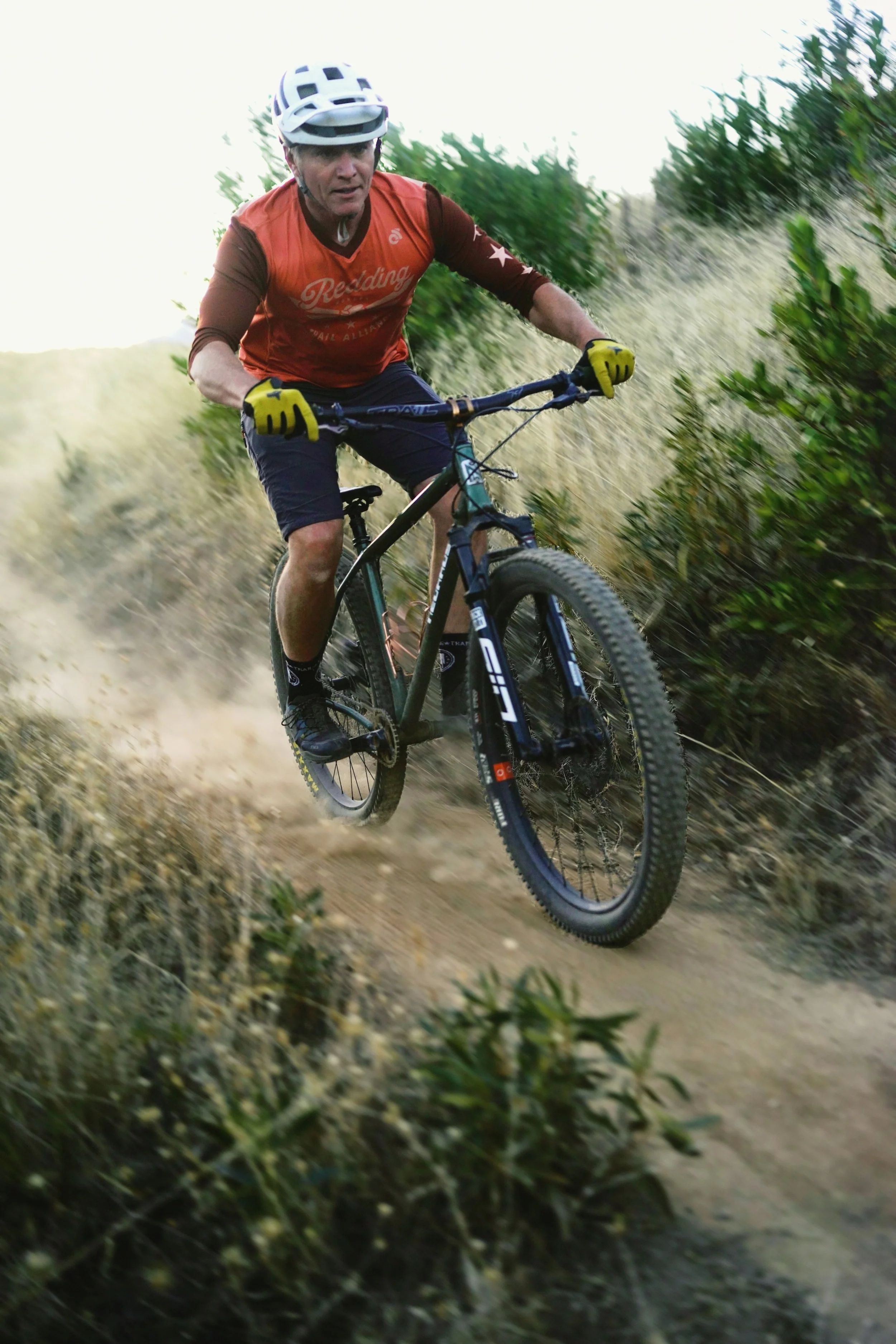
“When you’re riding singletrack, your mind is 100 percent focused on what you’re doing. It’s like somebody going into your brain and giving it this nice massage.”
nate knudsen
Most days, he worked alone, dragging big rocks into place to create rock gardens and shaping the trail with his pickaxe. Friends joined after work or on weekends, helping him build wooden features, including a fallen tree they planed with a chainsaw to span a ravine more than 10 feet deep.
“This was before I knew anything about trail design or sustainability,” he says. “The only thing driving it was, would I want to ride this.”
One day, while working near a dirt road, Nate looked up and saw a man in khakis and a wide-brimmed hat watching him.
“I thought this guy’s like a government field office dude,” he remembers thinking. “We’re hot.”
Nate walked up to him and discovered he was a neighbor who didn’t care what they were building.
Nate called the finished product the BC Trail, an homage to the trails he’d ridden in British Columbia. But its real name was Bottle Cap, after the beer caps he and his friends nailed into the wood features.
Before long, other riders found the trail, and Nate began hearing how much they liked it.
“That’s one of the best feelings,” he says. “You’re proud of something that you built and stoked that someone else is enjoying it.”
Nate wasn't the only one building without permission. Other local riders were cutting the trails they couldn't find anywhere else, with bigger ramps and jumps.
Then Brian Sindt of the McConnell Foundation came looking for them. Sindt knew Nate from the mountain biking world. He had a project he needed help with and recruited the illegal trail builders because he wanted people who were out there building what they loved.
The outlaws spent a season with the BLM, working alongside the same agency Nate feared would bust him. Together, they developed the first legal berms in Shasta County.
The BLM, Nate realized, wasn’t 100 percent against progressive trails and going legit didn’t mean just punching in wide vanilla trails with dozers.
In 2016, he helped found the Redding Trail Alliance.
“It was something I wanted to do for myself,” he says, “and create the best version of the Redding trail system we possibly could.”
His heart is still in gnarly, rogue trail building, and he’s skeptical of machine-groomed flow trails, which he feels lose the soul of the ground they’re plowed from. But RTA's flowy trails are its most popular.
"That's where it comes down to doing what you feel like the community wants," he says, "versus what you want."
Running a trail-building organization also revealed what Nate’s old trails lacked. Unauthorized trails weren’t mapped or maintained, and even the wood features he loved required regular inspection and repair. Now that upkeep was his job, he had to consider what would endure.
“Do we have too much trail that the community can’t take care of it?” Nate asks.
Much of the answer comes from volunteers. The digging season runs November to May, while there’s still water in the ground. Each weekend, an email goes out to more than 500 prospective volunteers, and once a month, they gather for a Saturday workday with burritos or sandwiches waiting back at the trucks. Thirteen people might show up, sometimes 25.
But Nate also has his regulars. He calls them his "superhero volunteers," a handful of older guys who dig beside him two or three days a week. One logged close to 300 hours last year.
"Nate is a leader, a humble one," says Max Walter, who began volunteering around 2018 and adopted Mule Ridge Trail, which climbs to a 360-degree view of Whiskeytown Lake, Mount Shasta and Mount Lassen. Max remembers helping build Upper Ono through a section so steep and rocky he couldn't imagine a trail there.
"I thought Nate was nuts," Max says. "Now I believe most everyone rides it. He is a trail-creating artist. Lucky us!"
In 2018, the Carr Fire tore through the hills west of Redding. With the canopy gone, buckbrush and manzanita spread where oak and pine had stood, and dead timber littered the trails. RTA's crews went back to work, replacing culverts and rebuilding burned tread.
"Each year the reminders of that devastation are less," Max says. "The great beauty is back in abundance."
The work has helped turn Redding into a mountain biking destination.
"That's where it comes down to doing what you feel like the community wants, versus what you want."
nate knudsen
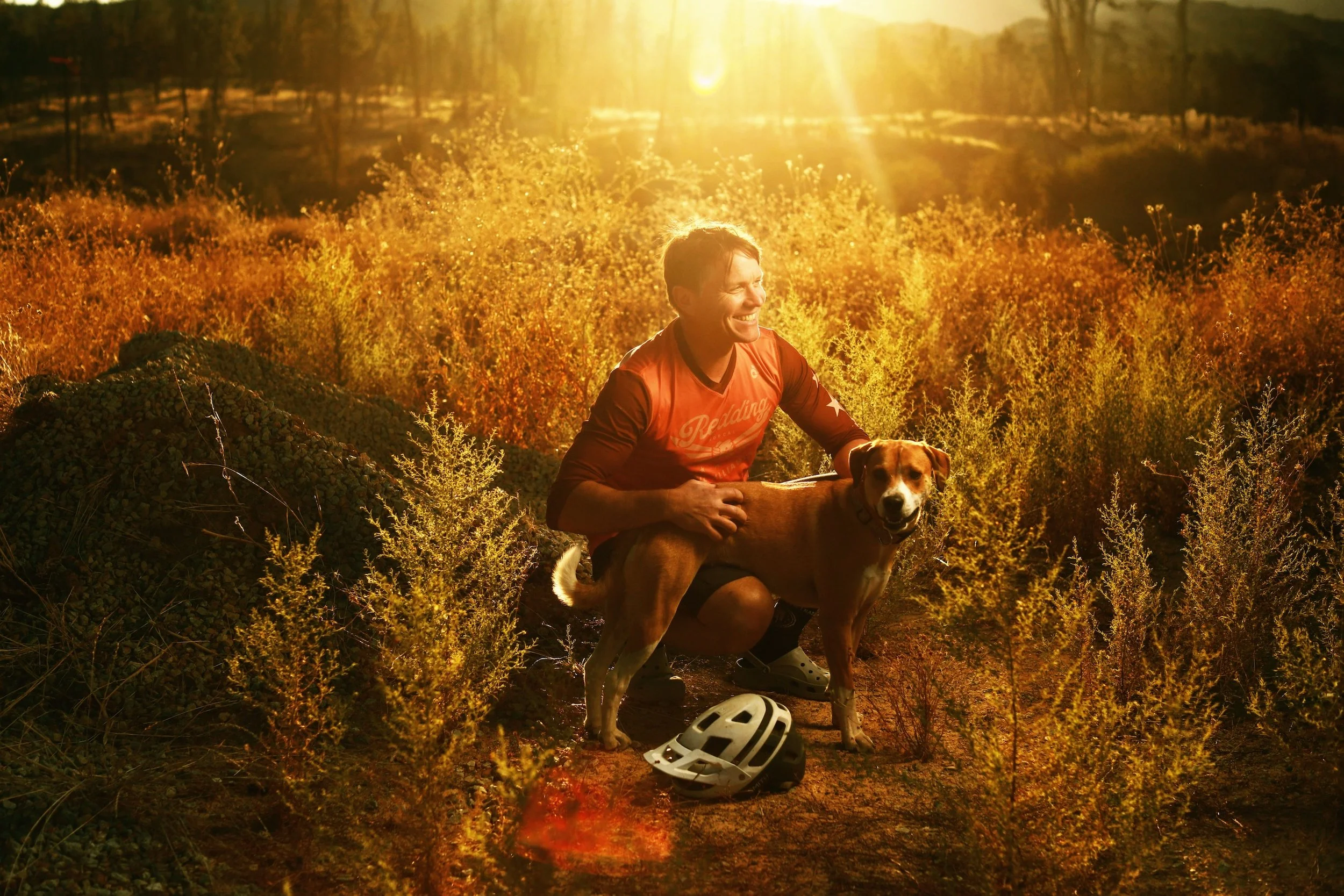
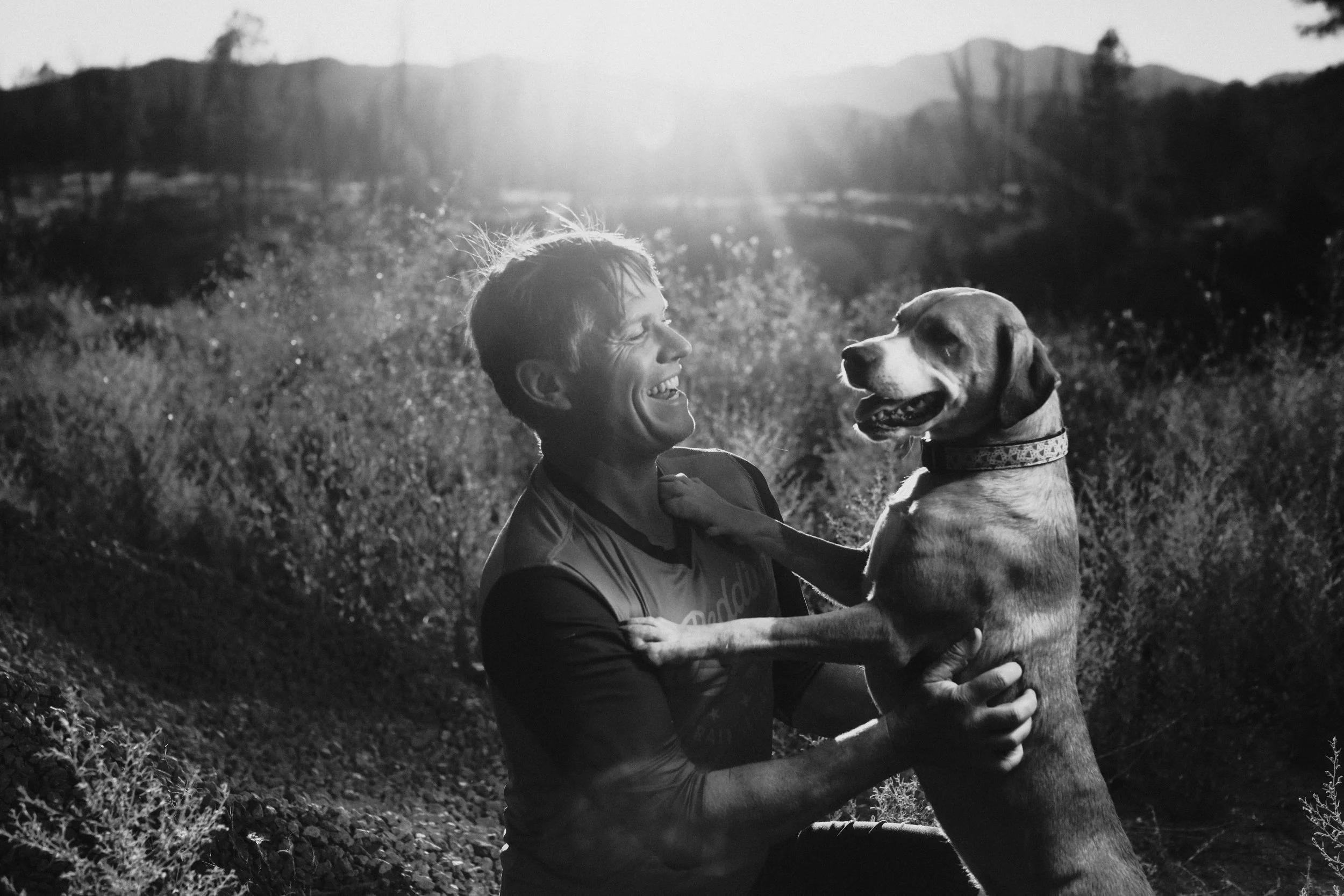
Knudsen with his dog, Suku.
Years ago, a former global brand manager for Fox's mountain bike clothing line rode Snail Trail while visiting family in Redding. RTA had recently given it a facelift to improve its sustainability.
He told Nate it was as good as any flow trail he’d ever ridden.
“He was one of the earlier ones that made me realize the impact we were having,” Nate says.
The rider eventually retired to Redding.
RTA’s biggest fundraiser, the Lemurian Classic, nearly disappeared before the alliance took it over in 2019. Now, it sells out at 350 riders. They hope to grow to 400 in 2027, while bigger, more established California races are shrinking. The riding doesn’t necessarily end at the finish line. Nate says racers return to Redding for days at a time to continue exploring the surrounding trails.
The race relies on local sponsors: contractors, dentists, hardware stores, tree services. Nate is grateful for their support, but he notices who keeps paying.
"It's always the same people that are writing those checks,” he says, while thousands more benefit.
In RTA’s early years, Nate shouldered much of that burden himself. He was paid only for his trail-crew hours, at about $16 an hour, while the demands of the nonprofit left little time for his graphic design business.
Eventually he went to RTA’s board.
"I am in an insane amount of debt," he told them. He pointed to the organization’s growth and argued that it was time to hire him. The board unanimously agreed and brought him on for a year at half salary. He still worked more than 40 hours a week.
Even after becoming a salaried employee, Nate sometimes considered quitting. He needed the job, but he also worried about what would happen to RTA without him.
“I have a strong feeling,” he says, "if I walked away from this, Redding Trail Alliance would no longer be in existence."
In those times, his wife, Camille, helps keep him level and reminds him of what he has.
Nate always insisted a job was just a paycheck. RTA has become something more: a place for growth while doing something he absolutely loves.
“My office is this amazing, beautiful area,” he says. “The only reason I’m able to do what I do is because of the people who have risen up to make Redding Trails successful.”
Years ago, one of Redding’s Rotary Clubs asked him to write a bio. Instead of the usual college and credentials, he wrote that he grew up running amok in the woods of Round Mountain, playing in the dirt.
“And that’s still what I’m doing today,” he says. “And I’m pretty, pretty happy about it.”
The Redding Trail Alliance is a registered 501(c)(3) nonprofit. To support its work building and maintaining local trails, make a donation through the Redding Trail Alliance website.
bloomline collective is supported by wilda's grill in redding