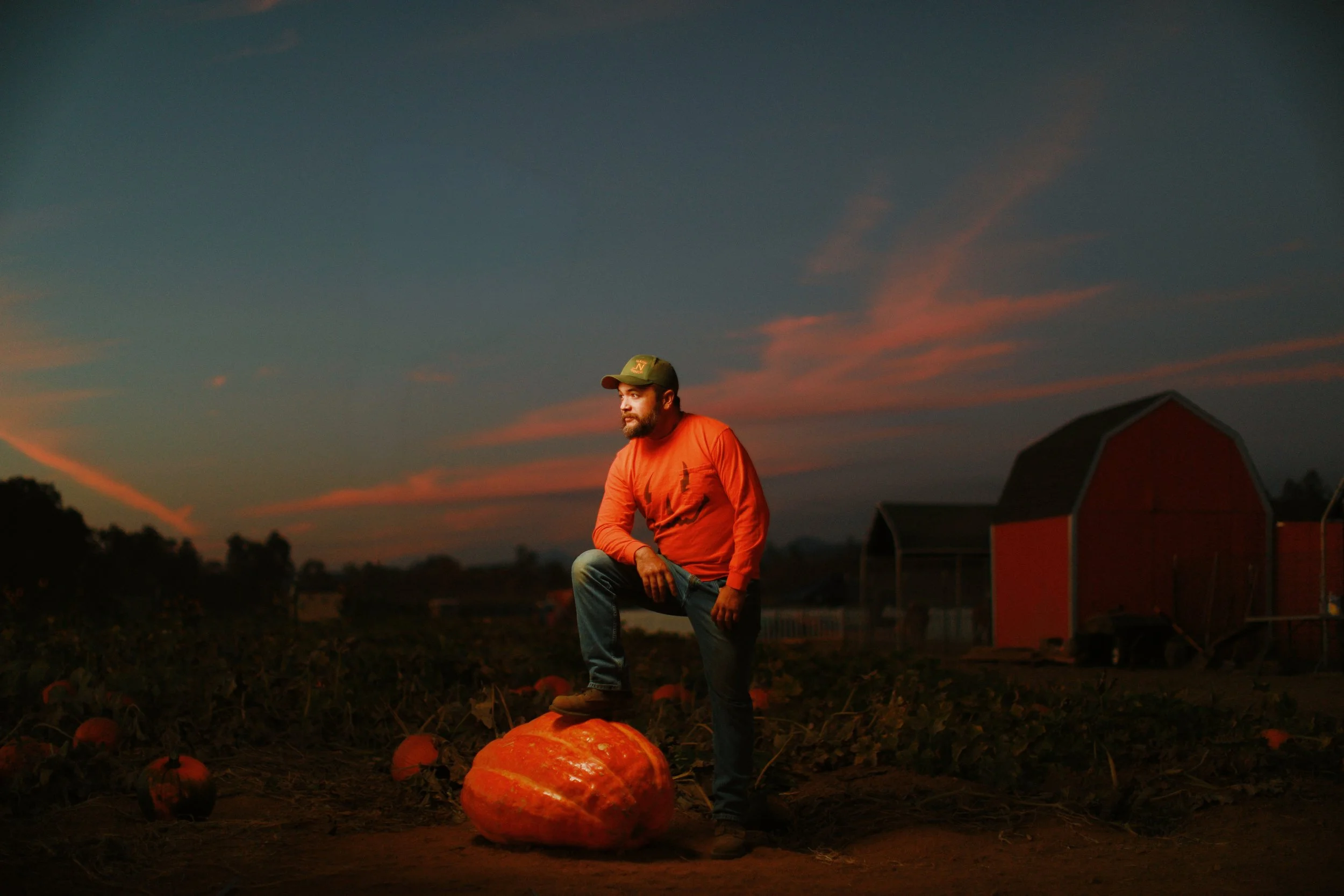
His grandfather bought the land. His father planted the pumpkins. Today, Louis Nash carries on a family tradition that generations of Redding families have made their own.
Story by Brad Holzwart
Photography by Tommy Corey
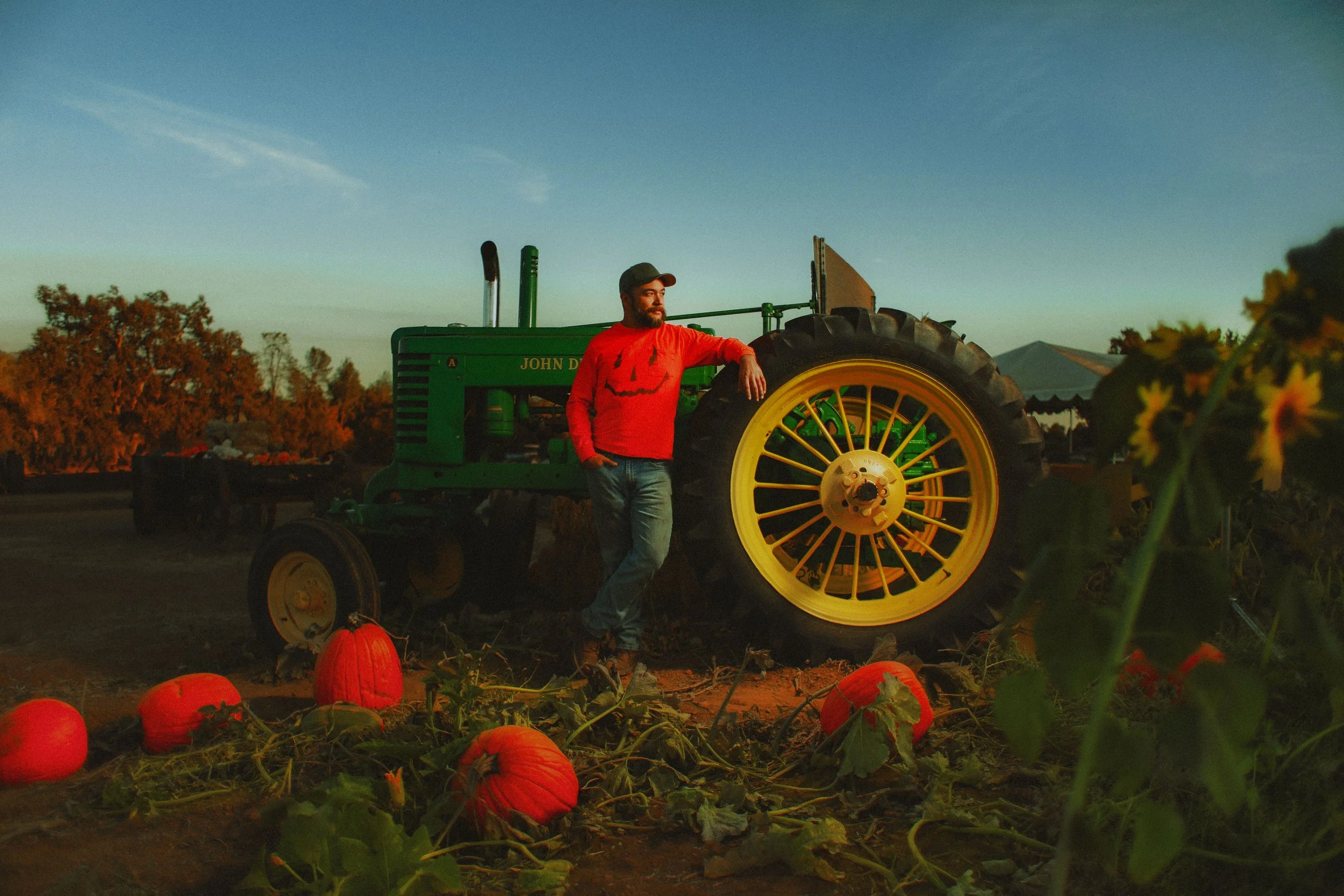
Louis Nash hasn't set an alarm in years. With two young sons at home and the harvest underway, something always wakes him.
"There’s so much banging around in my head,” Louis says. “It's 4:30, so I just get up.”
He makes coffee — a lot of it — and fills two thermoses. Some mornings he puts in a few hours of civil engineering work, what he likes to call his second job. Between that and his farm, he pulls 80 to 100 hours a week.
He grabs snacks and gets the boys ready. His wife, Rachael, is a nurse and leaves before daycare opens, so drop-off falls to him. Then he heads to Nash Ranch, the family farm on the edge of Redding, California.
"I doubt it's a whole lot different from anyone else's life," he says.
When he arrives around eight, his father, Bob, who lives next door, has usually beaten him there, already watering the roads to settle the dust. Employees may have finished the first few chores on the morning checklist, so Louis picks up where they left off.
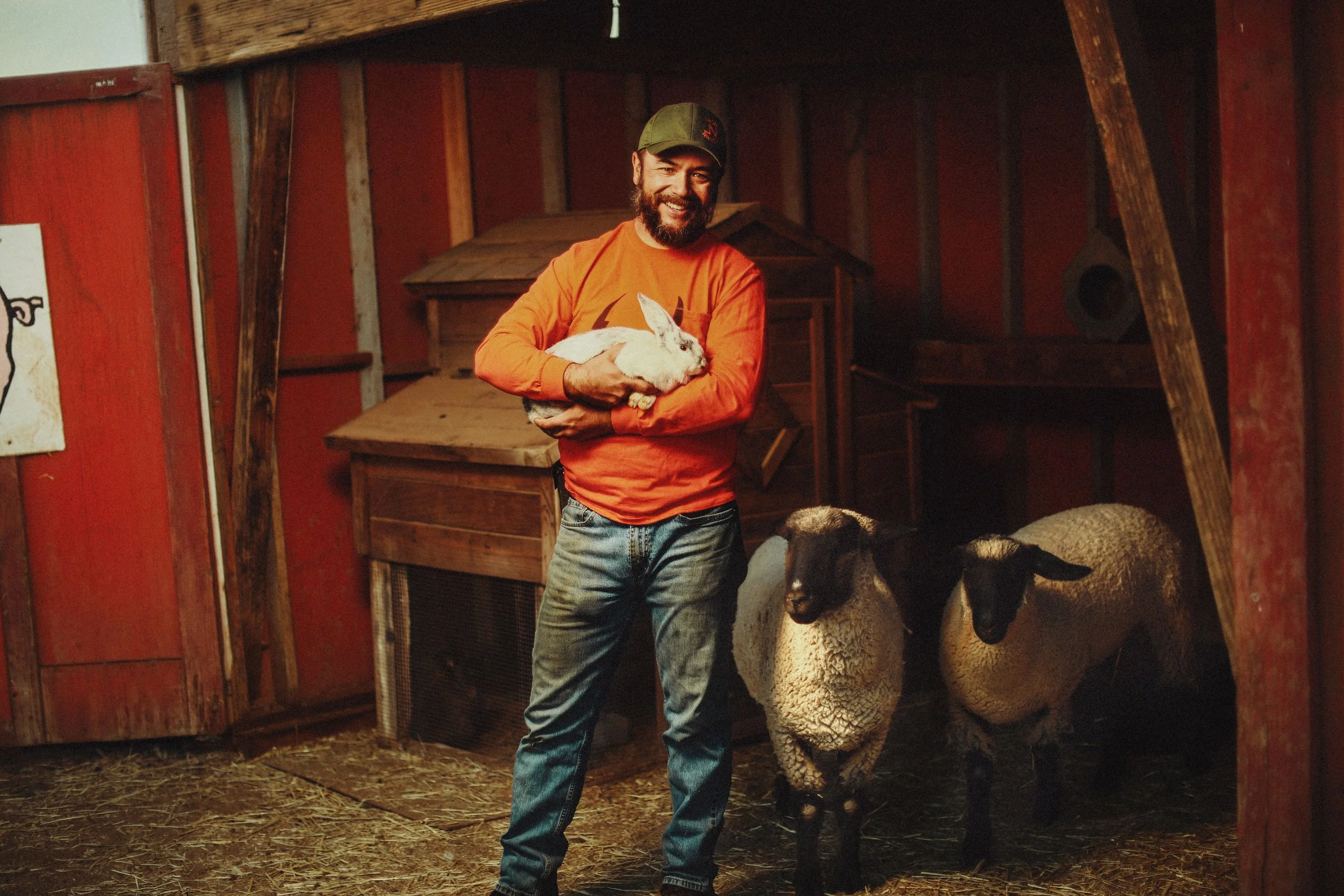
Feeding the animals is his ritual every morning and every evening. He puts hay in the barn to coax the goats and sheep inside. He ties up the cow and horse so they can’t get into the chicken feed. Then he feeds the chickens. His mind is already on the day’s visitors, but he stops to scratch the sheep behind their ears while they nibble at his pant legs.
Next, Louis unrolls the bounce houses, secures them to their anchors, and sets up the blowers. They weren’t always part of the routine.
Louis’s grandfather began buying the land that became Nash Ranch in 1953. For decades, the family grew alfalfa and onions and raised cattle. In the early nineties, Louis’s dad experimented by planting pumpkins on a small plot.
“[My dad] jokes that these were the ‘stupidest, ugliest pieces of junk,’” Louis says. “Then it rained one day, and they were all bright orange and shiny. People couldn’t swerve off the road fast enough to buy them.”
Later, Louis’s mom added a bounce house. The family initially thought it was ridiculous.
“It wasn’t just that we were wrong. We were immediately and obviously wrong,” Louis says, laughing.
The family still debates how much to add. Louis draws the line at anything that would turn the ranch into a county fair, saying, “We don’t want that.”
“They’re just so pumped on this 1.3-pound pumpkin…something that cost me basically nothing that has this really big impact.”
LOUIS NASHOn weekdays, school field trips fill the hours from nine to eleven. Cheryl Westbrook, who has worked the ranch for at least twenty years, meets each bus with an itinerary she and her daughter designed.
The ranch has long welcomed groups from care facilities and disability-support programs, too. But on crowded days, Louis noticed that the noise and activity could overwhelm some guests. “You see kids having to put on earmuffs and leave,” he says.
So, in 2025, he set aside a day to create a less overwhelming experience just for them.
This October, the buses arrived fifteen minutes apart to minimize the chaos.
“The thing I remember most about the quiet day is how much it wasn’t,” he says. “It’s boisterous, it’s loud. There’s no social pressure for them to be something they aren’t.”
The train is a favorite. Built in the 1990s around an old Volkswagen bus, with a custom shell and carriages, it plods around the 18-acre pumpkin patch without ever shifting out of first gear. “It’s bright white,” Louis says, “which is wildly inappropriate on these dirt roads.”
Where fifth graders run straight for the giant pumpkins, the quiet day visitors gravitate to the little ones that fit in their hand.
“They’re just so pumped on this 1.3-pound pumpkin…something that cost me basically nothing that has this really big impact,” says Louis.
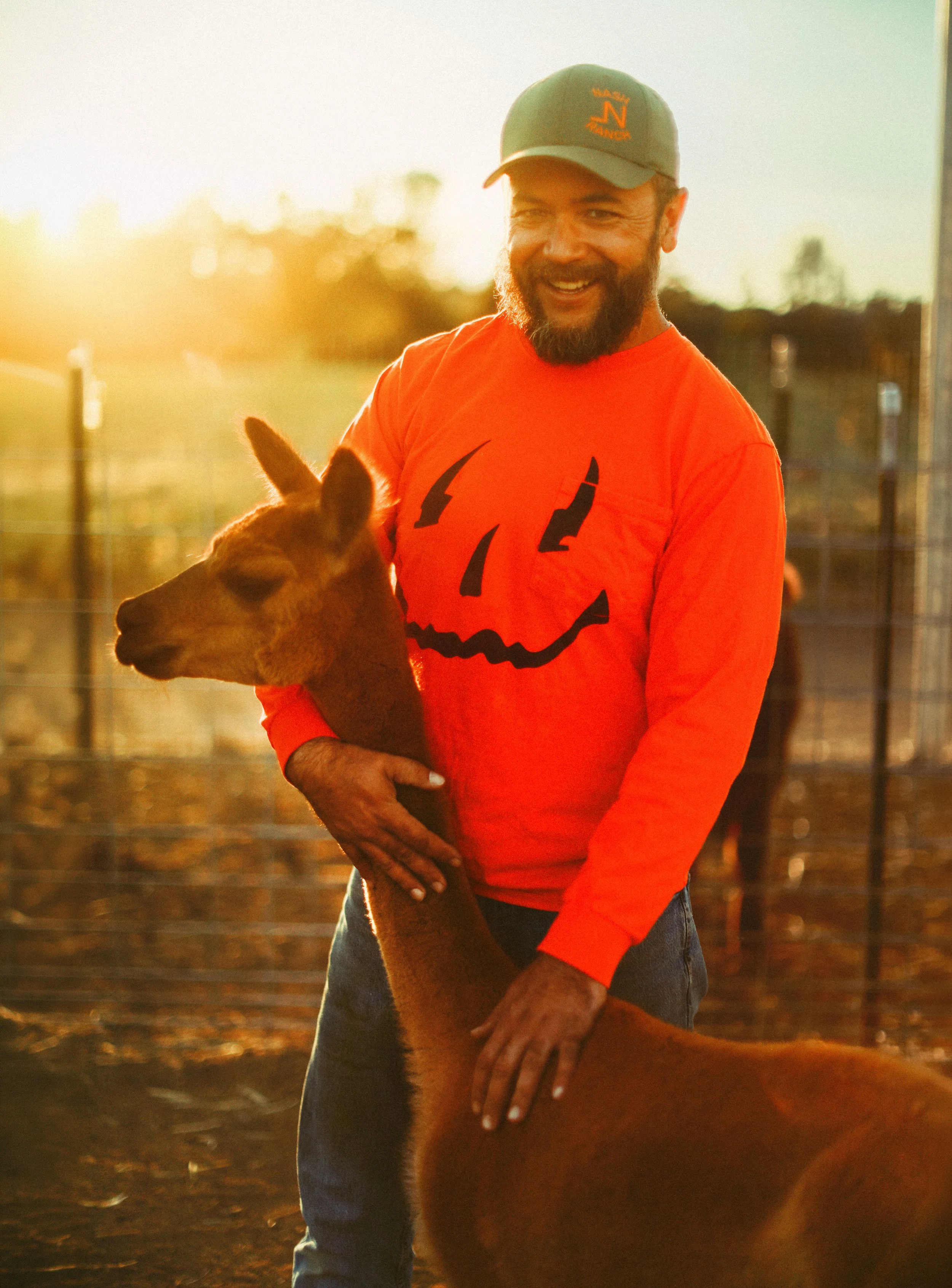
By one, the last bus has pulled out. This October has run hot, and the afternoon crew drifts east, following the shade. Louis stays at the cash stand, his laptop open to the day job. The pumpkin patch phone rings — it’s also the card reader — and someone asks for the shipping manager.
“There’s no office, no shipping manager, no accountant,” Louis says. “It’s just me.”
When something breaks, which is always, that’s him, too. He’s gotten “unfortunately good” at overhauling old Caterpillar engines, sometimes right in the dirt at the edge of the field “because that’s where it died.”
When there’s a free minute, Louis or one of the crew takes the tractor out to start prepping ground for the winter hay. Someone wheels a 200-pound pumpkin up to the stand, and Louis gets up to help lift it, then sits back down at the laptop.
Everywhere Louis looks, he sees his grandfather’s work. “He built everything here,” Louis says. “The same barns, just with new siding and roofs. Even some of the original creosote-treated fences.”
His grandfather, also Louis D. Nash, practiced surgery into his seventies and was the first board-certified surgeon in town. People over sixty still recognize the name. Some pull up their shirts to show Louis their scars. “Your grandpa took out my appendix,” they tell him.
His grandfather also built the dam. Above the fields sits a reservoir of about 35 acres at full pool, and everything below it runs on gravity. There’s no electricity or pressurized water out in the fields. At the top of the dam, a gate opens with a big wheel. “If I open it six turns, that’s enough to water this whole field,” he says.
“Community built this place. All I do is drive a tractor.”
louis nash
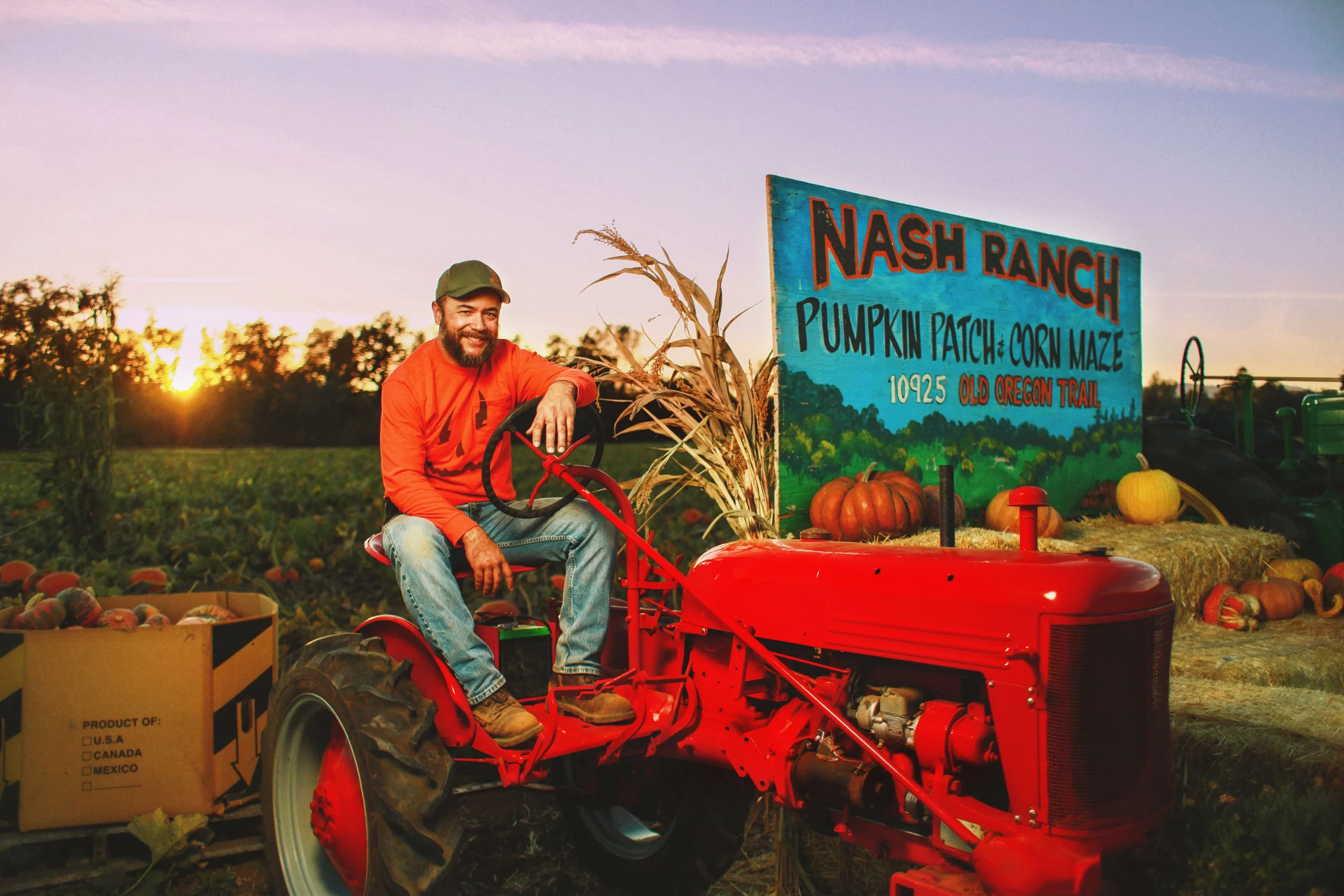
Underground, the original concrete pipe from the 1960s is wearing out. Every year Louis tears out a few more feet and replaces it with plastic, at a cost of tens of thousands of dollars. Still, the water is theirs.
“We’re water independent,” he says. “Kind of a big deal in California.”
In 2025, heavy rains fell throughout October, many on big weekends when the ranch should have been packed. Instead, it closed. The crews had already harvested the squash, binned it, and stacked it in the barn. Louis was left with about 100,000 pounds of produce.
For weeks, he hauled a trailer to a large food bank down the road that gave out boxes every Wednesday, until the staff told him they couldn’t handle more than four or five bins at a time.
Pulling in, he’d pass a line of cars stretching down the road.
“So many of the drivers were elderly, people struggling,” Louis says.
He started photographing the unloading and posting it to social media as a little “positive peer pressure” aimed at anyone who could help.
“People don’t go to the food bank because things are going well,” he says. “Community built this place. All I do is drive a tractor.
Rachael sees what Louis’ modesty obscures. “It makes me incredibly proud to watch Louis build meaningful connections with individuals and groups throughout our community,” she wrote.
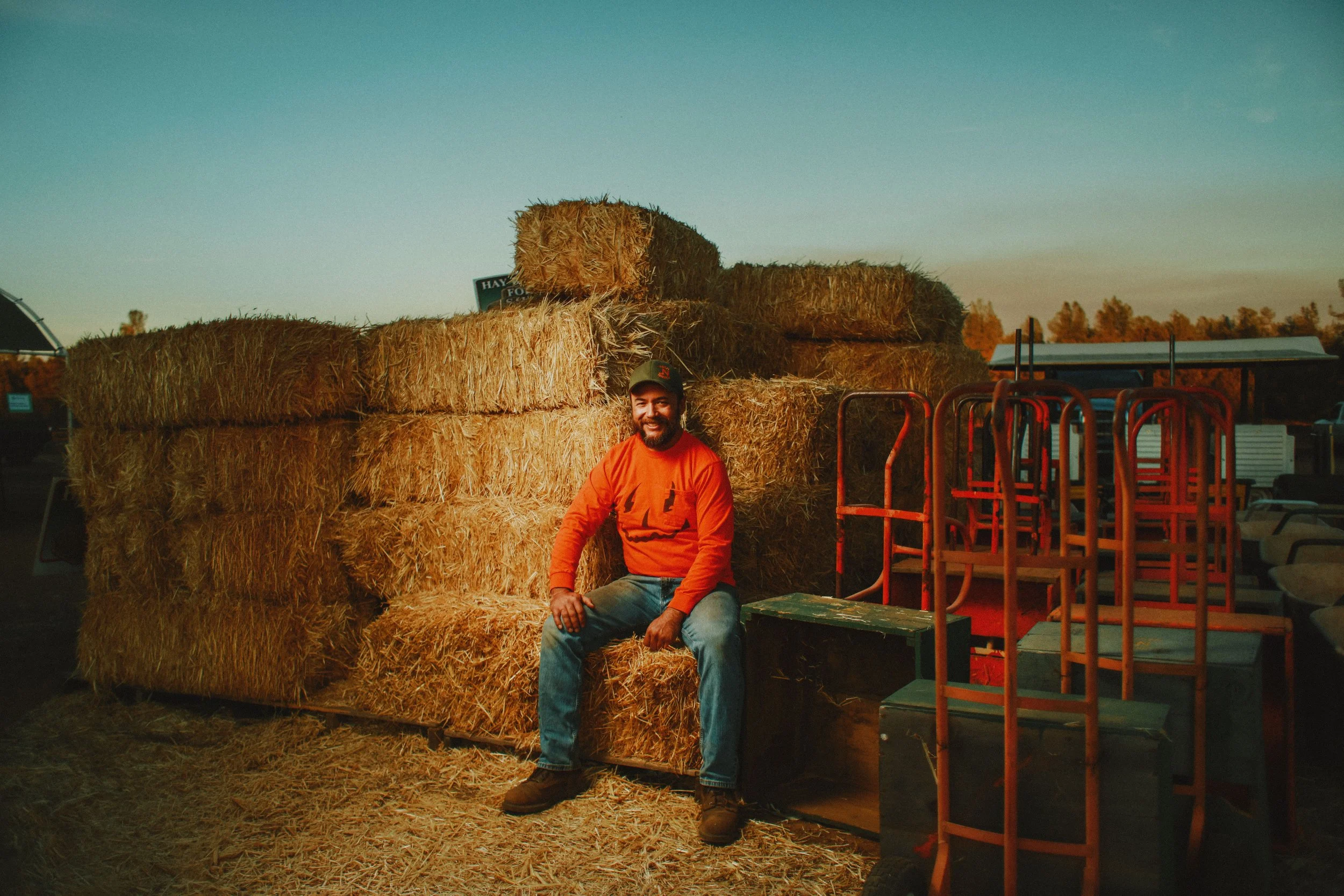
As the sun drops around 4:45, the ranch fills with people just off work and out of school. On Friday and Saturday nights, the ranch opens its haunted house and corn maze. Louis spent eighteen years wielding a chainsaw to frighten visitors. He rarely does it anymore, though admits he’s “distressingly good at it.”
As many as 10,000 people come through on fall weekends, and local groups run much of the operation: a swim team, the cheerleaders, eighth-grade graduation fundraisers, 4-H at the petting zoo. Awkward freshman boys approach car windows at the parking line asking visitors to pay the $5. Drivers hand it over and slip them another $10 for the jar.
He keeps the commercial food trucks from competing, telling them, “No hamburgers this weekend,” so the local groups grilling have a monopoly. Every few years, the family debates whether to take any of it over. “The answer is always no,” he says. “This is already enough work to kill a person.”
They’ve also placed 96 acres under a conservation easement, protecting the land from development. Louis imagines a developer offering a fortune for the property, enough to secure his children’s futures. “Dude, I’m just a person,” he says. “Who wouldn’t consider it?” The easement takes that decision away. He calls it a weight lifted from his shoulders.
Louis can’t say exactly when he took over the ranch. His dad paid him as an employee and rented him fields to plant and sell on his own, and through college he came home most weekends to work. Somewhere along the way, he stopped taking a paycheck. “One day, I just was,” he says.
Now he watches his own boys and wonders, “Will they know? Will they want to do this?”
By closing time, Louis is back to the familiar routine. He drops subtle hints by turning off a light here and there. He sends Cheryl home. “One or two more train rides,” he calls, then shuts off the bounce houses and starts feeding the animals, bedding them down for the night.
A few stragglers linger past closing, taking pictures of their kids at the face cutouts. Louis lets them be.
From where he stands, the impact can be hard to see. Then someone tells him they’ve been coming to the ranch for thirty years, and now they’re bringing their grandchildren. Sometimes they just say, “Thank you.” His voice catches when he talks about it.
“That’s when it comes home,” he says.