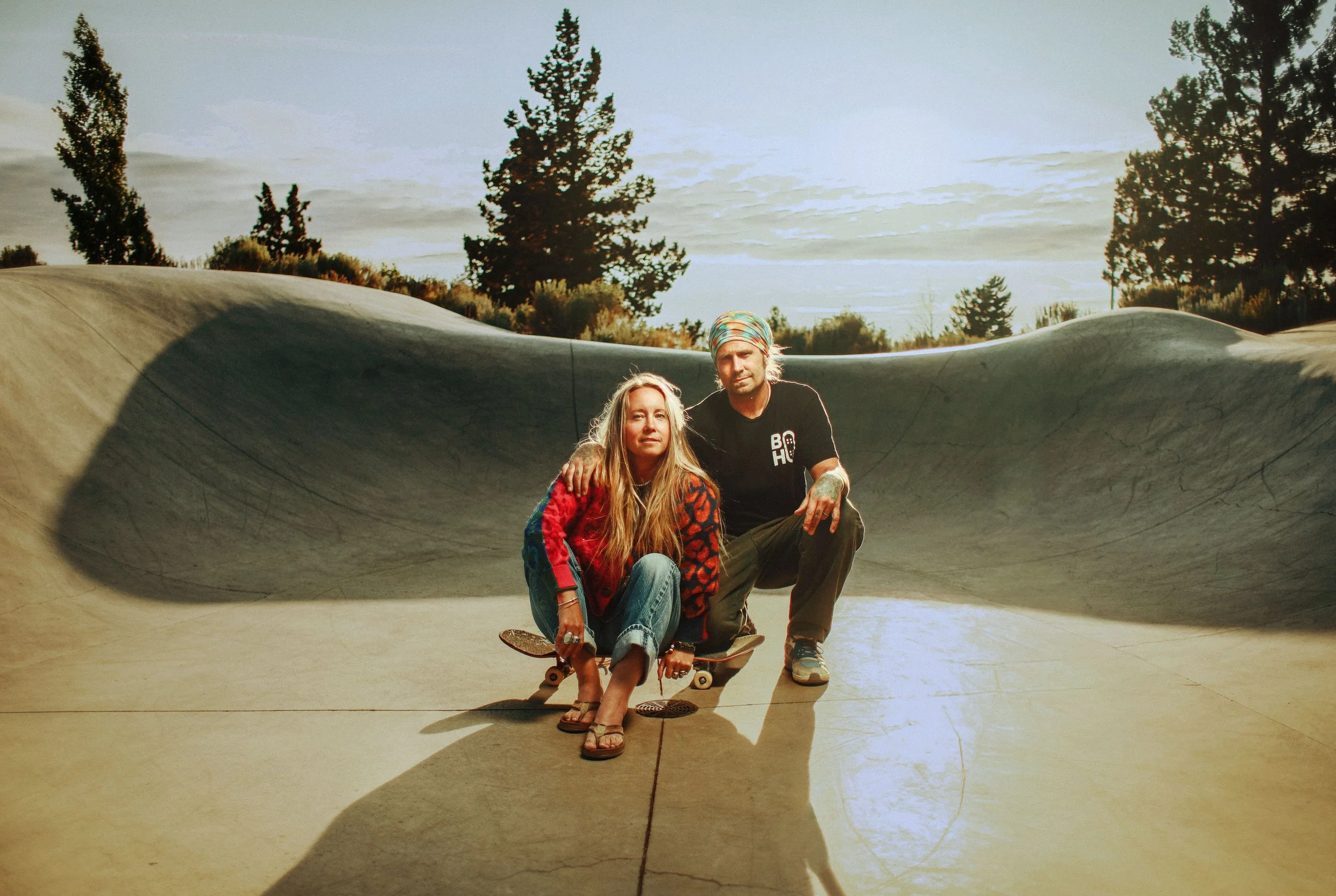
More Than Kickflips and Concrete: How Board House Society Is Building an Inclusive Skate Culture in Central Oregon
The vision to bring an indoor skatepark back to Central Oregon became something even bigger. It led Trygve and Caitlin Bjornstad to create Board House Society—a nonprofit that's building connection, opportunity, and community through skateboarding.
Story by Brad Holzwart
Photography by Tommy Corey
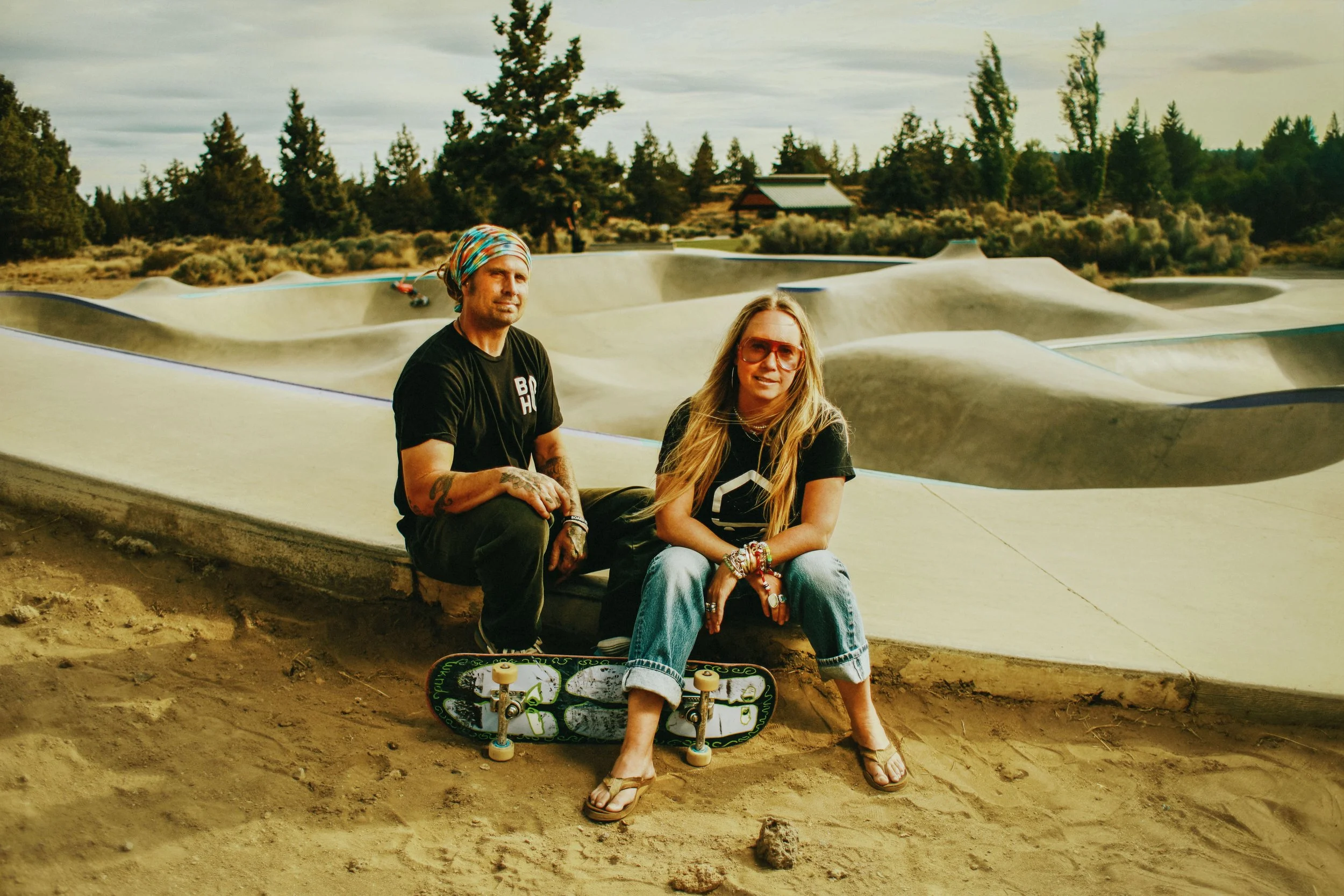
Board House Society founders Trygve and Caitlin Bjornstad at Rockridge Community Skate Park in Bend, Oregon.
It’s 6:20 p.m. on Trygve Bjornstad’s forty-fourth birthday. The light drains from the Oregon sky, and his family’s patience fades with it. Hours ago, his wife Caitlin asked if he wanted to go out to dinner to celebrate his birthday. All he wants is to land a kickflip — to jump into the air and flip his skateboard one full rotation beneath his feet before landing back on it. After half a year and more than a thousand attempts, he’s only heard the clatter of his board bouncing off the pavement.
On his next try, the skateboard tumbles against the sidewalk — again — only this time, his ankle rolls under him. He mutters, No, no, no. His daughter sits on a picnic table and says, “Dad, that was so close!”
He knows.
Four years ago, Trygve had never stepped on a skateboard. He and Caitlin hadn’t founded Board House Society, their nonprofit that uses skateboarding to create the kind of community where people can safely learn, fail, belong, and keep returning to. But the feeling of starting over wasn’t new.
Before Board House, Trygve worked more than twenty-five years in construction, eventually becoming director of operations for a commercial builder in Bend. He was a pillar of the company culture. Then, a restructuring left him isolated in his garage ordering construction materials from his laptop.
“I was really miserable and borderline depressed,” he says. “I knew this was not what I was meant to do.”
“It was a moment for reevaluation,” Caitlin says. “Trygve arrived at this point of feeling like he had checked the boxes but wanted to contribute to something bigger than himself.”
Pondering his next move, a friend told him to make two lists: things he liked doing and things he didn’t.
“I discovered I’m my best self when I’m on a board. I have a busy mind, but when I’m riding, there’s no future or past. I’m just in the moment.” He flashes a wry grin. “I went from being ‘bored’ to being on a ‘board.’”
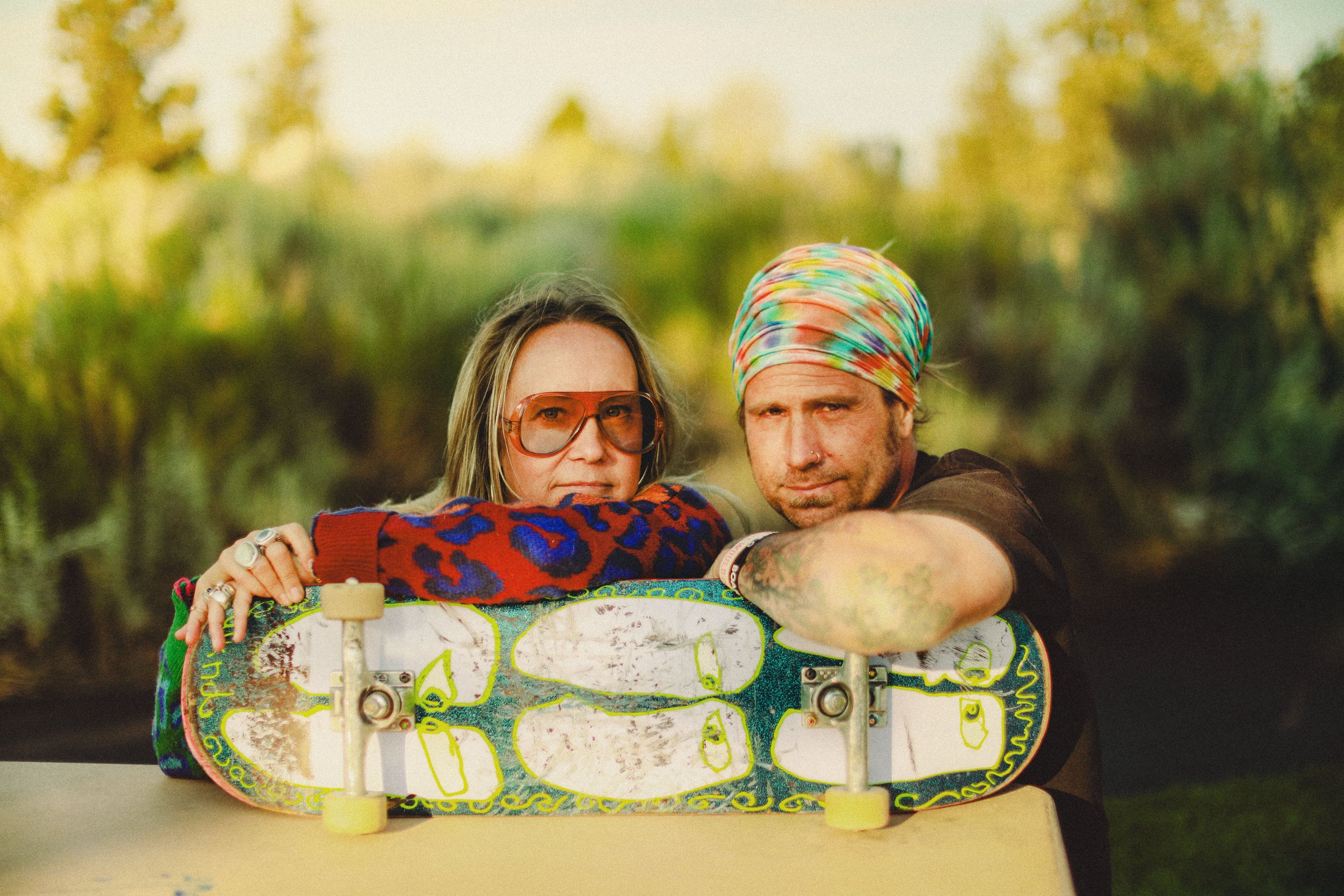
The snow, river, and wake crowds already had a strong foothold in Bend, while skateboarding didn’t. Trygve and Caitlin originally envisioned a for-profit indoor skatepark to give the skaters a place to drop in during the wet and cold Bend winters.
Over the first year, they tapped into the Bend community to polish their business plan and pitch investors, even flying cross country to meet one of the nation’s largest skateboard distributors.
“He loved the idea,” Caitlin says. “Then asked why he wouldn’t just put his money in the bank and make more. It was a real reality check.”
Back in Oregon, they connected with an ad agency that listened to them talk about growing a community and a safe place where kids could come and feel accepted, when the team interrupted the pitch.
“They told us that everything we were describing is a non-profit,” Caitlin says.
Without funding for a building, the plan changed shape. Instead of one skatepark, they’d bring skateparks — ramps, structures, whatever fit in their van — to people, all people, regardless of their ability and history.
There’s a pause before she looks at Trygve and says, “I think you could have used a thing like that, growing up.”
He doesn’t respond right away, then says simply, “Sure.”
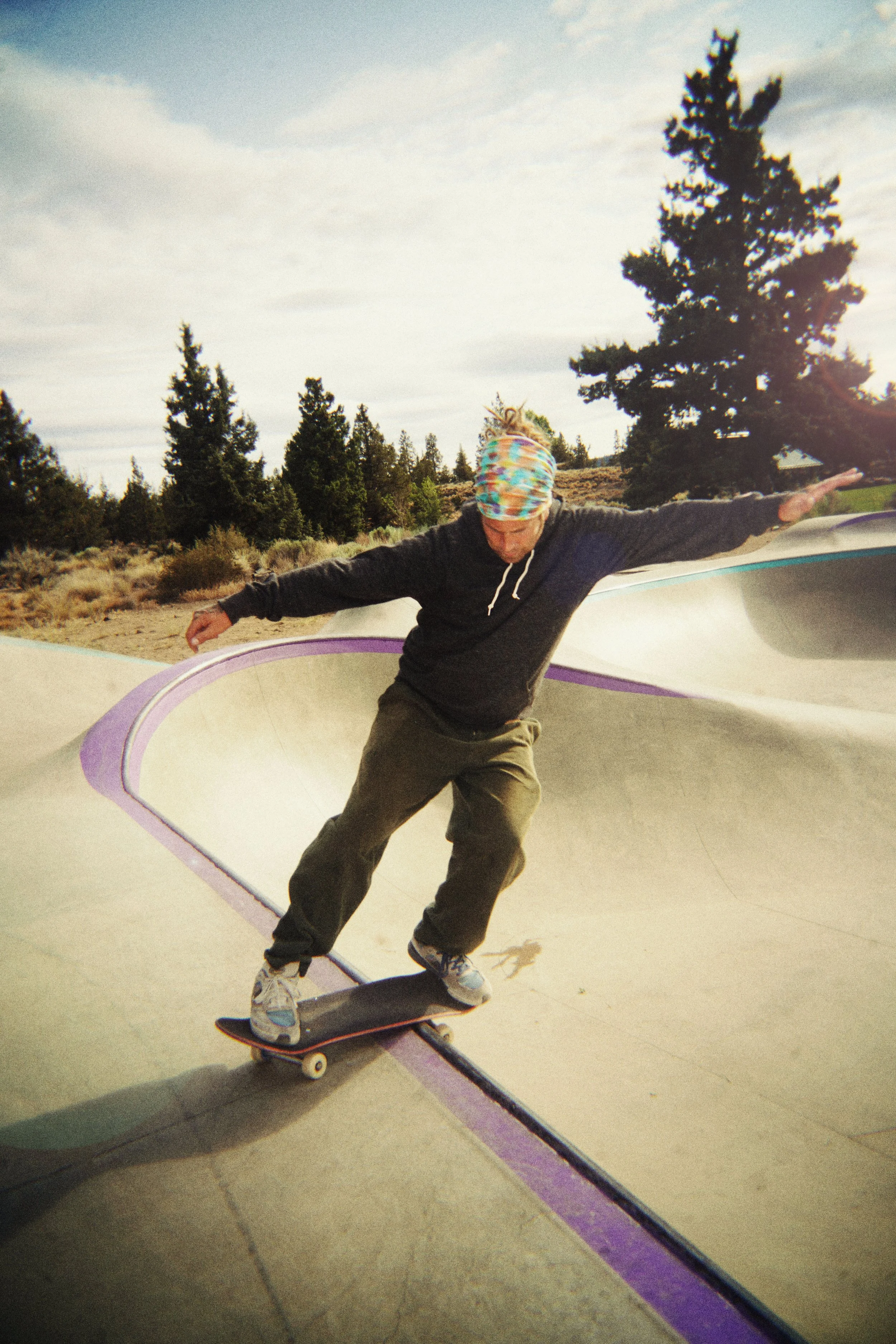
Trygve and Caitlin had known each other since middle school in Olympia, Washington even dating briefly before Caitlin and her family moved to Cape Cod, Massachusetts. From there, life took them in different directions.
Caitlin went to college in Florida and eventually moved to Denver, but she always felt something was missing there and ended up back in Washington. “I was convinced I was going to end up with some guy in pastel polos and Sperry Top Siders, being around sailboats—”
“Instead, she ended up with me, a guy with a bunch of tattoos and dreadlocks,” he interrupts. They both laugh.
For Trygve, he describes his childhood family as “looking amazing on the outside,” but lacking true connection behind closed doors. Alcohol flowed through the house and Trygve began drinking around age twelve, which segued into drug use. In high school, he became a runaway for three months, living with nine other kids in an apartment, experimenting with drugs.
One day, a knock came at the door. Trygve’s father stood there with two large and serious-looking men.
“My dad told me that I had court for shoplifting,” Trygve recalls. “I was all messed up at the time, but he hugged me and started crying. One of the big guys sat in the back of the car with me. About fifteen minutes down the freeway, I realized I wasn’t going to court.”
His parents sent him to a disciplinary facility in Montana where nearly every aspect of daily life was controlled. Speaking without permission, making eye contact, smiling, or even looking out a window could result in punishment. During his nine months there, Trygve spent time in solitary confinement, reduced to sleeping on a plywood floor with only a small window for daylight.
“My parents didn’t have the tools,” he says. “It was a very transactional relationship, and we’re still estranged today. Caitlin and I have a 17-year-old and a 14-year-old, and I couldn’t imagine either of our kids being where my life was. I haven’t had a drink in seven years, and I’ve had the most clarity I’ve had in my entire life.”
“There are so many kids where it looks like things are okay, they have a nice house, they go on vacations with their families but there are really bad things happening,” Caitlin adds.
Snowboarding and wakeboarding helped carry Trgyve through all of it, but he rode alone. It would take a different board, and another two decades, before he figured out what he’d actually been chasing on those mountains and lakes: connection. Board House grew from that quieter longing, to find the kind of community that had always eluded him.
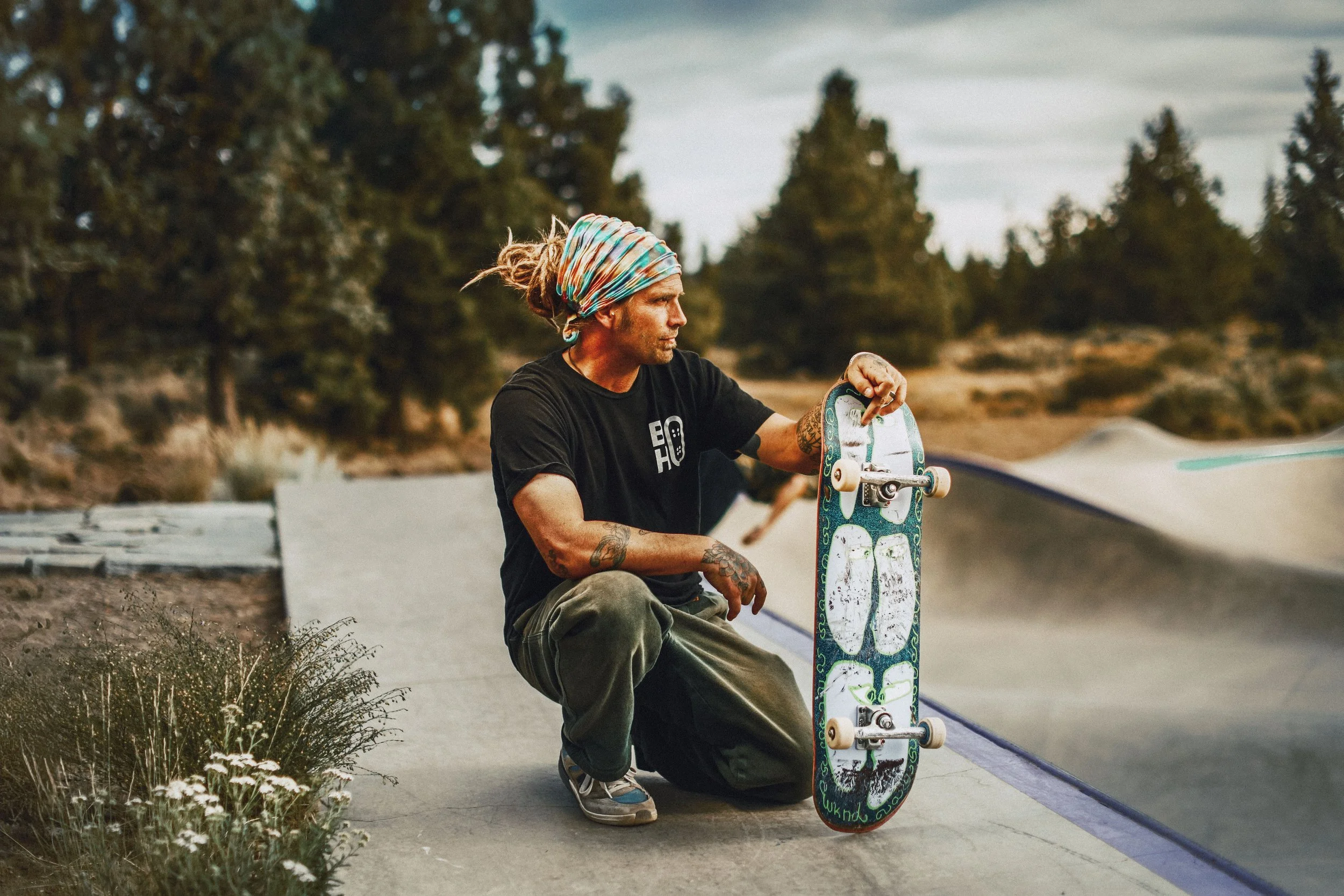
“I discovered I’m my best self when I’m on a board. I have a busy mind, but when I’m riding, there’s no future or past. I’m just in the moment.”
-Trygve Bjornstad
Board House held its first event as a non-profit, a Curb Jam, in the civic heart of Bend, called The Commons, in early November 2024. The area sits at the edge of downtown, where the Deschutes River slows beside Drake Park, and locals drift between live music and artisan markets. The warmth from fire pits pushed away the early winter cold. Trygve had duct taped plywood together to create features for the skaters to use.
“We had no idea how many people would come,” Caitlin recalls. “It was exciting and scary.”
For an evening, The Commons became a stage as skaters lined up to grind, slide, and improvise tricks, feeding off one another’s creativity and the crowd’s energy.
“I was smiling ear to ear,” Trygve said. “I kept looking around at all the people and thought, ‘we did this, and not just us, but our community.’”
From there, Caitlin took on the task of communications and outreach, in addition to her 9-5 job, a position she still holds today. They operated under the mantra of “say yes,” never turning down collaboration opportunities, which included schools, foundations, and other local groups.
“This has not been easy behind the scenes,” Caitlin admits. “Our house has been taken over, filled with Board House paraphernalia. You go from a comfortable, high-paying salary with benefits to a completely unknown world where you don’t know what’s going to happen next month.”
They’ve had to explain financial decisions to their kids, like why buying a nicer car doesn’t fit the budget. But then, they’ll host a Board House event where one Bluetooth speaker replaces dozens of pairs of earbuds, and skaters who might have spent the afternoon alone are now talking, laughing, and sharing the same soundtrack. Suddenly, the math changes.
“I felt like this nerdy mom who never quite fit in, especially in an activity that can be notoriously tough to break into,” she says, “Now these kids hug me, tell me what’s happening in their lives, and my impostor syndrome disappears. They welcomed me into a world I wasn’t part of.”
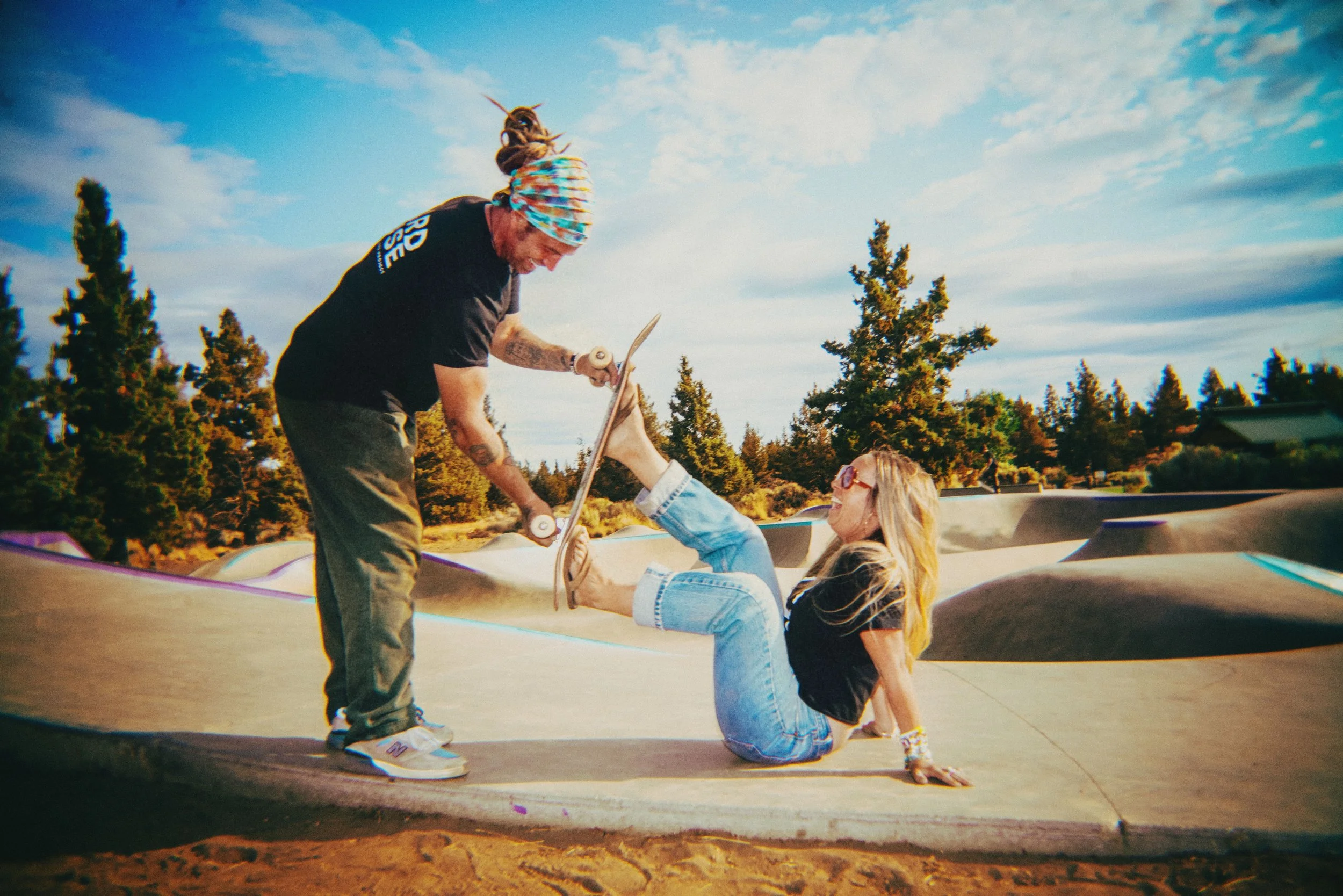
“Trygve walked up to me at Ponderosa Park. He asked if I wanted to start coaching kids—I had never coached before, but I love to skate everyday. Why wouldn’t I want to help the community out and get a new generation into it? It’s huge now. We go to school assemblies, and all these kids have Board House stickers on their helmets and are chanting our name.”
-Charlie Ruddell, 17, Board House Skate Coach
Last year, they participated in an event at a school in Redmond, Oregon where one of the students, who has cerebral palsy, said that he wanted to skateboard. The school created an apparatus for him to skate via a harness and remote control. They reached out to Board House to see if they wanted to participate.
“Of course we wanted to be part of it,” Caitlin says. “But Trygve didn’t want him to be a spectacle on parade, so he suggested we bring a bunch of skaters and features with us to do it alongside him, so he felt part of the community. It was incredible.”
In January, they partnered with Visit Bend and other local businesses to bring their own version of the well known skate competition Game of Skate — a high stakes, high intensity trick for trick competition — to Bend. The event sold over four hundred tickets, attracted sixteen of the best skaters in Central Oregon, and had prize money for the first time. A punk surfer band headlined and eight-year-olds crowd surfed with helmets on that sported Board House stickers.
“It’s been a really fun opportunity for your average Joe to walk in and buy a ticket and watch something that they might only see in the X Games or the Olympics,” Caitlin says. “We all know how hard it is to stay on a board, and I think that’s the part that intimidates people but also intrigues them.”
The kids around Trygve seamlessly land tricks he can’t, yet he keeps coming back anyway. They hound him at every event to try a kickflip.
“It’s changed me a lot,” he says. “You have to be ok with failing and trying things that are difficult, the whole mentality of keep getting back up.”
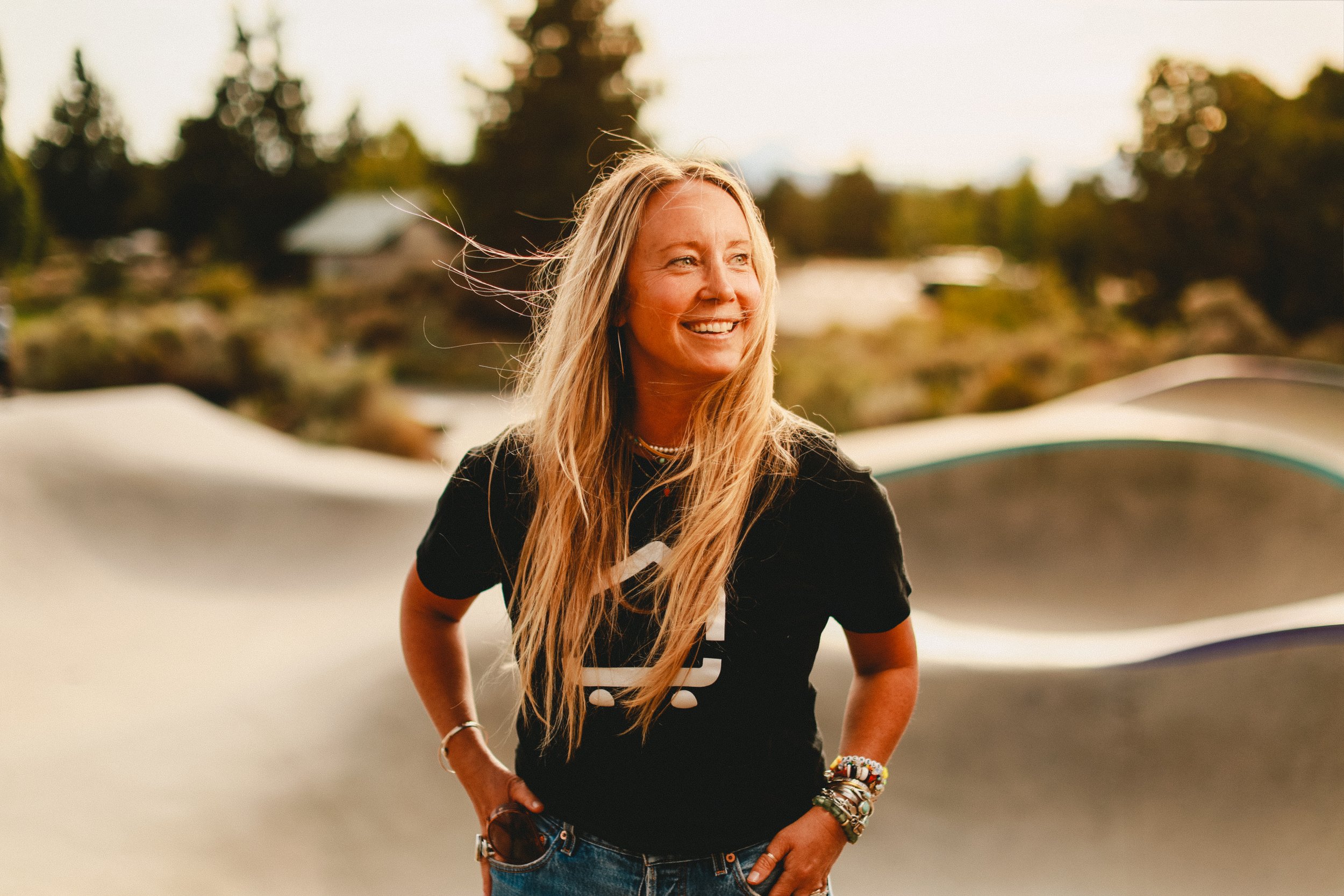
“Now these kids hug me, tell me what’s happening in their lives, and my impostor syndrome disappears. They welcomed me into a world I wasn’t part of.”
-Caitlin Bjornstad
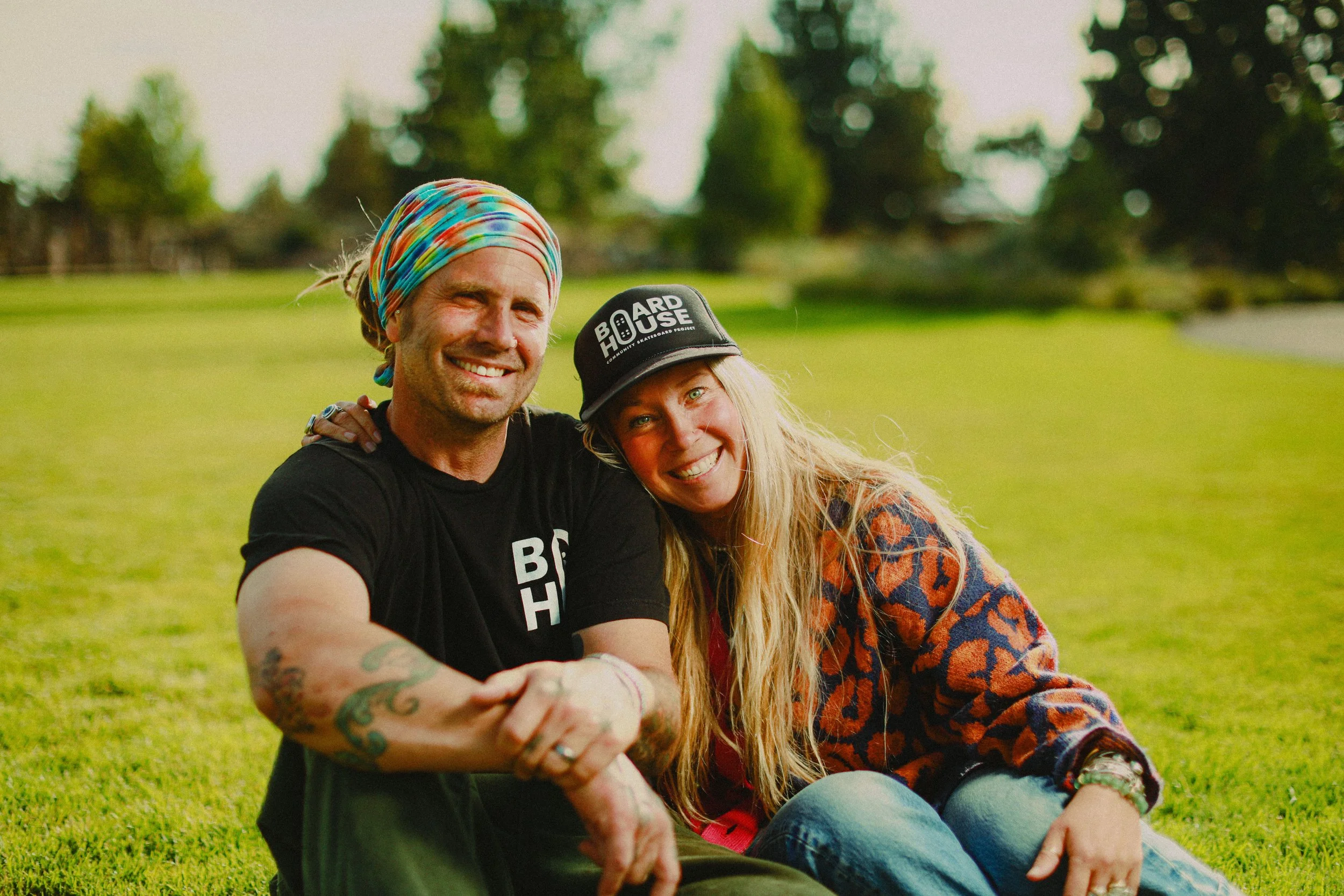
These days, Board House looks less like the business plan they once flew across the country to pitch and more like a community in motion: a van full of ramps pulling into a school parking lot, a coach spotting a kid through their first drop-in, hundreds of voices cheering for someone else’s success, and a punk show raising money so the next opportunity can happen again.
“Life was transactional and sometimes materialistic,” Caitlin says. “The thing I’ve gained the most in this entire experience is returning to true human relationships.”
It isn’t the building they once pictured. It’s bigger. It’s a place to be known.
Back at the park, Trygve pushes off from his board.
“I really feel like you’ll land the next one,” his daughter encourages.
The tail cracks the pavement with a pop like a gunshot. The board flips beneath his feet. He feels his soles reconnect with it. The front comes up and he gently transfers his weight, setting it down. The gritty hum of the board rolls across the pavement with Trygve still on it. He looks at his daughter, their faces frozen in shock.
“We’re going to dinner!” They scream together.
There’s a saying in the skate community, “it takes two to make it true.” Trygve knows this and knows there’s more to come.